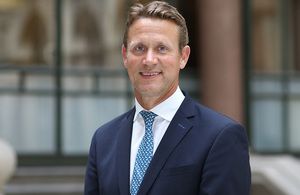
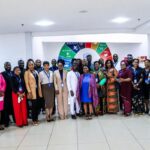
The Israeli Ambassador to Nigeria, Michael Freeman, has called on Nigerians to embrace unity, dialogue, and mutual respect as the foundation for sustainable peace and national development.
Speaking at an interfaith conference on coexistence and dialogue among Abrahamic faiths in Abuja, Ambassador Freeman stressed that peace and progress can only flourish in an environment built on empathy and understanding.
“It’s an honour to join today’s important and very timely discussions on coexistence,” Freeman said. “At a time when so many parts of the world are struggling with division and misunderstanding, this conversation could not be more necessary.”
He explained that true coexistence goes beyond the mere absence of conflict, describing it instead as “the presence of respect, empathy, and shared purpose.” According to him, “It is about choosing dialogue over hate, building bridges rather than walls, and recognising that our diversity can be a source of strength rather than weakness.”
Highlighting Israel’s own experience, the envoy said coexistence in his country is a “lived reality” where Jews, Muslims, Christians, and Druze “live, work, and study side by side.” He noted that Israeli hospitals, universities, and parliament reflect this diversity, even if the system remains imperfect.
Freeman also cited Israel’s regional peace initiatives through the Abraham Accords, which have strengthened ties with nations like Morocco, Bahrain, and the United Arab Emirates. “These accords have already changed the face of the Middle East, proving that peace between peoples is possible when we focus on what unites us,” he said.
Drawing parallels between Israel and Nigeria, Freeman described Nigeria as a nation “diverse, faithful, and full of promise,” but one that must heal from religiously motivated violence through understanding and partnership. “Peace does not begin in government halls or international conferences,” he noted. “It begins in neighbourhoods, in schools, in our places of worship, and in our hearts.”
He reaffirmed Israel’s commitment to strengthening cooperation with Nigeria in innovation, agriculture, education, and security, while deepening what he termed a “moral partnership” rooted in shared values.
During a panel discussion, religious leaders from the Islamic, Christian, and Jewish faiths echoed similar sentiments, calling for grassroots leadership, youth engagement, and moral responsibility.
Imam Muhammed Ashafa urged faith leaders to guide young people toward constructive community engagement. “Faith should not divide us,” he said. “When people of faith come together to discuss issues that matter — such as freedom, youth welfare, and family life — we show the world a living example of unity.”
Rabbi Menachem Chitrik emphasized the importance of teaching tolerance from an early age and leading by example. “You have to be an example in your home,” he said, urging renewed commitment to mediation and dialogue among communities.
Archbishop Peter Ogunmuyiwa of the Christian Association of Nigeria praised the interfaith dialogue for promoting inclusiveness. “If we decide to create space to practise human existence together,” he said, “then we will meet, work, and achieve the peace we desire.”
He cautioned against claims of superiority that fuel conflict, urging Nigerians to see one another as members of one family. “When we see ourselves as one, we will not fight each other,” he said.