The Livelihood Improvement and Family Enterprises Project in the Niger Delta (LIFE-ND) has secured an additional $32 million financing from the International Fund for Agricultural Development (IFAD), following significant progress in the implementation of the intervention across the Niger Delta.
The project has also achieved 95 per cent disbursement of its original IFAD loan, while expanding the use of digital technology and artificial intelligence-powered agricultural advisory services to support farmers and rural enterprises.
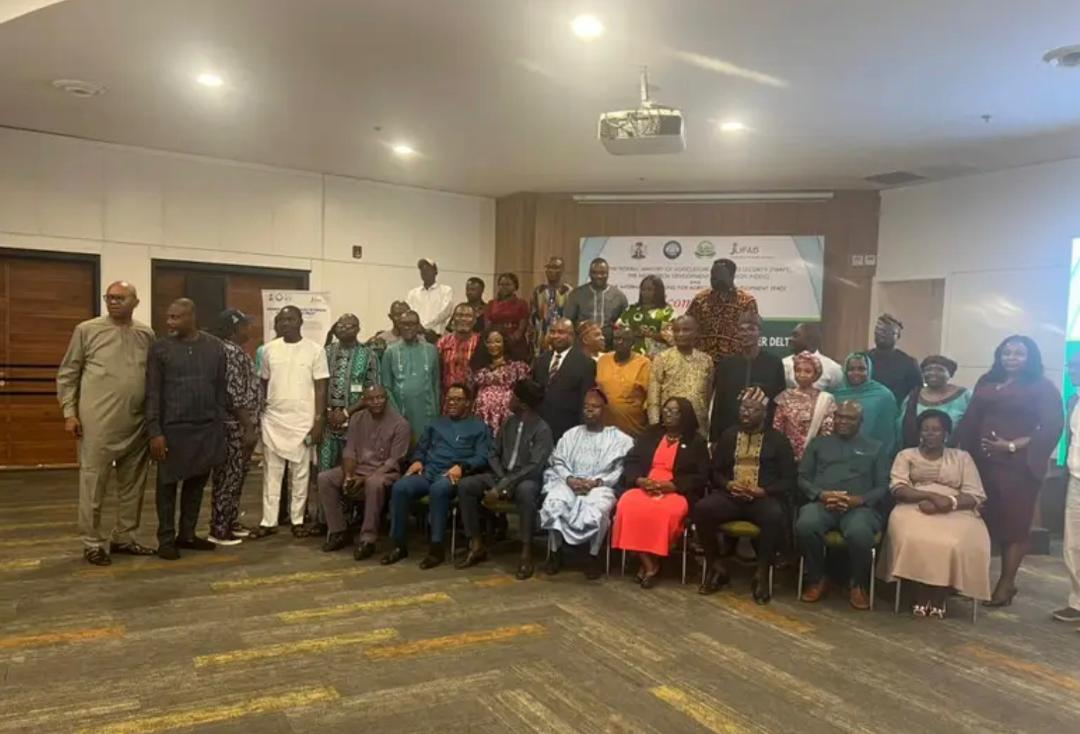
The developments were disclosed in Abuja as the Federal Government, the Niger Delta Development Commission (NDDC) and IFAD commenced the sixth Joint Supervision Mission of LIFE-ND, a month-long exercise aimed at reviewing implementation, addressing challenges and documenting lessons for a proposed second phase.
The additional financing, coupled with a three-year extension, has increased the project’s total budget from $97.8 million to $129.8 million, creating additional resources to expand livelihood opportunities for rural households, women and young agripreneurs across the region.
Launched in February 2019, LIFE-ND was designed to tackle persistent economic and livelihood challenges in Niger Delta communities, where many residents depend on agriculture but face limited access to finance, productive assets, markets, technology, skills and sustainable employment.
The project adopted an enterprise-incubator model, linking young people with established agribusinesses that provide practical training, mentorship and business guidance.
Under the programme, 900 mature enterprises are targeted to serve as incubators for 38,250 apprentices. Of these, 25,500 are expected to benefit across six IFAD-funded states, while another 12,750 are targeted in three states supported by the NDDC.
LIFE-ND said the intervention had recorded measurable improvements among participating households and enterprises.
According to the project, 74 per cent of participating households increased agricultural production, while 74 per cent of rural enterprises recorded higher profits. In addition, 82.8 per cent of participating households adopted improved agricultural technologies.
Technology has also become a major component of the intervention, with more than 18,000 beneficiaries receiving real-time weather information and 2,177 farmers reached through a pilot AI-powered digital agricultural advisory system.
Women account for 42 per cent of farmers reached through the AI pilot, compared with 58 per cent men.
The project has also recorded strong performance in nutrition and youth development. Participation in its nutrition interventions has reached 135 per cent of the original target, while 86 per cent of participating women achieved minimum dietary diversity, surpassing the initial 50 per cent target.
Similarly, the number of young people comprehensively trained in crop production has reached 181 per cent of the project target.
LIFE-ND also reported improved access to agricultural land among participating incubatees, helping young beneficiaries convert acquired skills into viable enterprises.
On financial management, the project said it had achieved 95 per cent disbursement of the original IFAD loan, supported by computerised accounting systems, compliance with audit requirements and adherence to approved work plans.
The fifth Supervision Mission, conducted late last year, rated the project “moderately satisfactory,” indicating substantial progress while identifying areas requiring further improvement.
Under the expanded financing arrangement, IFAD’s total contribution, including the original and additional financing, stands at $92 million. The NDDC is contributing $30 million, the Federal Government $3 million and state governments $4.8 million in counterpart funding.
The NDDC has also disbursed two consecutive tranches of its contribution, strengthening the financial base for continued implementation.
The ongoing sixth Joint Supervision Mission, running from September 1 to 30, is expected to assess project performance across participating states, identify implementation bottlenecks and determine which successful interventions should be strengthened and scaled up.
The mission team, led by IFAD Country Director and Representative in Nigeria, Dede Ekoue, comprises specialists in agribusiness, livestock, gender, youth development, financial management, procurement and information and communication technology for development.
The team is scheduled to undertake field activities in Asaba, Delta State, from September 2 to 8.
A key objective of the mission is to ensure that lessons and innovations generated under LIFE-ND are incorporated into the framework for a potential second phase.
The partners are expected to document best practices, address implementation bottlenecks and update the Procurement Risk Matrix and Integrated Project Risk Matrix.
At the conclusion of the exercise, an official Aide-Memoire, Mission Report and updated project performance indicators are expected to guide subsequent interventions.
The additional $32 million represents a significant boost to efforts to consolidate the gains recorded since LIFE-ND began in 2019, particularly in expanding opportunities for women and young people and strengthening rural agricultural value chains.
The partners now face the challenge of translating the project’s reported achievements into a larger and more sustainable rural transformation programme capable of creating commercially viable enterprises, improving household incomes, strengthening food security and building resilience across Niger Delta communities.
The outcome of the sixth supervision mission is expected to provide the operational roadmap for that next phase, with the project’s enterprise-incubator model and emerging digital and AI-powered advisory systems positioned as key innovations for possible expansion across the region.