Nigeria requires an estimated $337 billion between 2026 and 2035 to implement its climate commitments, prompting renewed calls for reforms to make international climate finance more accessible to developing countries.
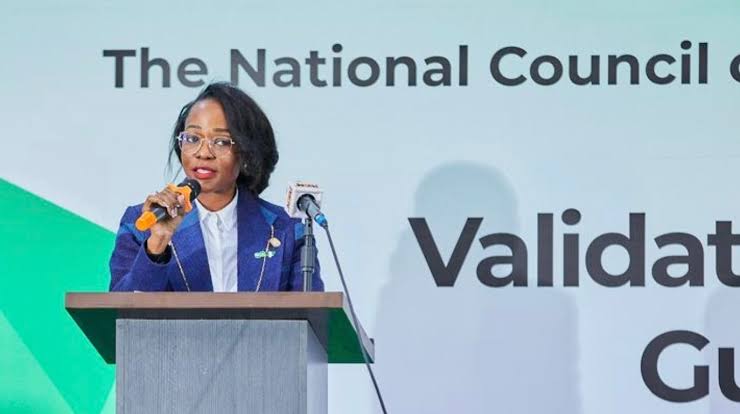
The funding challenge featured prominently at a climate finance engagement in Abuja, where representatives of five countries under the MIKTA partnership—Mexico, Indonesia, South Korea, Türkiye and Australia—joined Nigeria’s National Council on Climate Change (NCCC) to explore practical solutions for mobilising climate funds.
The discussions focused on improving access to climate finance, attracting private investment, promoting technology transfer, strengthening sustainable financing mechanisms and ensuring that international commitments translate into measurable results.
Representing the Director-General of the NCCC, Tenioye Majekodunmi, Jummai Vandu highlighted Nigeria’s substantial financing needs under its Nationally Determined Contribution 3.0 (NDC 3.0).
The $337 billion requirement covers investments needed for climate change mitigation and adaptation, resilience-building and the transition towards a lower-carbon economy.
Vandu’s presentation underscored the need to mobilise resources, strengthen institutional coordination and develop investment-ready projects capable of attracting domestic and international funding.
Türkiye’s Ambassador to Nigeria, Mehmet Poroy, emphasised the need to bridge the gap between climate commitments and projects capable of attracting financing.
He highlighted the proposed Climate Implementation Bridge, an approach designed to help countries translate climate plans into bankable projects and connect them with potential funding sources.
The initiative prioritises practical interventions in renewable energy, climate-resilient agriculture, green industrialisation, food security and the circular economy.
Poroy’s position reinforced the need for stronger partnerships among governments, development institutions, investors and technical organisations to move climate projects from planning to implementation.
Australia’s High Commissioner to Nigeria, Leilani Bin-Juda, called for reforms to simplify access to climate finance, particularly for developing countries and communities most vulnerable to climate change.
She highlighted an action plan developed through consultations involving vulnerable countries, development banks and multilateral climate funds to address barriers faced by small island developing states and least developed countries.
Launched at a pre-COP meeting in Fiji on October 8, the initiative seeks to address complicated application procedures, fragmented financing arrangements, demanding reporting requirements and lengthy approval processes.
Bin-Juda also identified debt pressures, limited fiscal space and high borrowing costs as factors constraining climate investments.
She called for wider international support for the initiative, including from Nigeria and other African countries, stressing the need for simpler funding procedures, stronger national capacity and greater mobilisation of private capital alongside public and grant financing.
Indonesia’s Ambassador to Nigeria, Bambang Suharto, highlighted the role of innovative financing instruments, including green sukuk and sustainable finance taxonomies, in directing investment towards environmentally beneficial projects.
Green sukuk can mobilise funds for eligible projects, while sustainable finance taxonomies establish criteria for identifying activities that qualify as environmentally sustainable.
Suharto stressed the importance of credible standards, transparent reporting and measurable outcomes to ensure that sustainable financing instruments deliver tangible environmental and economic benefits.
South Korea’s representative, Jeong Yo-an, emphasised technology transfer, knowledge-sharing and international cooperation as essential tools for translating climate commitments into practical results.
He highlighted the importance of partnerships that strengthen institutional capacity, provide technical expertise and support the deployment of clean energy and other climate solutions suited to countries’ development needs.
Mexico’s Chargé d’Affaires, José Manuel Briseño Flores, called attention to sustainable finance frameworks, including green, social and sustainability bonds, as mechanisms for directing investment towards climate action and development priorities.
He stressed the importance of clear standards, transparency and reliable reporting to attract investors and demonstrate the impact of funds raised for renewable energy, climate resilience and other sustainable development projects.
The interventions reflected a shared concern that the scale of climate action required globally continues to exceed the capacity of many developing countries to finance implementation.
For Nigeria, participants noted that securing the estimated $337 billion would require more than international funding pledges. It would also depend on stronger institutions, credible project pipelines, effective coordination and financing frameworks capable of attracting private capital.
The country must also ensure that climate investments support broader development priorities, including energy access, economic diversification, job creation and social inclusion.
As preparations for the 31st United Nations Climate Change Conference (COP31) gather momentum, the Abuja engagement highlighted the need for an international climate finance system that developing countries can access in practice.
For Nigeria, the outcome could have significant implications for its ability to meet climate targets, strengthen economic resilience, attract green investment and deliver tangible benefits to communities affected by climate change.