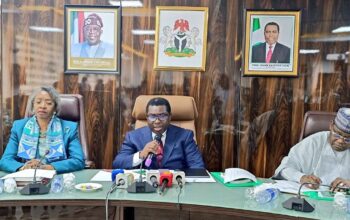
In a concerted effort to empower women-led businesses in Nigeria and other West African countries, Do Take Action Organisation (DO), a non-governmental organization (NGO), has joined hands with UN Women to set an ambitious target of empowering 2,500 such enterprises through Affirmative Procurement initiatives.
The collaborative endeavor stems from the launch of the Women Economic Empowerment through Affirmative Procurement (WEEAP) training program in the West Africa region in May 2023, initiated by both DO and UN Women. This pivotal project has been made possible through the support of key partners, including the African Development Bank, Women Entrepreneurs Finance Initiative, Lagos State Bureau of Procurement, and Kaduna State Bureau of Procurement.
The flagship program, launched initially in Nigeria, Mali, Senegal, and Côte d’Ivoire, aims to address the gender disparity in public procurement by bolstering access to opportunities for women-owned businesses and fostering a more inclusive economic environment.
A recent statement highlighted the stark reality that, despite women leading a significant portion of Micro, Small, and Medium Enterprises (MSMEs) in West Africa, they receive only a minimal fraction of procurement contracts. This gender gap persists despite women entrepreneurs contributing substantially to regional economies, representing approximately 41% of MSMEs and accounting for an average of 20% of GDP across the region.
Public procurement, which constitutes a significant portion of GDP in both OECD countries and sub-Saharan Africa, remains skewed against women-led businesses. In Nigeria alone, women’s businesses capture merely 1% of federal and state-level procurement contracts, despite the country’s substantial annual expenditure of $1.1 billion.
Citing statistics from the Nigerian Association of Chambers of Commerce, Industry, Mines, and Agriculture (NACCIMA) 2021 report, the statement emphasized that only a fraction of this expenditure, N4.73 million, reaches women-owned businesses. Such disparities not only impede women’s economic growth but also curtail the overall economic potential of the region.
Precious Ebere, CEO of DO, underscored the significance of the WEEAP program in advancing gender equality in West Africa. She emphasized that by equipping women-led businesses with the necessary tools and resources to compete for public contracts, the initiative aims to unlock the region’s full economic potential.
The statement outlined UN Women’s comprehensive approach to addressing this challenge, which includes advocating for gender-responsive procurement policies, enhancing institutional capacity, providing capacity-building support to women-owned businesses, and promoting gender-responsive supply chains.
Dr. Chukwuemeka Onyimadu, Programme Specialist for Women Economic Empowerment at UN Women, hailed the collaborative effort as a powerful example of how public-private partnerships can drive positive change. He emphasized that by working together, a future where women entrepreneurs thrive and contribute fully to the economic development of West Africa can be realized.
Moreover, the joint initiative aligns with the African Union’s Agenda 2063, which prioritizes creating an enabling legal and policy environment for women’s economic empowerment. Additionally, it contributes to UN Women’s strategic plan and Sustainable Development Goal 5: Gender Equality.
Through this collaborative endeavor, DO and UN Women aim to not only bridge the gender gap in procurement but also pave the way for a more equitable and prosperous future for women-led businesses across West Africa.