The National Human Rights Commission (NHRC) has cautioned media organisations and journalists against spreading misinformation, disinformation, hate speech and politically motivated narratives ahead of the 2027 general elections, warning that irresponsible reporting could undermine national peace, public safety and democratic stability.
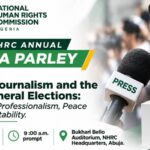
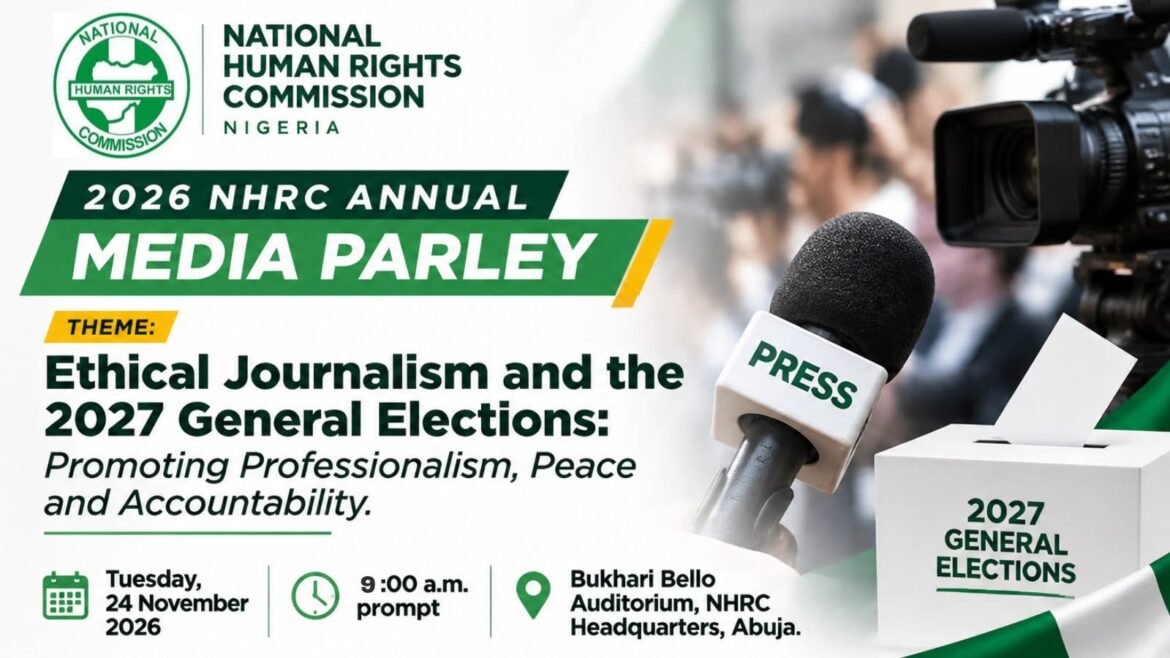
The Executive Secretary of the Commission, Chief Tony Ojukwu, gave the warning at the 2026 NHRC Annual Media Parley, themed, “Ethical Journalism and the 2027 General Elections: Promoting Professionalism, Peace and Accountability.”
Ojukwu said the media played a critical role in informing voters, holding political actors accountable, shaping public opinion and promoting democratic participation, stressing that journalists must uphold accuracy, fairness, verification, balance and respect for human dignity in their coverage of the electoral process.
He noted that elections went beyond political contests and the transfer of power, as they involved fundamental human rights, including freedom of expression, access to information, peaceful assembly, political participation and the right of citizens to freely choose their leaders.
According to him, the distinction between responsible and irresponsible journalism could have far-reaching implications for national cohesion and the protection of citizens’ rights.
“Our message is simple: the media must not become a vehicle for electoral division; it must remain an instrument for democratic accountability, peaceful participation and national cohesion,” he said.
The NHRC boss acknowledged that freedom of expression was fundamental to democracy but urged journalists to exercise the right responsibly, particularly amid growing digital manipulation and politically driven narratives capable of eroding public confidence in democratic institutions.
He, however, emphasised that the responsibility for ensuring a healthy media environment did not rest on journalists alone, insisting that media practitioners must be protected against intimidation, harassment and unlawful interference.
Ojukwu reaffirmed the Commission’s commitment to safeguarding journalists’ rights and promoting an environment that supports independent, free and responsible media practice.
He explained that protecting journalists also meant protecting citizens’ right to information and preserving the democratic space.
He urged media practitioners to strengthen human rights-focused reporting ahead of the 2027 elections, particularly on voter intimidation, political violence, discrimination, attacks on journalists and restrictions on civic participation.
He also called for greater attention to violations affecting women, children, persons with disabilities and other vulnerable groups.
Addressing the security challenges associated with election coverage, Ojukwu said the safety of journalists, particularly those reporting from volatile environments, must remain a priority.
He disclosed that the NHRC, in collaboration with Konrad Adenauer Stiftung, would launch a Safety Handbook for Journalists and Media Practitioners on November 26.
The handbook, he said, would provide practical guidance to help journalists identify, manage and navigate security risks associated with field reporting, especially during elections.
Ojukwu explained that the initiative was designed to equip media practitioners with the necessary knowledge and guidance to protect themselves while discharging their professional responsibilities.
He commended journalists and media organisations for their continued coverage of the Commission’s activities, particularly their contributions to amplifying the voices of victims of human rights violations and bringing critical human rights issues to national attention.
Describing the annual media parley as an important platform for strengthening institutional collaboration, he said the engagement provided an opportunity for the NHRC and the media to reflect on their shared responsibilities in promoting justice, accountability, human rights and democratic values.
He expressed optimism that the discussions would deepen cooperation between the Commission and media practitioners and strengthen collective efforts towards peaceful, credible and accountable elections in 2027.
The event also featured the Director of the United Nations Information Centre (UNIC), Nigeria, Ronald Kayanja, as keynote speaker, alongside journalists, civil society representatives and officials of the Commission.