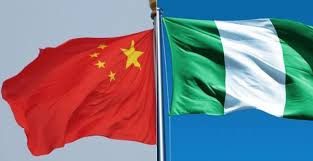
Nigeria and China are seeking to deepen their 55-year diplomatic relationship, with renewed emphasis on science, technology, agriculture, cultural exchange and trade as drivers of economic transformation and shared prosperity.
The emerging direction of the bilateral partnership was highlighted in Abuja on Saturday at the “Seasonal Life & Harmonious China” Cultural Exhibition held at the China Cultural Center.
The event, organised under the China-Africa Year of People-to-People Exchanges, also marked the 55th anniversary of China-Nigeria diplomatic relations and provided a platform for both countries to highlight expanding areas of cooperation.
Speaking at the exhibition, Permanent Secretary, Federal Ministry of Innovation, Science and Technology, Dr. Mukhtar Yawale Muhammad, described the new phase of the relationship as a “season of unprecedented opportunity,” stressing that Nigeria-China cooperation was moving beyond conventional trade into agriculture, science and technological innovation.
Muhammad said China’s development experience, particularly its use of science and technology to address poverty, agricultural challenges, infrastructure deficits and environmental degradation, offered valuable lessons for Nigeria.
He cited a recent technical visit to China, particularly the Yangling High-tech Agricultural Demonstration Zone in Shaanxi Province, which he described as an “eye-opener.”
According to him, the Nigerian delegation observed advanced irrigation and soil-monitoring technologies aimed at increasing agricultural productivity while reducing water consumption. He said China’s experience in tackling land degradation in the Loess Plateau could provide useful lessons for Northern Nigeria and the Lake Chad region, where desertification, water scarcity and declining agricultural productivity remain major challenges.
The Permanent Secretary also pointed to the opportunity presented by China’s zero-tariff policy for products from 53 African countries, saying Nigerian commodities such as sesame, ginger, cashew nuts and cocoa could gain improved access to the Chinese market.
He, however, cautioned that tariff-free access alone would not guarantee success, as Nigerian producers would have to meet international standards for quality, packaging, processing and supply-chain reliability.
“The policy does not just facilitate exports; it forces us to level up,” Muhammad said.
He disclosed that the Federal Ministry of Innovation, Science and Technology was pursuing stronger collaboration with Chinese research institutions, universities and industries to develop technologies capable of strengthening Nigeria’s agricultural value chains and reducing dependence on raw commodity exports.
Potential areas of cooperation include affordable solar-powered cold-storage facilities to reduce post-harvest losses, as well as technologies for processing cassava, shea butter and cashew nuts into value-added products for Chinese and global markets.
Muhammad said the objective was to enable Nigeria to process more of its agricultural resources locally, create jobs, increase export earnings and retain a greater share of the value generated from its natural resources.
The proposed collaboration also covers human-capital development, with plans to expand scientific exchanges and training opportunities for Nigerian researchers in Chinese universities, particularly in sustainable agriculture, water management, soil conservation and other STEM disciplines.
Muhammad stressed that stronger links among government ministries, universities, research institutions and industries would be critical to converting scientific knowledge into commercially viable solutions.
On the cultural front, Chinese officials said people-to-people exchanges would remain central to strengthening mutual understanding and trust between the two countries.
The exhibition featured the Twenty-Four Solar Terms, traditional Chinese delicacies, intangible cultural heritage crafts and interactive activities. The solar-term tradition, rooted in centuries of observation of nature and seasonal changes, reflects principles of harmony with nature, conservation and sustainable living.
Cultural Counselor of the Chinese Embassy in Nigeria, Yang Jianxing, said the Embassy and China Cultural Center would continue to serve as bridges between the Nigerian and Chinese peoples through cultural exhibitions, artistic performances, language programmes, youth exchanges and tourism activities.
He stressed that sustained cultural engagement was essential to building the trust and mutual understanding required for long-term bilateral cooperation.
Over the past five and a half decades, Nigeria-China relations have expanded from diplomatic engagement into infrastructure, trade, investment, education, telecommunications, agriculture, manufacturing, tourism and cultural exchange.
The renewed focus on science, technology and agricultural innovation represents an effort to take the relationship into a more development-oriented phase, with potential benefits for Nigerian farmers, researchers, young people, entrepreneurs and businesses.
For Nigeria, however, the opportunity will depend on stronger domestic investment in production capacity, quality assurance, infrastructure, research and development and private-sector competitiveness.
As both countries look beyond 55 years of diplomatic relations, the emerging challenge is to translate goodwill, technology partnerships and market access into measurable economic and social gains for Nigerians.
If successfully harnessed, the next phase of Nigeria-China relations could be defined not merely by what the two countries exchange, but by what they jointly create.