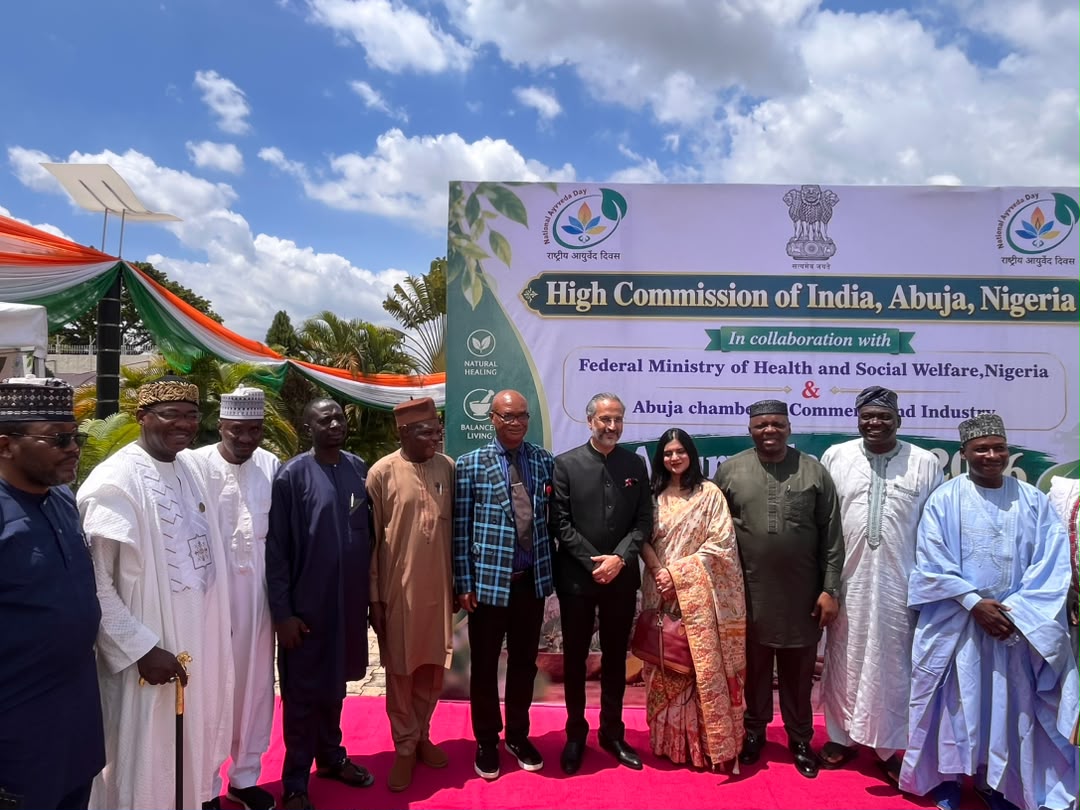
Nigeria and India have renewed calls for stronger cooperation in traditional and complementary medicine, with both countries emphasising scientific research, innovation, regulation and evidence-based healthcare.
The call was made on Wednesday in Abuja at the 11th Ayurveda Day celebration organised by the High Commission of India in collaboration with Nigeria’s Federal Ministry of Health and Social Welfare.
The 2026 celebration, themed “Ayurveda for a Healthier Tomorrow,” was held under the tagline, “One Health, One Future: Integrating Ayurveda through Science, Evidence, Innovation and Holistic Care.”
India’s High Commissioner to Nigeria, Ambassador Abhishek Singh, described Ayurveda as more than a 5,000-year-old Indian tradition, saying it forms part of India’s broader vision for promoting global wellness.
According to Singh, Ayurveda emphasises balance of the body and mind, healthy lifestyles, nutrition and harmony with nature, while India is seeking to position the traditional system as a potential contributor to modern healthcare through research and innovation.
“For us, Ayurveda Day is much more than merely a celebration of India’s 5,000-year-old heritage. It is a vision for global wellness,” he said.
The envoy noted that India and Nigeria share a strong respect for traditional knowledge and indigenous healthcare practices, describing the common heritage as a platform for deeper cooperation in preventive healthcare, nutrition, research and holistic wellbeing.
“Why Ayurveda and why Nigeria? India and Nigeria share a deep respect for traditional knowledge. Nigeria has a rich tradition of herbal medicine and traditional healing,” he said.
Singh disclosed that India provides scholarships, training and capacity-building opportunities for Nigerian practitioners and researchers at institutions including the All India Institute of Ayurveda in New Delhi and the National Institute of Ayurveda in Jaipur.
He added that between 30 and 40 fully funded Indian Council for Cultural Relations scholarships are offered annually to Nigerian students for undergraduate, postgraduate and doctoral programmes.
The High Commissioner also called for accelerated progress on the proposed health cooperation framework between Nigeria and India, saying stronger institutional links would further consolidate bilateral collaboration.
He said the Ayurveda Day programme was conceived as a “people’s movement” designed to showcase Ayurveda through exhibitions of herbs and medicinal plants, yoga, wellness practices and demonstrations of Ayurvedic therapies.
Singh further said India was prepared to facilitate engagement between Indian Ayurvedic pharmaceutical companies that comply with World Health Organisation Good Manufacturing Practice standards and Nigerian regulatory authorities, including the National Agency for Food and Drug Administration and Control.
“This will ensure that quality and affordable traditional medicine products reach those who need them,” he said.
He identified integrative healthcare, evidence-based research and innovation, and community wellbeing and sustainable living as the three major pillars of the 2026 campaign.
Singh urged Nigeria and India to move beyond cultural appreciation of traditional medicine and strengthen scientific research and innovation aimed at determining its appropriate role in contemporary healthcare.
Also speaking, the Director of Traditional, Complementary and Alternative Medicine in the Federal Ministry of Health and Social Welfare, Dr Kingsley Nnelue, said Nigeria was open to deeper engagement with India on traditional and complementary healthcare.
Nnelue, who represented the Minister of State for Health, commended the Indian government and its High Commission for sustaining healthcare cooperation with Nigeria.
He described Ayurveda as a longstanding health system centred on prevention, healthy living, balance and holistic wellbeing, noting that Nigeria similarly possesses extensive indigenous health knowledge.
“Nigeria, like India, has a rich heritage of traditional health practices and indigenous knowledge,” he said.
Nnelue, however, stressed that collaboration in traditional medicine must be supported by patient safety, quality assurance, scientific evaluation, professional standards and effective regulation.
He said Nigeria could benefit from increased knowledge exchange with India in healthcare delivery, capacity building, research, innovation, pharmaceutical development and traditional health practices.
“We are very much interested in the commercialisation of medical products. We need to continue to share our research,” he said.
He added that Nigeria expected India to share its experience and expertise as both countries seek to strengthen cooperation in traditional and complementary medicine.
The Director-General of the Nigerian Natural Medicine Development Agency, Prof. Martins Emeje, who delivered a special lecture on health awareness, stressed the importance of preventive healthcare, early detection and individual responsibility for maintaining good health.
Emeje said health should be viewed beyond the absence of disease to encompass physical, mental, emotional and social wellbeing.
He urged Nigerians to pay greater attention to lifestyle, nutrition, the environment and mental wellbeing, noting that preventive measures could reduce complications associated with illness.
The NNMDA chief also advocated greater attention to environmental and ecosystem-based approaches to health, including access to green spaces, nature walks, outdoor activities and healthy living environments.
He said traditional medicine should continue to undergo rigorous research and scientific evaluation while drawing appropriately from nature and indigenous knowledge.
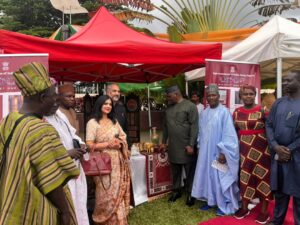
The Ayurveda Day celebration featured health awareness activities, exhibitions of herbs and medicinal plants, yoga sessions and demonstrations of Ayurvedic therapies.
The event further underscored the potential for Nigeria and India to expand bilateral cooperation in traditional medicine, scientific research, pharmaceutical development, professional training and healthcare innovation.