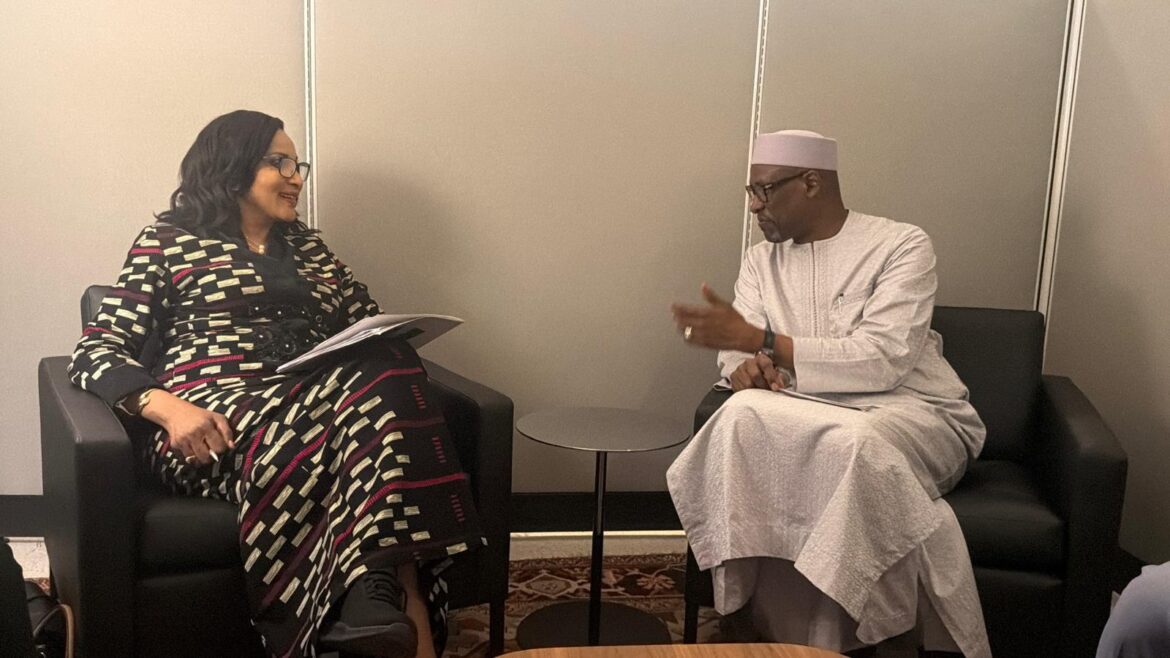
Nigeria and Mali have renewed high-level diplomatic engagement, with security challenges in the Sahel and broader regional cooperation featuring prominently in talks between their foreign ministers on the sidelines of the 81st United Nations General Assembly in New York.
Nigeria’s Minister of Foreign Affairs, Ambassador Bianca Odumegwu-Ojukwu, met with her Malian counterpart, Abdoulaye Diop, on September 22, 2026, as both sides explored ways to strengthen bilateral relations and address shared regional concerns. Mali’s government confirmed that the discussions covered bilateral cooperation as well as current sub-regional and regional dynamics.
The engagement comes against the backdrop of significant political and security changes in West Africa, including Mali’s withdrawal from the Economic Community of West African States (ECOWAS), alongside Burkina Faso and Niger, and the emergence of the Alliance of Sahel States (AES).
The discussions underscored the importance of maintaining dialogue between Abuja and Bamako despite the changing regional political architecture. Nigeria has consistently stressed the need for greater cooperation with Sahelian countries in confronting terrorism and banditry.
Earlier in July, Nigeria and Mali agreed to revitalise their Joint Commission, with security, trade, energy, irregular migration, human trafficking and the Bilateral Air Services Agreement (BASA) identified as priority areas for cooperation. Nigeria’s Foreign Ministry said the mechanism would help reactivate dormant bilateral agreements and broaden relations between the two countries.
Security remains a particularly important component of the renewed engagement, given the cross-border nature of terrorism, organised crime, trafficking and other threats affecting the Sahel and West Africa.
For Nigeria, sustained engagement with Mali also provides a channel for direct diplomatic consultations at a time when regional cooperation mechanisms are undergoing significant changes.
The UNGA meeting therefore forms part of a broader effort by Abuja and Bamako to maintain bilateral communication while exploring cooperation in security, economic relations, mobility and other areas of mutual interest.
The engagement also aligns with Nigeria’s wider participation in UNGA81, where Abuja has highlighted multilateral cooperation and regional peace and security as key elements of its foreign-policy priorities.
The renewed Nigeria-Mali dialogue places bilateral relations within the wider effort to sustain regional cooperation and coordinate responses to security and development challenges that transcend national borders.