The Federal Government has called for stronger public-private partnerships and increased private-sector investment to bridge Nigeria’s climate adaptation financing gap, warning that government alone cannot provide the level of resilience needed to protect communities, infrastructure and the economy from worsening climate impacts.
Minister of Environment, Balarabe Lawal, made the call in Abuja at the weekend during a stakeholders’ engagement on the socialisation of Nigeria’s National Adaptation Plan (NAP) for development partners and the private sector.
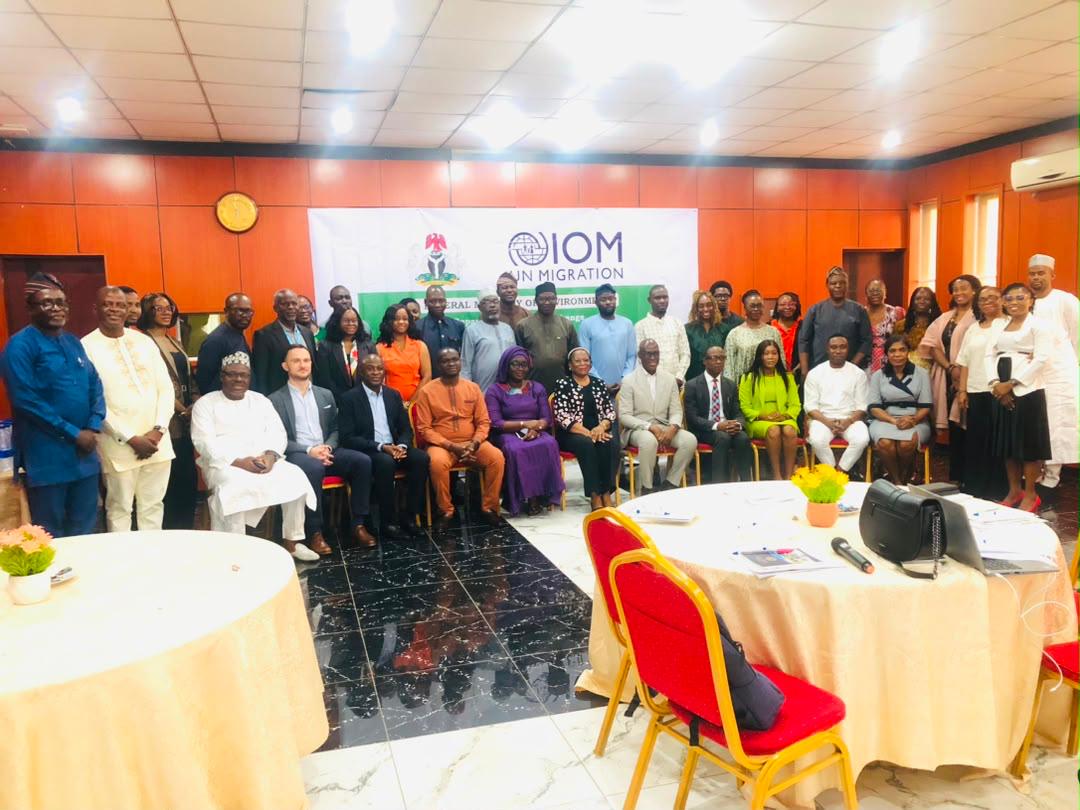
The engagement, themed “Mobilising Partnerships and Investments for Climate-Resilient Development through Nigeria’s National Adaptation Plan,” brought together representatives of government, the private sector, financial institutions, academia, civil society and development organisations.
Represented by the Permanent Secretary of the ministry, Dr. Salihu Usman, Lawal said Nigeria remained committed to global climate action while pursuing its national development priorities.
He said the Federal Government had established strategic frameworks and initiatives, including the Climate Change Act, Nationally Determined Contribution (NDC 3.0), National Adaptation Plan, Energy Transition Plan, National Clean Cooking Policy and National Carbon Market Activation Framework, to accelerate the transition towards a climate-resilient, low-carbon economy.
According to him, the NAP represents a major milestone in Nigeria’s climate action efforts, providing a framework for identifying climate risks, reducing vulnerabilities, strengthening resilience and integrating adaptation measures into national, sectoral and subnational development planning.
The minister said the plan prioritises critical sectors including agriculture, water resources, health, infrastructure, energy, biodiversity, forestry, disaster risk management and human settlements.
He, however, stressed that the scale of the adaptation challenge required significantly more than government intervention, making innovative financing, technology transfer, institutional strengthening and sustained investment essential.

“Adaptation requires us to mainstream climate risk into every aspect of development planning and decision-making,” Lawal said.
The minister acknowledged the contribution of development partners to Nigeria’s climate agenda, noting that their support had strengthened institutions, built technical capacity, improved climate data and information systems, facilitated access to international climate finance and supported adaptation initiatives across the country.
He also assured private investors of the government’s commitment to creating an enabling environment for climate-related investment through policy reforms, institutional coordination and partnerships designed to reduce investment risks and promote innovation.
Lawal said the stakeholder engagement was intended to deepen understanding of the NAP, identify investment and partnership opportunities and mobilise the resources required to move from planning to implementation.
He urged stakeholders to develop practical and bankable adaptation programmes, strengthen institutional collaboration and establish partnerships capable of delivering measurable outcomes.
“Together, let us build a future where every investment strengthens resilience, every partnership accelerates progress, and every Nigerian has the opportunity to thrive despite the challenges of a changing climate,” he said.
Also speaking, Permanent Secretary Usman, represented at the event by the Director of Climate Change, Dr. Iniagbon Abiola-Awe, said successful implementation of the NAP could not be achieved through government efforts alone.
He called for broad-based partnerships involving government institutions, development partners, private companies, financial institutions, research organisations, civil society groups and local communities.
Usman said development partners had consistently supported Nigeria through institutional capacity building, improved climate governance, technical expertise and climate financing, adding that the ministry was ready to deepen such collaboration.
He particularly identified the private sector as critical to driving innovation, mobilising capital, developing climate-resilient technologies, strengthening resilient value chains, expanding climate insurance, financing resilient infrastructure and supporting nature-based solutions.
“Adaptation is no longer solely a public policy issue; it is increasingly a business imperative and an investment opportunity that can deliver economic, social and environmental returns,” he said.
In her welcome address, Abiola-Awe said the engagement was designed to improve stakeholders’ understanding of the NAP, showcase its strategic priorities and investment opportunities, and promote dialogue on accelerating implementation.
She said the workshop would also strengthen coordination, identify areas for collaboration and mobilise resources needed to improve the resilience of Nigerians, ecosystems and the national economy.
The Chief of Mission of the International Organisation for Migration (IOM), Sharon Dimanche, reaffirmed the organisation’s commitment to supporting Nigeria’s implementation of the NAP.
Represented by Hajara Jalo, Dimanche said the engagement offered an important platform for strengthening collaboration, identifying opportunities and developing partnerships capable of translating the NAP’s objectives into tangible and lasting benefits for communities.
Participants were drawn from the public and private sectors, financial institutions, academia, civil society organisations and development partners, including the IOM, World Health Organisation (WHO) and United Nations Industrial Development Organisation (UNIDO).