Nigeria has received counsel to seize the opportunity presented by the Debt-for-Climate Swaps financing mechanism to extricate itself from its current financial predicament. Embracing this system could potentially generate over $3.7 billion annually for the next six years.
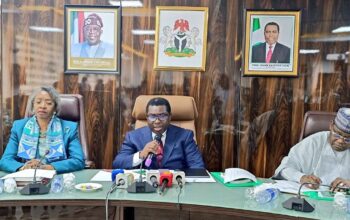
Speaking at a report dissemination event in Abuja with the theme “Towards Reconciling Economic and Debt Management Policies with Gender and Climate Objectives in Nigeria,” Professor Joseph Nnanna, the Chief Economist at the Development Bank of Nigeria, Plc, expressed concern over Nigeria’s current challenges, which include both climate change and a mounting debt burden.
Nnanna pointed out that Nigeria is not alone in facing these challenges, citing the adverse effects of climate change such as rising temperatures, sea-level rise, and extreme weather events. He emphasized the urgency of addressing climate change, especially given the shrinking Lake Chad, which poses threats to food and water security and broader socio-economic development.
Nnanna highlighted the alarming increase in Nigeria’s public debt, exacerbated by the COVID-19 pandemic. To ensure economic growth and stability, he stressed the need to reduce dependence on fossil fuels and promote green-oriented industries. The proposed solution, he explained, lies in Debt-for-Climate Swaps, an innovative financing mechanism that involves exchanging debt service payments for investments in climate change mitigation and adaptation programs. This approach, he argued, would allow Nigeria to combat climate change while alleviating its debt burden.
Nnanna pointed to research findings indicating that Nigeria’s vulnerability to climate change and debt distress makes this approach compelling. If fully implemented, it could free up significant resources, amounting to over $3.7 billion annually for the next six years. These funds could be directed toward achieving the Nationally Determined Contributions (NDC) and supporting green initiatives, including sustainable public transportation.
He further explained that while the concept of debt swaps is not new, its application in the context of climate and development is innovative. Through strategic debt-for-development swaps, Nigeria could unlock up to US$11 billion currently tied up in debt obligations, redirecting these funds toward climate-smart projects and sustainable development initiatives. This could include investments in renewable energy projects, climate-resilient infrastructure, and community support for adapting to environmental changes.
Nnanna also raised the issue of carbon pricing, noting its effectiveness in facilitating a low-carbon transition and raising revenue for climate-smart investments. He lamented the absence of an explicit carbon tax policy for greenhouse gas reduction in Nigeria and called for the development of such a policy to reduce carbon emissions by up to 2.4 million tonnes annually and generate substantial revenue for critical sectors like infrastructure, education, and healthcare.
In his welcome address, Dr. Chukwuka Onyekwena, Executive Director of the Centre for the Study of the Economies of Africa (CSEA), highlighted the rising debt trend in Nigeria as a cause for concern. He emphasized that this trend has limited the country’s capacity to foster growth, respond to crises, and invest in development.
Dr. Onyekwena explained that the dissemination event, titled “Towards Reconciling Economic and Debt Management Policies with Gender and Climate Objectives in Nigeria,” was the result of months of dedicated research. It was organized by CSEA in collaboration with the Brookings Africa Growth Initiative and funded by the International Development Research Centre (IDRC). He underscored the transformative power of knowledge, the importance of collaboration, and the responsibility to translate research findings into actionable policies.