The Nigerian Meteorological Agency (NiMet) has unveiled its 2026 Seasonal Climate Prediction (SCP), projecting variable rainfall patterns, prolonged dry spells, a severe August Break in parts of the country, and generally warmer temperatures nationwide.
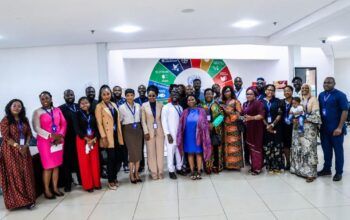
The forecast was presented at a high-level stakeholder engagement held at the NAF Conference Centre in Abuja, drawing government officials, policymakers, farmers, aviation operators, disaster managers, development partners, private sector representatives and members of the media.
Speaking at the event, the Minister of Aviation and Aerospace Development, Festus Keyamo, SAN, CON, described the Seasonal Climate Prediction as a critical national planning instrument that translates climate science into actionable guidance across key sectors of the economy.
He noted that climate variability and change continue to impact aviation safety, food security, infrastructure development and national planning, stressing that timely and accurate weather information is indispensable for sustainable development. The minister reaffirmed the Federal Government’s commitment to strengthening NiMet as a centre of excellence in meteorological and climate services.
Keyamo highlighted Nigeria’s over 140 years of meteorological observation, commending NiMet’s sustained contributions to aviation, agriculture, disaster risk reduction, water resources management, health, energy and transportation.
Presenting key highlights of the 2026 outlook, the minister cautioned against interpreting early rains already recorded in parts of southern Nigeria as the official onset of the rainy season. He advised farmers and other rainfall-dependent users to rely strictly on NiMet’s scientifically determined onset dates.
According to the forecast, early rainfall onset is expected in Bayelsa, Rivers, Akwa Ibom, Cross River, Benue, Kogi, Nasarawa, Oyo, and parts of Kebbi, Niger, Jigawa, Katsina, Kano, Adamawa and Taraba states. Conversely, Borno State is projected to experience a late onset.
Rainfall cessation is predicted to occur earlier than normal in parts of Ogun, Osun, Ondo, Imo, Rivers, Akwa Ibom, Kogi and Niger states. A delayed end of season is expected in Lagos, Ogun, Anambra, Enugu, Cross River, Benue, Nasarawa and Kaduna states.
NiMet projects a longer-than-normal rainy season in Lagos, Benue, Enugu, Ebonyi, Ogun, Oyo, Nasarawa, Anambra, Kwara, Kebbi, Kaduna, Gombe and Taraba states. However, parts of Borno, Yobe and Niger states may witness a shorter-than-normal season.
The agency forecasts normal annual rainfall totals across most of the country. Above-normal rainfall is expected in Borno, Sokoto, Kebbi, Kaduna, Enugu, Cross River, Abia, Ebonyi, Akwa Ibom and the Federal Capital Territory, while below-normal rainfall is anticipated in parts of Katsina, Zamfara, Kwara, Oyo and Ogun states.
The outlook also warns of severe dry spells exceeding 15 days between March and May in parts of Oyo and Ogun states. Dry spells of up to 21 days are projected between June and August across several northern and central states. The Little Dry Season, commonly known as the August Break, is expected to commence in late July and may be severe and prolonged over Lagos, Ogun, Ekiti and parts of Oyo states.
Additionally, both daytime and nighttime temperatures are forecast to be warmer than the long-term average across most parts of the country in January, February, March and May 2026.
In his remarks, NiMet’s Director-General and Chief Executive Officer, Prof. Charles Anosike, reaffirmed the agency’s commitment to delivering authoritative, science-based climate information to support national planning in the context of a changing climate.
He disclosed that NiMet is integrating emerging technologies, including Artificial Intelligence, into its forecasting operations to enhance predictive accuracy and service delivery. Anosike also called for stronger collaboration with state governments and relevant stakeholders to further downscale the Seasonal Climate Prediction to farmers and local communities.
The unveiling of the 2026 SCP reinforces Nigeria’s commitment to science-driven planning, climate resilience and sustainable development, while consolidating NiMet’s role as the country’s primary provider of weather and climate services.