The Northern Christian Youth Professionals (NCYP) have expressed opposition to the confirmation and inauguration of the North West Development Commission’s newly appointed board, deeming it unrepresentative of the region’s religious diversity.
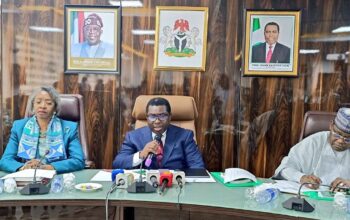
Speaking at a press conference on Tuesday, NCYP Chairman Isaac Abrak urged President Bola Ahmed Tinubu to reconsider the board’s composition, citing the absence of Christian representation despite the estimated 11 million Christians in the North West, which includes Kaduna, Katsina, Sokoto, Kebbi, Kano, Jigawa, and Zamfara States.
“If the Senate confirms and the President inaugurates the current list,” Abrak warned, “it would set a precedent of religious imbalance in a region striving for unity and stability.”
Abrak outlined the current board, chaired by Haruna Ginsau of Jigawa, with members predominantly from a single religious background, including Professor Abdullahi Shehu Ma’aji (Kano), Dr. Yahaya Namahe (Sokoto), Aminu Suleiman (Kebbi), and others, representing all seven states of the North West. He emphasized the perceived imbalance, noting that Kano and Jigawa, both of which hold two board positions, have large indigenous Christian populations, yet neither slot was allocated to a Christian representative.
“This omission denies almost half the population fair representation, particularly in states like Kaduna, where census data has recorded Christians as a significant proportion of residents,” Abrak stated.
Abrak expressed concerns that the lack of Christian representation could affect future decision-making processes, particularly in resource allocation to Christian-majority communities that have faced violence and displacement. He argued that an inclusive board would help ensure fair distribution of resources and promote trust in the commission’s mission. “Without representation, the interests of these communities may be neglected when key interventions and development activities are planned,” he said.
The NCYP underscored that qualified Christian professionals from diverse sectors are readily available to serve, advocating for one Christian member to be appointed to an executive role within the board.
“Our recommendation,” Abrak stressed, “is rooted not in division, but in a commitment to equal representation—a principle essential to our region’s peace and progress. We seek to support President Tinubu’s administration, which we campaigned for in good faith, and believe this adjustment would reinforce his commitment to inclusivity.”
Concluding, Abrak praised the administration’s strides toward stability in the North West, attributing recent gains to inclusive leadership. He affirmed that fair representation in the commission would further these gains, fostering unity and long-term development across the region.