Former Archbishop of the Abuja Catholic Diocese, Cardinal John Onaiyekan, has urged President Bola Tinubu to prioritise equipping and motivating the nation’s existing security personnel rather than proceeding with plans to recruit an additional 20,000 police officers.
Speaking at the 9th International Conference on Love and Tolerance in Abuja, Onaiyekan warned that Nigeria cannot afford delays in confronting its security challenges, stressing that strengthening the capacity of the current police force would yield faster and more effective results.
“Right now in Nigeria, we have to build bridges so that all of us, Christians and Muslims, can jointly face our common enemy—those who are killing us,” he said. “With all these wonderful soldiers and police, we should be able to deal with them. I’m not even sure we need 20,000 more policemen. Arm them well, treat them well, and they will do their job.”
The cleric questioned the practicality of mass recruitment during a national emergency, arguing that training and deployment of 20,000 new officers could take up to a year. “In one month, this country can be destroyed,” he cautioned, adding that existing officers—now withdrawn from private assignments—should be redeployed to frontline duties.
Onaiyekan also called for strong political will to flush terrorists out of forest enclaves, describing policing as the primary security responsibility: “What do you have police for? That’s their job. It’s not even the job of the army.”
In a broader reflection on religious harmony, he lamented growing internal divisions in Nigeria despite global efforts toward unity, referencing the historic “Abu Dhabi document” co-signed by Pope Francis and the Grand Imam of Al-Azhar.
Former Kaduna Central Senator and human rights activist Shehu Sani also addressed the conference, identifying inequality, power struggles, race, and religion as root causes of intolerance. He warned of shrinking freedom of expression, noting that arrests and heightened social media surveillance threaten open dialogue.
“Differences are natural and unavoidable,” Sani said. “Peace and tolerance begin with recognizing and accepting human diversity.”
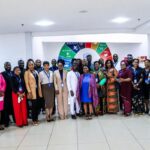
UFUK Dialogue Foundation President, Emrah Ilgen, whose organisation convened the gathering, said the conference was created to address rising global and domestic tensions. The theme, “Bridging Divides: Building Trust in a Polarized World,” he explained, underscores a world shaken by misinformation, fear, and identity-based conflicts.
“For more than a decade, we have committed to building bridges between communities,” Ilgen said. “Humanity is strongest when it chooses dialogue over suspicion, compassion over conflict, and understanding over prejudice.”
In his welcome address, Director General of the Institute for Peace and Conflict Resolution, Dr. Joseph Ochogwu—represented by Dr. Emmanuel Mamman—warned that Nigeria is grappling with deep mistrust and widening identity divides. He stressed that rebuilding trust requires fairness, dialogue, and inclusion of women and youths.
“Polarization is not destiny. Mistrust, though deep, remains reversible,” he said, noting that religious and traditional institutions remain vital to restoring national cohesion.