The Pan African Alliance of Small and Medium Industries (PAOSMI) has identified high interest rates, expensive electricity, shortage of skilled manpower and fragmented industrial standards as major obstacles to industrialisation and the competitiveness of African businesses.
The alliance called for coordinated action by governments, industries, academia and the media to address the structural challenges confronting manufacturers and small businesses, warning that Africa’s industrial ambitions would remain unattainable without policies that promote local production and strengthen productive capacity.
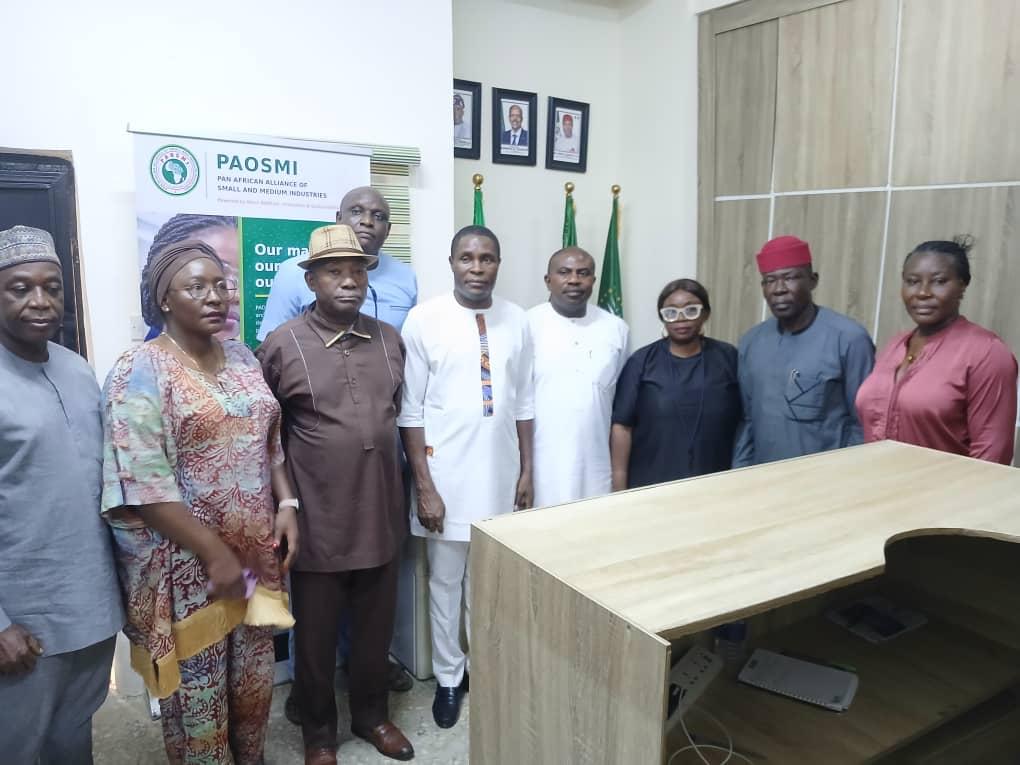
Director-General of PAOSMI, Dr Henry Emejuo, made the call on Thursday in Abuja when the executive members of the Association of West African Legislative Correspondents (AWALCO), led by its President, Comrade Innocent Odoh, paid him a courtesy visit.
Emejuo described PAOSMI as a continental organisation committed to supporting small and medium industries, emerging manufacturers and start-ups as critical drivers of economic transformation and industrial development across Africa.
He said the alliance operated as both a development institution and a membership-based organisation, implementing programmes to strengthen businesses and expand industrial capacity, with affiliate networks in 40 countries and about 84 affiliate networks, including ASURI in Nigeria.
He explained that PAOSMI’s industrial development strategy was based on collaboration among industry, academia and government, with the media playing a critical role in communicating policies, opportunities and challenges affecting the sector.
Under the framework, he said, universities and research institutions were expected to drive research and innovation, industries to translate research findings into commercially viable products, while governments provided policies and an enabling environment for businesses to thrive.
The PAOSMI chief stressed the need for African countries to align their industrial policies with regional and continental frameworks, particularly the African Continental Free Trade Area (AfCFTA), to facilitate cross-border trade, expand markets and enable businesses to scale up production.
He said inconsistent policies and regulatory frameworks across countries continued to frustrate businesses seeking to operate beyond their domestic markets, making policy harmonisation essential for the continent’s industrial advancement.
High borrowing costs, electricity burden
Emejuo identified high interest rates and the short-term nature of loans available to businesses as major impediments to industrial investment, noting that manufacturers required long-term financing to acquire equipment, establish factories and expand production.
He said borrowing costs across Africa remained significantly higher than in more industrialised economies, while the limited duration of available credit made it difficult for businesses to undertake capital-intensive projects.
He called for reforms in banking and lending practices to make financing more affordable and accessible to manufacturers, arguing that existing credit arrangements were not sufficiently geared towards supporting productive investments.
Emejuo also described expensive and unreliable electricity as a major threat to the competitiveness of African industries, particularly Nigerian manufacturers.
He said electricity costs in Nigeria, estimated at about 16 cents per kilowatt-hour, placed local manufacturers at a disadvantage compared with producers in countries where energy was cheaper and more reliable.
The unreliable power supply, he added, further increased operational expenses and made sustained production difficult.
He described the combination of high electricity costs and inadequate supply as a double burden on businesses, stressing that industrial growth depended on access to affordable and dependable energy.
Skills deficit, fragmented standards
The PAOSMI director-general expressed concern over the shortage of skilled technical manpower required to sustain industrial expansion, questioning the capacity of Nigeria’s educational and vocational training systems to adequately prepare graduates for the demands of modern industry.
He cited the deployment of foreign technical personnel in major industrial projects, including refinery operations, as an indication of the need to reassess the country’s skills development and technical education framework.
He called for stronger partnerships between educational institutions and industries to identify skills requirements, redesign training programmes and equip graduates with the competencies needed to operate modern industrial facilities.
Emejuo also advocated the harmonisation of product standards and certification requirements across African countries to ease the movement of locally manufactured goods and reduce the cost of doing business within the continent.
He said manufacturers should not be subjected to multiple registration and certification processes when seeking to sell their products in other African markets.
While acknowledging efforts by the African Organisation for Standardisation and national standards agencies towards harmonisation, he urged stakeholders to accelerate the process to eliminate regulatory bottlenecks confronting manufacturers and strengthen the implementation of the AfCFTA.
He further identified weak financial connectivity, difficulties in transferring funds across African countries, mobility restrictions and transportation challenges as additional obstacles to intra-African trade.
AWALCO seeks stronger partnership
Earlier, AWALCO President, Comrade Innocent Odoh, said the association was seeking to deepen its partnership with PAOSMI to strengthen media coverage of industrial development, trade, investment and manufacturing issues.
Odoh said an earlier engagement with the alliance had exposed members to its activities and generated discussions on how both organisations could establish a sustained relationship beyond occasional meetings.
He said AWALCO was interested in expanding coverage of PAOSMI’s programmes and creating opportunities for members to participate in interviews, conferences, seminars and workshops to deepen their understanding of industrial and economic development.
He assured the alliance of the association’s readiness to support its activities through sustained reportage and wider dissemination of information on initiatives affecting businesses and the economy.
Odoh added that closer engagement would enable journalists to better understand the challenges confronting manufacturers and provide more informed coverage of policies and programmes aimed at strengthening the industrial sector.
Emejuo welcomed the proposed partnership, saying stronger media engagement would help bring the challenges facing African industries to the attention of policymakers, governments and regional institutions while promoting advocacy and practical solutions to advance industrial development.