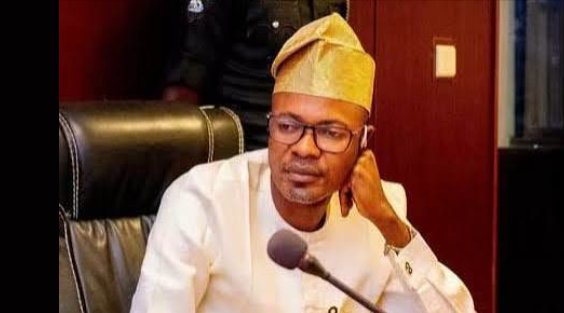
The Socio-Economic Rights and Accountability Project (SERAP) has expressed concern over the reported arrest and detention of the father of Mr. Adeniyi Adeyemi in connection with allegations involving the purported Presidential Foreign Intervention Promotion Council (PFIPC), an entity the Presidency has publicly described as fictitious despite reports that it received more than ₦1.3 billion in the 2026 Appropriation Act.
In a statement, the organisation argued that the reported arrest, if confirmed, violates constitutional and international human rights safeguards, stressing that criminal responsibility is strictly personal under Nigerian law.
SERAP cited Sections 35 and 36(8) of the 1999 Constitution (as amended), noting that no individual should be arrested, detained or punished for an offence allegedly committed by another person. It added that every person can only be held accountable for his or her own conduct.
The rights group further maintained that the reported detention would be inconsistent with Nigeria’s obligations under Article 9 of the International Covenant on Civil and Political Rights and Article 6 of the African Charter on Human and Peoples’ Rights, both of which prohibit arbitrary arrest and detention. It also referenced the position of the United Nations Human Rights Committee that deprivation of liberty must never be used as a tool of intimidation or coercion.
SERAP called on the authorities to immediately and unconditionally release Adeyemi’s father unless there is admissible evidence linking him personally to a recognisable criminal offence, insisting that the rule of law rejects guilt by association.
Beyond the arrest, the organisation urged the National Assembly to invoke its constitutional oversight powers under Sections 88 and 89 of the Constitution to investigate how a purportedly non-existent agency allegedly secured an allocation exceeding ₦1.3 billion in the 2026 budget.
According to SERAP, the legislative probe should determine whether any public officials abused their offices, neglected their statutory responsibilities or facilitated any illegality in the appropriation process.
The group also called on the Independent Corrupt Practices and Other Related Offences Commission (ICPC) and the Economic and Financial Crimes Commission (EFCC) to conduct thorough, independent and impartial investigations into the circumstances surrounding the alleged budgetary allocation.
It urged the anti-corruption agencies to identify and prosecute anyone found culpable in accordance with the law, stressing that genuine accountability requires uncovering not only the actions of private individuals but also any official complicity that may have enabled the alleged misuse of public institutions and public funds.