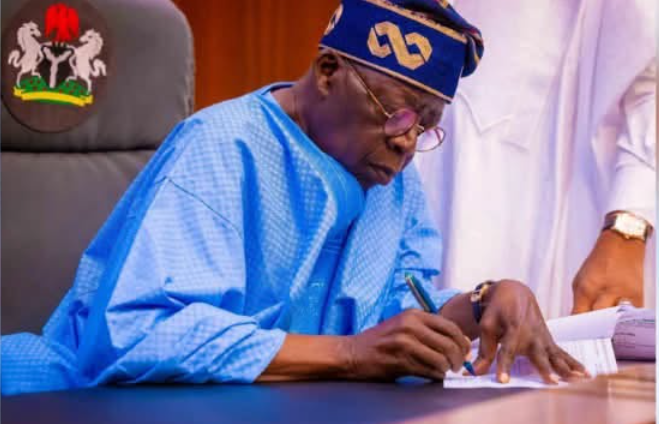
President Bola Tinubu has approved the establishment of a National Child Protection Agency as the Federal Government moves to strengthen Nigeria’s child protection laws, prohibit corporal punishment and introduce tougher penalties for child abuse, exploitation and harmful traditional practices.
The proposed agency, which received presidential approval at a Federal Executive Council (FEC) meeting, is expected to provide a central institutional framework for coordinating, monitoring and strengthening child protection interventions across the country.
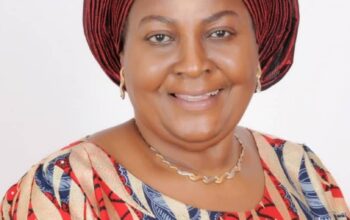
The Minister of Women Affairs, Hajiya Imaan Sulaiman-Ibrahim, disclosed this on Tuesday in Abuja during a stakeholders’ validation exercise on the review and amendment of the Child Rights Act, 2003.
The proposed amendments seek to introduce a total prohibition of corporal punishment and degrading treatment in homes, schools, religious institutions and care facilities. They also provide for stiffer penalties for female genital mutilation (FGM) and expanded liability for individuals involved in facilitating child marriage.
Other proposed reforms include stronger safeguards against sexual abuse, human trafficking, child labour, online exploitation and other forms of violence against children.
The review, coming 23 years after the enactment of the original legislation, is also expected to strengthen reporting, investigation, prosecution and support mechanisms for child victims.
Speaking at the event, the Head of Nigeria Programmes of the International Institute for Democracy and Electoral Assistance (International IDEA), Danladi Plang, said the review had become necessary because existing legislation had not adequately addressed emerging threats arising from technological, scientific and societal changes.
Plang explained that International IDEA had been working with the Federal Ministry of Justice to facilitate an inclusive review process involving relevant stakeholders.
He stressed that the organisation’s involvement was not intended to impose foreign laws on Nigeria but to support the development of a legal framework reflecting the country’s peculiar social, cultural and developmental realities.
According to him, consultations brought together parliamentarians, state attorneys-general, traditional rulers, civil society organisations, child protection practitioners, development partners and other relevant institutions.
He recalled that although the Child Rights Act was enacted in 2003, it took almost two decades for states to adopt the legislation, with Kano State among the last to do so in 2023.
Plang said the proposed amendments went beyond criminalising offences to establish a comprehensive child protection framework covering prevention, safeguarding, reporting, investigation, victim support, confidentiality, accountability and child-friendly justice services.
He identified proposed provisions addressing rape and other sexual offences against children, grooming, child sexual abuse and safeguarding obligations for organisations working with children.
Other measures include mandatory reporting mechanisms, protection for individuals who report abuse in good faith, specialised child-friendly investigation procedures and improved access to medical, psychosocial and legal assistance for victims.
He added that the draft legislation would strengthen confidentiality safeguards, inter-agency coordination and specialised training for justice sector personnel to prevent secondary victimisation of children during judicial proceedings.
In his keynote address, the Attorney-General of the Federation and Minister of Justice, Prince Lateef Fagbemi, said the review was designed to bridge the gap between the rights guaranteed to children under existing legislation and their actual experiences in homes, schools, communities and justice institutions.
Fagbemi disclosed that the review followed a structured process involving a National Review Committee chaired by Justice Suzzette Eberechi Nyesom-Wike of the Court of Appeal, five thematic review groups and a Technical Committee.
He said the National Stakeholders’ Engagement held from September 22 to 24, 2026, provided an opportunity for federal and state governments, the judiciary, law enforcement agencies, civil society organisations, development partners and child protection practitioners to contribute to the process.
According to him, the Technical Committee subsequently harmonised the recommendations and conducted a clause-by-clause examination of the draft Child Rights Act Amendment Bill.
The Attorney-General identified digital exploitation, abuse, neglect, trafficking, harmful traditional practices and other forms of violence as emerging threats requiring stronger legislative safeguards.
He also called for a more responsive child justice system that recognises the age, vulnerability and developmental needs of children who come into contact with the law, whether as victims, witnesses or children in conflict with the law.
Fagbemi maintained that the best interests of the child must remain central to the administration of justice, with priority given to access to justice, diversion, restorative justice, rehabilitation and reintegration.
He stressed that detention should remain a last resort and, where unavoidable, should be limited to the shortest appropriate period.
The minister disclosed that the Federal Ministry of Justice had supported the development of Legal Aid Guidelines and Prosecutors’ Guidelines for handling cases involving children.
He, however, cautioned that legislation alone would not guarantee effective child protection, noting that functioning institutions, adequate resources, public awareness, effective coordination and sustained political commitment were essential.
On the proposed National Child Protection Agency, Sulaiman-Ibrahim, who was represented by the Director of Child Development in the Federal Ministry of Women Affairs and Social Development, Ali Madugu, described the presidential approval as a major demonstration of the administration’s commitment to children’s survival, development, participation and protection.
She said the agency would provide a specialised institutional mechanism to address fragmented child protection interventions by improving coordination, implementation, monitoring and accountability.
The minister disclosed that the Federal Ministry of Women Affairs was working with relevant government institutions to prepare the necessary processes for presenting the agency’s establishment Bill to the National Assembly as an Executive Bill.
She said the government was seeking an accelerated legislative process to translate the President’s approval into law and establish a functional national institution dedicated to child protection.
Sulaiman-Ibrahim identified child abuse, neglect, child marriage, trafficking, child labour, sexual exploitation, harmful traditional practices and online abuse among the persistent and emerging threats confronting Nigerian children.
She also expressed concern about the vulnerability of children in emergency and conflict situations, stressing that the review of the Child Rights Act was both urgent and necessary.
The minister said the government was strengthening reporting and referral mechanisms, access to justice for victims and safeguards against online child sexual exploitation and abuse.
She further highlighted ongoing efforts to promote early childhood development through interventions focusing on health, nutrition, early learning, safety, nurturing care and responsive caregiving.
She emphasised the importance of family-based care as the preferred environment for children’s development, alongside stronger monitoring of adoption and alternative care arrangements to prevent abuse, trafficking and other irregularities.
Earlier, the Director of the Administration of Criminal Justice Reform Department in the Federal Ministry of Justice, Mrs Leticia Ayoola-Daniels, said the proposed amendments would completely prohibit corporal punishment and degrading treatment in homes, schools, religious institutions and care settings.
She explained that the reforms would also introduce stronger prohibitions and tougher penalties for female genital mutilation, while extending liability for child marriage beyond the spouses to individuals who arrange, solemnise, register or benefit from such marriages or betrothals.
Ayoola-Daniels said the proposed reforms were consistent with Nigeria’s commitments at the First Global Ministerial Conference on Ending Violence Against Children in Bogotá, where the country reaffirmed its resolve to eliminate corporal punishment, FGM and child marriage through comprehensive legal and policy reforms.
She described the validation exercise as an important milestone in translating Nigeria’s international commitments into concrete legislative action.
The director also highlighted the involvement of children in the review process, noting that their recommendations had been considered in developing the proposed amendments.
“No law on children can be complete without the voices of children,” she said.
She urged stakeholders to scrutinise the draft Bill to ensure its provisions were clear, consistent, legally sound and capable of effective implementation.
The Federal Ministry of Justice, she added, would coordinate the completion of the review, harmonise the recommendations and undertake further legislative drafting before the proposed amendment Bill proceeds for consideration by the appropriate authorities.
Fagbemi acknowledged the contributions of the National CRA Review Committee, the Technical Committee led by Professor P.C. Okorie, the thematic review groups, state governments and development partners, including UNICEF, International IDEA, the World Bank’s Early Childhood Development Initiative, Gender Mobile Initiative, SOS Children’s Villages, Justice Research Institute and WARDC.
He urged stakeholders to ensure that the revised legislation translated into practical protection for children, describing the review as an opportunity to renew the promise of the Child Rights Act and strengthen its impact on Nigerian society.
“Children are not just the leaders of tomorrow; they are the very heartbeat of our nation today,” he said.