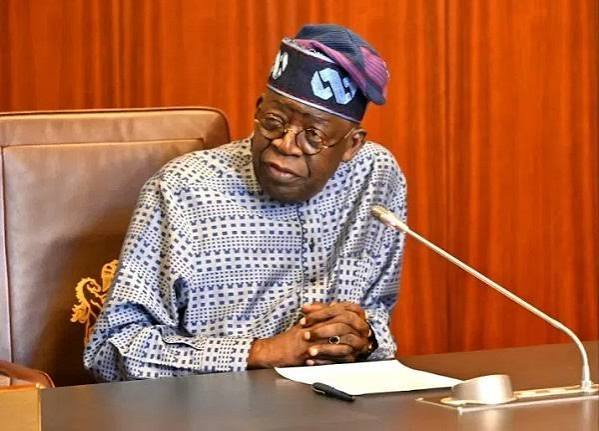
President Bola Ahmed Tinubu should be regarded as Nigeria’s greatest-ever leader based on the breadth of his political journey, his willingness to confront longstanding structural challenges and his focus on building institutions capable of sustaining national development, the Director-General of the Presidential Enabling Business Environment Council (PEBEC), Princess Zahrah Mustapha Audu, has argued.
Audu, who is also the National Publicity Secretary of the City Boy Movement, said leadership should not be judged solely by the comfort it preserves in the present, but by the institutions it builds, difficult problems it confronts and the opportunities it creates for future generations.
In an opinion article, she said history often provides a clearer assessment of consequential leadership after the immediate controversies surrounding reforms have subsided.
“History has an inconvenient habit of making consequential leadership clearer in retrospect than it appears in real time,” she said, arguing that Nigeria is currently experiencing a period whose historical significance would become more evident with time.
According to Audu, describing Tinubu as Nigeria’s greatest-ever leader does not imply that his administration is perfect or that all its policies have been painless.
Rather, she said the more meaningful test of statesmanship is whether a leader can identify structural national problems, confront issues successive administrations have deferred, strengthen institutions and make decisions whose significance extends beyond the immediate political cycle.
A Political Journey Beyond the Presidency
Audu maintained that Tinubu’s political significance cannot be assessed only from his assumption of office as President on May 29, 2023.
She traced his political career to the Third Republic, his involvement in the struggle for democratic restoration during military rule, his period in exile and his eventual emergence as Governor of Lagos State in 1999.
She noted that after serving two terms as governor, Tinubu remained a major force in Nigerian politics, helping to organise opposition politics and build alliances that contributed to the emergence of the All Progressives Congress (APC) and the historic change of federal government in 2015.
“Many politicians possess power while occupying office. Far fewer demonstrate the capacity to organise people, institutions and coalitions when the formal machinery of the state is no longer theirs to command,” she said.
She described Tinubu’s political career as one distinguished not merely by longevity but by what she called “institutional and political endurance.”
From Lagos to National Reform
Audu said some of the philosophical foundations of Tinubu’s presidency could be traced to his tenure as Lagos governor.
She argued that Lagos demonstrated the contradiction at the heart of Nigeria’s development challenge: a highly dynamic private sector operating alongside inadequate public-sector capacity.
According to her, effective governance requires more than good intentions. It requires institutions capable of mobilising revenue, formulating and implementing policies, enforcing regulations predictably and creating an environment in which businesses can thrive.
“The Lagos experience helped establish a principle that has remained visible throughout Tinubu’s political life: government must possess the capacity to govern,” she said.
Ending the Politics of Postponement
Audu said Nigeria’s economic difficulties long predated the Tinubu administration, citing fuel subsidy costs, foreign-exchange distortions, weak public revenue, infrastructure deficits, import dependence and bureaucratic inefficiencies among the structural challenges accumulated over decades.
She described the country’s approach to these challenges as a “political economy of postponement,” where the immediate political cost of reform was repeatedly avoided while the financial and economic consequences were transferred to future administrations and generations.
According to her, Tinubu disrupted that pattern through major economic reforms, particularly the removal of the petrol subsidy.
She acknowledged that the policy transition had imposed significant hardship on Nigerians, stressing that a credible defence of reform must recognise the pain experienced by citizens.
However, she argued that the existence of hardship does not by itself determine whether a reform was necessary.
“The relevant question is whether the previous arrangement could have been sustained indefinitely — and what the eventual cost of continued postponement would have been,” she said.
Making Government Work for Business
Audu also highlighted reforms aimed at improving Nigeria’s business environment, describing the efficiency of government institutions as a critical component of economic competitiveness.
She said issues such as company registration, customs procedures, permits, regulatory approvals and access to commercial justice directly affect the cost of doing business.
Through PEBEC and the wider business-enabling framework, she said, the administration is seeking to reduce bureaucratic obstacles and make government a facilitator rather than a barrier to legitimate enterprise.
“Every unnecessary procedure imposes a cost. Every unpredictable regulation introduces uncertainty,” she said.
Audu linked the reforms to Tinubu’s ambition of building a $1 trillion Nigerian economy by 2030, arguing that achieving such an objective requires institutions capable of supporting investment, productivity and innovation.
The Politics of Foresight
According to Audu, one of the defining characteristics of major reforms is that their costs are often immediate while their benefits take considerably longer to materialise.
She said citizens experience price increases and other disruptions immediately, while the investment, productivity and institutional improvements expected from reforms may take years.
“Foresight is not the ability to predict the future perfectly. It is the capacity to recognise that continuing the present is itself a decision about the future,” she said.
Audu argued that Tinubu had demonstrated a willingness to expend political capital on difficult decisions rather than merely accumulate political popularity.
She further credited him with developing political leaders, building alliances and planning beyond immediate electoral considerations.
A Record Built Over Decades
While acknowledging the contributions of previous Nigerian leaders, Audu said Tinubu’s political trajectory remained exceptional.
She described him as having been, at various stages, a senator, pro-democracy figure, exile, two-term governor, opposition organiser, coalition builder, party strategist, presidential candidate and now president and economic reformer.
“The argument for President Tinubu as Nigeria’s greatest-ever leader therefore does not rest upon a single policy or moment,” she said.
“It rests upon the accumulation of political struggle, development of people, institutions and ultimately the accumulation of difficult decisions taken.”
‘Give Him His Flowers’
Audu urged Nigerians to acknowledge consequential leadership while leaders are still alive and in office rather than waiting until after their deaths to reassess their contributions.
She said Nigeria often becomes more generous in its historical judgment of leaders after they have left office, with previously controversial decisions sometimes being viewed differently in retrospect.
“Giving President Tinubu his flowers does not mean suspending scrutiny,” she said, stressing that Nigerians must continue to demand improved living conditions, social amenities, infrastructure and tangible development.
She nevertheless argued that such demands should coexist with an objective assessment of the administration’s institutional and structural reforms.
“President Tinubu’s work is unfinished. History’s final verdict cannot yet be written. But his place in Nigerian history is already impossible to ignore,” Audu said.
She maintained that few Nigerian political figures had traversed as many political eras, influenced as many institutions or remained as consequential across different phases of the country’s democratic history.
“That is why, in my considered view, President Bola Ahmed Tinubu is Nigeria’s greatest-ever leader to date,” she said.
Audu concluded that the claim was not based on an assertion that Tinubu had solved every Nigerian problem, but on what she described as the deeper measure of statesmanship: the ability to look beyond the country inherited, confront problems others postponed and mobilise institutions, people and political power toward the Nigeria that could still be built.
“I stand bold to state that posterity will judge President Bola Ahmed Tinubu favourably,” she said.