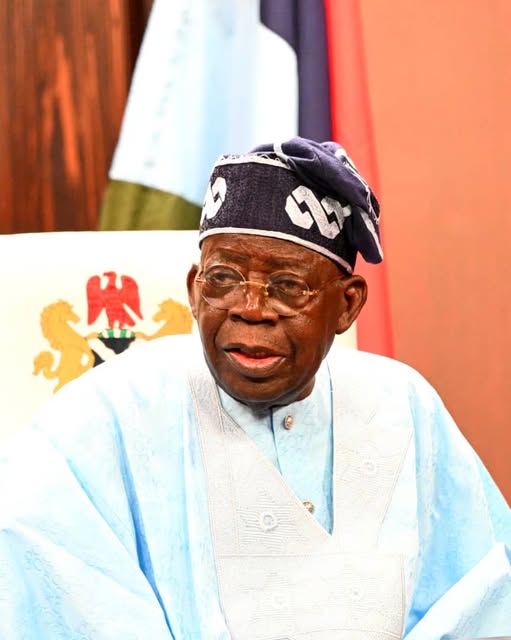
President Bola Ahmed Tinubu has declared that Nigeria has emerged from a difficult period of economic reforms and is now entering an era focused on broad-based prosperity.
Tinubu made the declaration in his Independence Day address to Nigerians on Thursday, marking the country’s 66th anniversary of independence and delivering the address under the theme, “From Reforms to Prosperity.” The speech was published by the State House. State House
The President said the country had endured years of economic crises, insecurity, political upheaval and structural weaknesses, but maintained that the reforms introduced by his administration had corrected what he described as longstanding distortions in the economy.
“Nigeria has corrected its course. We have passed through our own Red Sea. This is not the time to look back,” Tinubu said, urging Nigerians to move forward with renewed confidence in the country.
According to the President, the administration’s immediate task over the past three years had been to stabilise the economy and address structural problems, while the focus would now shift to translating those reforms into improved living standards and widespread economic opportunities.
He said the economy had grown by more than four per cent in 2026, with both the oil and non-oil sectors contributing to growth. He also cited lower oil theft, a substantial decline in inflation from its peak, rebuilt foreign reserves and greater stability in the foreign exchange market among indicators of improved economic conditions.
Tinubu further said Nigeria recorded more than $6 billion in non-oil export revenue in 2025, describing the figure as evidence of growing productive activity by Nigerian businesses.
The President acknowledged that millions of Nigerians were still struggling with food costs, school fees, medical bills and transportation expenses, but said the difficulties predated his administration and reflected the cumulative impact of decades of low productivity, inadequate infrastructure and limited economic opportunities.
He said the next phase of his administration would therefore focus on reducing the cost of living by lowering the cost of production and transportation.
According to him, government will expand mechanised irrigation and dry-season farming, improve access to seeds and fertiliser, increase agricultural mechanisation and invest in storage and transportation infrastructure.
He also highlighted ongoing investments in roads, railways and ports to improve connections between farms, factories and markets.
Tinubu said the government would deploy Nigeria’s gas resources to power industries, support the revival of factories, expand digital connectivity and invest in skills development, while providing Nigerian businesses with infrastructure and financing to expand.
“We will use our gas to power new industries,” he said, adding that his administration wanted to see more Nigerians producing goods, more farms supplying cities and factories, and more Nigerian businesses exporting to global markets.
The President also outlined measures targeted at vulnerable Nigerians, including strengthening direct support for poor households and improving the National Social Register to ensure that social assistance reaches intended beneficiaries.
He cited the Nigerian Education Loan Fund as a mechanism for expanding access to higher education for students from low-income households, while noting that the Consumer Credit Corporation (CREDICORP) was providing access to credit for Nigerians seeking to acquire essential assets.
Tinubu said government would also continue working with state and local governments to strengthen primary healthcare, basic education and other essential public services.
He maintained that such interventions were not intended to replace economic prosperity but to provide support for vulnerable Nigerians while the broader economy creates more productive opportunities.
The President said eliminating poverty would require sustained economic growth, discipline and the creation of millions of productive jobs, adding that the government would continue to pursue policies aimed at achieving that objective.
“The age of reform has done its work. Now begins the age of prosperity,” Tinubu declared.
He urged Nigerians to remain united and confident in the country’s future, saying the sacrifices made during the reform period should ultimately translate into better opportunities and living conditions.
“The Promised Land before us is a Nigeria of abundance and opportunity; a nation where prosperity is broadly shared, where every child can dream beyond the circumstances of his birth,” he said.
Tinubu concluded his Independence Day message by calling on Nigerians to move forward without looking back, expressing confidence that the country’s economic foundation had been strengthened and that the next phase should focus on delivering prosperity to citizens across the country.