President Bola Ahmed Tinubu has approved the establishment of a Presidential Task Force on Ebola Virus Disease Preparedness and Emerging Public Health Threats, alongside the immediate release of ₦10 billion for emergency preparedness and response.
According to a State House statement issued by Bayo Onanuga, Special Adviser to the President on Information and Strategy , the intervention fund is intended to strengthen the operational capacity of the Nigeria Centre for Disease Control and Prevention (NCDC) and enhance the country’s readiness for public health emergencies.
The Presidential Task Force will be chaired by the Chief of Staff to the President, Femi Gbajabiamila, with membership drawn from relevant ministries, departments and agencies, as well as representatives of state governments.
The decision follows renewed concerns over the resurgence of Ebola cases in the Democratic Republic of Congo (DRC) and Uganda, countries sharing regional proximity with Nigeria.
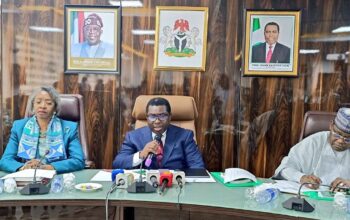
The approval was reached after a high-level stakeholder meeting chaired by the Chief of Staff to assess Nigeria’s preparedness and develop preventive strategies against possible importation of the virus.
Participants at the meeting included representatives of the Ministry of Interior, Federal Airports Authority of Nigeria (FAAN), Nigeria Immigration Service (NIS), Nigerian Civil Aviation Authority (NCAA), Lagos State Government, and other relevant agencies.
President Tinubu also directed all states hosting international airports and border corridors, alongside relevant federal agencies, to submit their preparedness plans, funding requirements and operational needs for coordinated national response.
As part of additional containment measures, the Task Force is mandated to intensify passenger screening at all international airports, including enhanced temperature checks and stricter crowd-control protocols.
It is also expected to strengthen monitoring of passengers arriving through identified high-risk airline routes, including Air Uganda, RwandAir, Air Tanzania, Air Angola, Kenya Airways and Ethiopian Airlines.
Other directives include the immediate activation of referral and isolation centres at Lagos and Abuja international airports, with similar facilities to be established in other locations as required.
The measures further include mandatory use of QR code-based pre-arrival health declaration systems for travellers from or transiting through designated high-risk countries, as well as disinfection of airport terminals, baggage areas and cargo facilities.
The President also directed that the advisory group work with security, diplomatic and aviation authorities to regulate flights from affected countries where necessary.
In addition, the Task Force is to designate specific terminals for high-risk flights to ensure controlled screening and isolation procedures, as well as adjust flight schedules to reduce contact between high-risk passengers and other travellers.