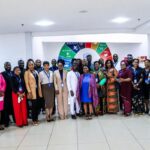
The United Nations Office on Drugs and Crime (UNODC) has launched an ambitious Country Programme for Nigeria covering 2026–2030, aimed at strengthening criminal justice, combating organised crime, promoting public health, and reinforcing the rule of law.
Speaking at the launch in Abuja, the UNODC Representative in Nigeria, Cheikh Toure, described the initiative as a comprehensive and integrated framework designed to advance peace, justice, and development.
“It is my honour and privilege to welcome you to the launch of the UNODC Country Programme for Nigeria 2026–2030,” Toure said, noting that the gathering reflected a shared commitment to pursuing national stability through coordinated efforts.
He подчеркнул that Nigeria faces a critical juncture as Africa’s largest economy and most populous nation, stressing that its trajectory has far-reaching implications for the continent and the global community.
Toure identified key challenges confronting the country, including illicit drug trafficking and abuse, transnational organised crime, human trafficking, maritime insecurity, violent extremism, and corruption. He noted that these threats continue to exert pressure on institutions and communities, with consequences extending beyond national borders.
According to him, the new programme is built on longstanding partnerships and extensive consultations with government agencies, civil society, and development partners, while respecting Nigeria’s sovereignty and institutional frameworks.

He outlined five strategic pillars of the programme, including strengthening the criminal justice system, tackling corruption and illicit financial flows, countering terrorism within the framework of human rights, addressing organised crime in its various forms, and promoting public health with a focus on drug prevention and treatment.
The UNODC official added that the programme prioritises youth engagement, gender equality, and inclusion of vulnerable groups, including persons with disabilities, while fostering collaboration at federal, state, and community levels.
He also commended the contributions of key Nigerian institutions such as the National Drug Law Enforcement Agency (NDLEA), National Agency for the Prohibition of Trafficking in Persons (NAPTIP), Nigeria Police Force, Nigerian Navy, Economic and Financial Crimes Commission (EFCC), Independent Corrupt Practices Commission (ICPC), and the Nigerian Correctional Service.
Toure called for sustained political will and increased domestic resource mobilisation, warning that underfunded justice systems could undermine progress.
“The challenges we face are too complex for any one institution or country to address alone,” he said, urging deeper collaboration to achieve lasting impact.
Meanwhile, Chairman of the NDLEA, Buba Marwa, warned that drug abuse and trafficking in Nigeria have escalated into a major public health and national security crisis.
Marwa, who also spoke at the event, said the drug problem in Nigeria is rapidly evolving, driving violent crime, money laundering, and social instability, while posing serious risks to public health.
“The drug challenge in Nigeria is no longer static; it is expanding and becoming more complex,” he said.
He disclosed that the NDLEA is adopting a more holistic strategy that combines intelligence-led enforcement with prevention, rehabilitation, and counselling for affected individuals.
“We have strengthened enforcement, but we have also expanded our focus on prevention, counselling and rehabilitation,” Marwa added, describing the approach as a shift toward a human-centred and restorative model.
He noted that the UNODC programme aligns with Nigeria’s priorities of implementing data-driven interventions, strengthening institutional integrity, and adopting gender-sensitive strategies.
Looking ahead, Marwa emphasised that success should be measured not only by drug seizures but by lives saved and communities strengthened.
“No single agency can tackle this challenge alone,” he said, calling for stronger collaboration among law enforcement agencies, healthcare providers, educators, and civil society organisations.
He reaffirmed the NDLEA’s commitment to working with UNODC and other partners to ensure effective implementation of the programme and to safeguard communities across Nigeria.