Key national and international agencies have launched a collaborative effort to reshape Nigeria’s migration governance, aiming to make migration safer, more orderly, and a source of national pride.
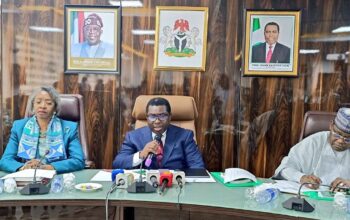
The initiative, led by the United Nations Office on Drugs and Crime (UNODC), in partnership with the National Agency for the Prohibition of Trafficking in Persons (NAPTIP), Nigeria Immigration Service (NIS), the National Commission for Refugees, Migrants and Internally Displaced Persons (NCFRMI), and other stakeholders, was formally unveiled Wednesday in Abuja at the inaugural meeting of the Steering Committee for Component 3 of the Support to Migration Governance in Nigeria project.
UNODC Country Representative, Cheikh Toure, emphasised the importance of transforming Nigeria’s migration narrative from vulnerability to dignity and opportunity. “Today, we gather not merely to address these challenges but to redefine the narrative of migration in Nigeria—to make it safe, orderly, and a source of pride,” he said.

Toure highlighted the risks Nigerians face during migration, including exploitation by smugglers, violence at borders, and human trafficking. He described the project as a “promise” to protect and empower migrants, improve policy implementation, strengthen law enforcement, and foster international cooperation.
“Aligned with the UNODC’s Strategic Vision for Nigeria 2030, this initiative is a bold step toward safeguarding human rights and building resilience against trafficking and smuggling,” he added.
He called on the newly inaugurated Steering Committee to move beyond routine work plans and deliverables, urging them to act as architects of Nigeria’s migration future. “Challenge us. Demand transparency. Insist on sustainability,” he told members.

Representing NAPTIP Director-General Binta Adamu, the agency’s Head of Data and Statistics, Rasheed Okatinji, echoed the importance of the initiative. “Migration can be a powerful force for development, but it also presents risks when poorly governed—risks such as irregular migration, trafficking, labour exploitation, and transnational organised crime,” he said.
Okatinji described Component 3 of the project as timely and strategic, reflecting a shared commitment to strengthening Nigeria’s migration framework in a way that is rights-based, gender-sensitive, and development-oriented.
He expressed gratitude to the European Union for funding the project, acknowledging its continued support in driving meaningful change in Nigeria’s governance landscape.