The United Nations has called on Nigeria to adopt alternative financing models by leveraging domestic and private sector resources, following significant cuts in Official Development Assistance (ODA) from international donors.
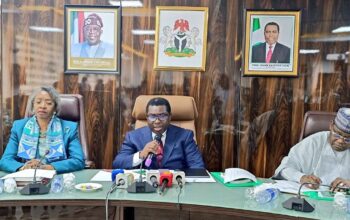
UN Resident and Humanitarian Coordinator in Nigeria, Mohamed Fall, made the call on Monday at a press briefing ahead of the 2025 Africa Social Impact Summit (ASIS), which the UN is co-convening.
Fall warned that development and humanitarian financing would no longer follow traditional patterns, urging Nigeria to prioritize internal revenue generation and private investment.
“We are entering a new era,” he said, “where ODA and humanitarian aid will never be as they were in the past decade. Development financing must now come from domestic resources.”
He emphasized the importance of mobilizing the private sector, not just for charity or corporate social responsibility, but as key development partners who benefit directly from a stable and prosperous economy.
“Private sector engagement must be seen as an investment with shared value,” he said.
Fall also spotlighted the financial losses Nigeria incurs through illicit financial flows, which he pegged at $17 billion annually—around 20% of Africa’s estimated $90 billion lost each year to such outflows.
“That amount, if redirected, could account for nearly half of Nigeria’s annual government spending, including debt servicing,” he noted.
Echoing Fall’s position, Sterling Bank CEO Abubakar Suleiman said the private sector must take greater responsibility in addressing Nigeria’s socio-economic challenges.
“We must do more—not for publicity, but to fundamentally change the country,” he said. “The era of relying on foreign aid is over.”
Suleiman argued that with the private sector controlling over 80% of Nigeria’s resources, there is a clear obligation to fill the gap left by diminishing international support.
“Until the government can generate 30 to 35% of GDP in taxes, we in the private sector must step up,” he said.
Also speaking, CEO of Sterling One Foundation, Olapeju Ibekwe, described the 2025 summit—tagged “Scaling Action: Bold Solutions for Climate Resilience and Policy Innovations”—as an execution platform focused on partnerships, impact investment, and policy advocacy.
“2030 is closer than we think. Now is the time to accelerate action,” she said.
The Africa Social Impact Summit is scheduled to hold next month, with stakeholders across sectors expected to strategize on sustainable, scalable solutions for development in Africa.