The United Nations High Commissioner for Refugees (UNHCR) has underscored the imperative of safeguarding refugees, expressing deep concern over the distressing statistic of 6,976,470 individuals being forcibly displaced due to conflicts and violence within the ECOWAS sub-region. Of this total, 624,124 are registered refugees seeking asylum, while the remainder, 6,352,346, are internally displaced persons (IDPs).
Notably, Nigeria and Burkina Faso are hosting the largest displaced populations, with 3,578,996 and 2,062,534 people, respectively, while Niger currently shelters the largest refugee population of 325,419 individuals.
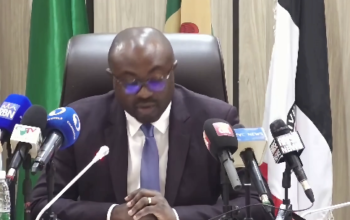
This revelation came from Mr. Abdouraouf Gnon-Konde, Director of UNHCR Regional Bureau for West and Central Africa, during the signing of an updated Memorandum of Understanding (MOU) between UNHCR and the Economic Community of West African States (ECOWAS) Commission. The MOU expands the scope of cooperation to encompass the identification and protection of refugees in perilous migration movements, statelessness, emergency management, and long-term solutions to forced displacements.
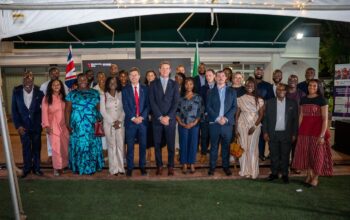
The Economic Community of West African States (ECOWAS) and the United Nations High Commissioner for Refugees (UNHCR) have solidified their commitment to bolster cooperation in preserving the rights and well-being of refugees, stateless individuals, and internally displaced persons within the region. This agreement was sealed through a Memorandum of Understanding (MOU) inked by the President of the ECOWAS Commission, H.E Dr. Omar Alieu Touray, and Mr. Abdouraouf Gnon-Konde, Director of UNHCR Regional Bureau for West and Central Africa.
President Touray elucidated the ECOWAS Commission’s initiatives aimed at addressing the political and humanitarian crises in the region. He affirmed that member states are diligently working to tackle the root causes of conflicts through diplomatic and political engagements, expressing confidence in the Commission’s efforts to yield positive outcomes in these areas.
Gnon-Konde highlighted the ongoing prevalence of violent conflicts, disasters, and insecurity in various countries, which have compelled numerous individuals to flee their homes within and beyond the sub-region. He emphasized the enduring, highly productive, and pertinent collaboration between UNHCR and the ECOWAS Commission in light of the prevailing humanitarian challenges in the sub-region. Additionally, he noted UNHCR’s close cooperation with other ECOWAS institutions, particularly the ECOWAS Court of Justice and the ECOWAS Parliament, with distinct MOUs previously signed to address forced displacement issues within the ECOWAS sub-region, each aligning with the specific mandates of these institutions.