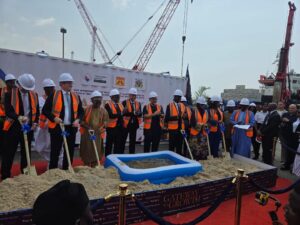
Nigeria has commenced the £746 million rehabilitation of the Lagos Port Complex, Apapa, and Tin Can Island Port Complex under a financing arrangement backed by the United Kingdom Export Finance (UKEF), in a major effort to modernise the country’s maritime infrastructure and improve trade competitiveness.
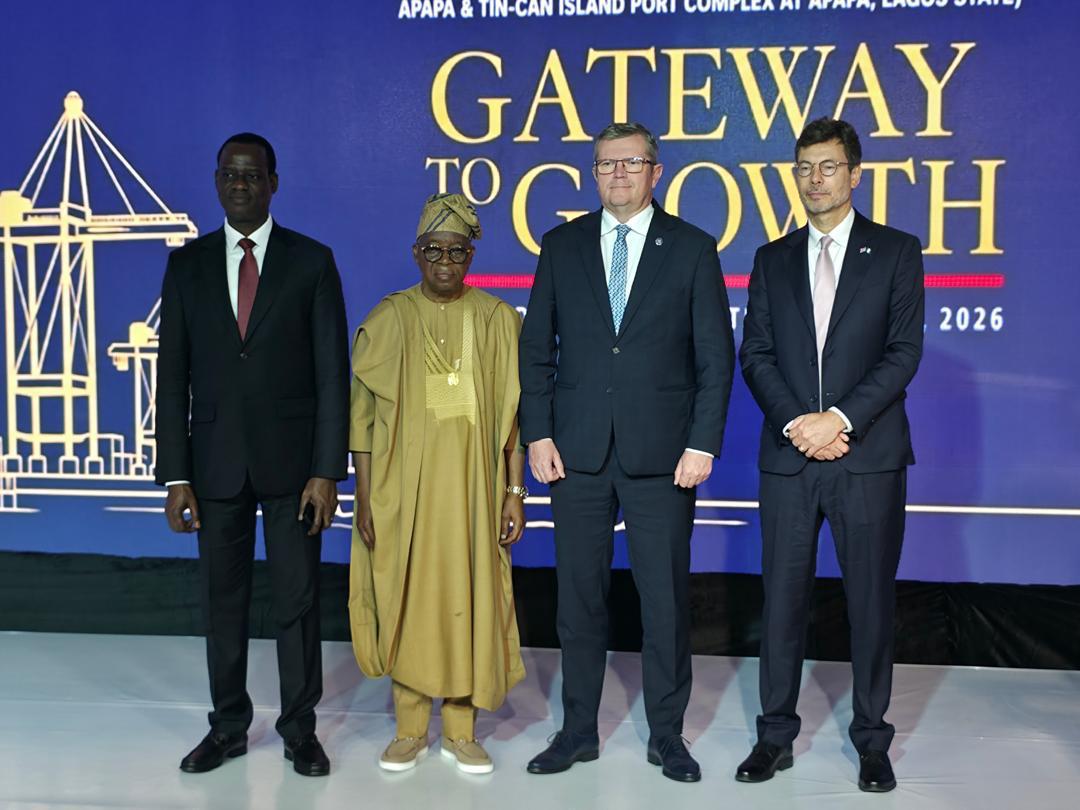
The groundbreaking ceremony, held on Wednesday, marks the beginning of a comprehensive upgrade of the two major maritime gateways, with the project expected to improve cargo-handling capacity, operational efficiency, navigation infrastructure and the movement of goods.
The financing package, coordinated and arranged by Citi, is being provided through UKEF’s Buyer Credit Facility, while construction works will be undertaken by Hitech Nigeria and ITB Nigeria.
The rehabilitation will cover critical infrastructure, including quay walls and berths, dredging and navigation channels, access facilities, cargo-handling equipment and operational systems.
Speaking at the ceremony, the Minister of Marine and Blue Economy, Adegboyega Oyetola, said the project would comprehensively upgrade port infrastructure while promoting integrated, efficient and digitally enabled operations.
He explained that the rehabilitation would address longstanding physical and operational limitations at the facilities, strengthen their capacity to support Nigeria’s growing trade requirements and improve the country’s position in regional and international maritime commerce.
Oyetola projected that the project would generate at least 20,000 direct and indirect jobs across construction, engineering, dredging, logistics, transportation, port operations and related sectors.
The Minister of Finance and Coordinating Minister of the Economy, Taiwo Oyedele, described the initiative as a significant step towards reducing the cost of doing business, improving Nigeria’s competitiveness and accelerating economic growth.
He said improved port efficiency would reduce cargo delays and associated costs for importers and exporters, enhance the competitiveness of Nigerian products and deliver wider economic benefits to manufacturers, farmers and consumers.
The Lagos Port Complex and Tin Can Island Port Complex are among Nigeria’s most important gateways for international trade, handling substantial volumes of imports, exports and industrial cargo.
However, ageing infrastructure, congestion and operational inefficiencies have remained major challenges affecting the country’s maritime logistics chain.
The rehabilitation is expected to address these constraints, facilitate faster cargo movement and increase the ports’ capacity to support businesses and the wider economy.
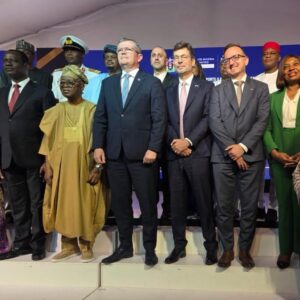
The British Deputy High Commissioner in Lagos, Jonny Baxter, said the project demonstrated the practical benefits of UK-Nigeria economic cooperation, combining British financing, steel and other supplies with Nigerian construction expertise.
Baxter disclosed that the project had secured £746 million in UK-backed financing, with at least £236 million in contracts expected to go to British businesses.
He said the modernisation of the ports would enable Nigerian businesses to move goods more efficiently, reduce delays and improve access to international markets, while creating commercial opportunities and long-term economic benefits for both countries.
British suppliers, including British Steel, are expected to provide specialised materials and services for the rehabilitation.
Also speaking, Managing Director and Chief Executive Officer of Citibank Nigeria Limited, Nneka Enwereji, said the bank had supported Nigeria’s economic development through financing and advisory services for more than four decades.
She described the rehabilitation as a major infrastructure investment capable of improving trade efficiency, strengthening connectivity and contributing to long-term economic prosperity.
Enwereji reaffirmed Citi’s commitment to deploying its global network, financial expertise and capabilities to support Nigeria’s economic ambitions and infrastructure development agenda.
The Technical Manager of ITB, Ramez Bou-Riz, described the project as critical to securing the future of Nigeria’s maritime trade, assuring that the construction companies would prioritise safety, quality, world-class facilities and skills development for Nigerians.
He said the project would go beyond infrastructure modernisation by equipping Nigerians with the technical skills and expertise required to sustain improvements in the maritime sector.
The financing is expected to be disbursed against agreed project milestones and verified progress, while rehabilitation works are scheduled to commence following the groundbreaking ceremony.