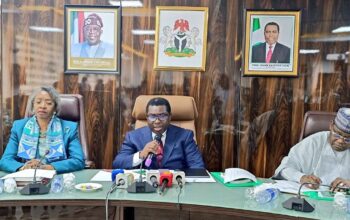
Dr. Joy Iganya Agene, Senior Environment Specialist at the World Bank Nigeria Office and Task Team Leader for the ACReSAL Project, has called for a comprehensive hydrological assessment in Zone C of Benue State to address ongoing flooding issues. Dr. Agene emphasized the importance of deploying advanced technology to conduct a detailed study of the area’s groundwater potential.
During the joint World Bank/Federal Government of Nigeria Hybrid Implementation Support Mission for the ACReSAL Project, Dr. Agene stressed the necessity of an integrated policy encompassing Environment, Water Resources, Climate Change, and Agriculture to ensure project sustainability. She praised the state government’s efforts and requested updates on the status of the state’s park gazettes.
Dr. Agene underscored the critical need for interventions around the River Benue to reduce flood impacts, which have devastated livelihoods and caused fatalities. She highlighted the project’s goal of reclaiming 50,000 hectares of riparian areas, with Benue State specifically targeting 20,000 hectares. She urged the development of activities to protect residents in flood-prone zones.
Mr. Abdulhamid Umar, National Project Coordinator for the ACReSAL project, stressed the importance of sustainability plans for investments like tractors and commended the state government for its support and involvement in the project.
Hon. Odoh Ugwu, Benue State Commissioner for Water Resources, Environment, and Climate Change, welcomed the mission team and solicited their support in addressing state and regional issues. He reaffirmed the government’s dedication to the project’s continuity and sustainability.
Additional speakers, including Mr. Lawal from the Federal Ministry of Finance, highlighted the necessity of sustaining investments and ensuring timely repayment of Community Resolving Fund (CRF) loans.
The ACReSAL State Project Coordinator detailed the state government’s efforts, including the payment of 1 billion naira in counterpart funds and the provision of 50 solar-powered boreholes to communities under the ACReSAL Project.