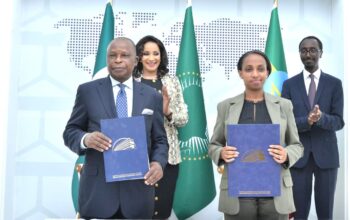
The Minister of Foreign Affairs, Ambassador Yusuf Tuggar, has emphasized that Nigeria can achieve significant economic growth, social development, and enhanced international standing by effectively harnessing the strengths of its diaspora population.
Speaking on Thursday at the Diaspora Study Stakeholders Engagement Workshop, organized by the Nigerian Institute of Social and Economic Research (NISER) in collaboration with the Nigerians in Diaspora Commission (NiDCOM), the Minister—represented by the Director of Economic, Trade, and Investment at the Ministry of Foreign Affairs, Ambassador Bolaji Akinremi—highlighted the strategic role of Nigerians abroad in national development.
“Nigeria boasts one of the most dynamic and influential diaspora populations in the world,” he stated. “Across continents, Nigerians have made remarkable contributions in academia, medicine, technology, entrepreneurship, and diplomacy. Their remittances, expertise, and global networks serve as invaluable assets that, when effectively harnessed, can propel the nation’s economic and social transformation.”
He further noted that the workshop provides a critical platform to engage stakeholders in shaping the proposed Diaspora Study, ensuring that its design and implementation align with national priorities and global best practices. “It is imperative that we leverage the insights and expertise of key players, including government agencies, businesses, and scholars, to develop policies that maximize diaspora contributions,” he added.
The Minister urged stakeholders to actively participate in the discussions, stressing that the success of the study will not only enhance diaspora engagement but also solidify Nigeria’s position as a nation that values and integrates its global citizens into national development.
NiDCOM Reaffirms Commitment to Diaspora Engagement
In her remarks, the Chairman/CEO of NiDCOM, Hon. Abike Dabiri-Erewa, emphasized the immense potential of Nigeria’s diaspora community, describing them as one of the most resourceful and active in the world.
“Nigeria is fortunate to have a diaspora population flourishing in various professional fields across continents. The networks, expertise, and knowledge they possess remain an untapped resource that could significantly accelerate the country’s economic and social transformation,” she stated.
Dabiri-Erewa highlighted that the Diaspora Study aims to provide a comprehensive framework for effectively engaging and utilizing this potential. “This is not merely about gathering data; it is about developing evidence-based policies and initiatives that will translate into tangible contributions to Nigeria’s development,” she explained.
She further outlined key policy measures for harnessing diaspora contributions, including:
- Creating investment opportunities tailored for the diaspora.
- Establishing diaspora-specific investment funds to channel remittances into productive ventures.
- Facilitating knowledge transfer through mentorship and training programs.
- Providing easier access to markets and networks in Nigeria.
By implementing these measures, she noted, Nigeria can leverage the skills, resources, and networks of its global citizens for sustainable national development.
“This workshop serves as a platform for exchanging ideas, refining strategies, and ensuring the study’s design is both robust and inclusive,” she concluded. “Your insights and recommendations will be invaluable in ensuring this research translates into actionable policies with meaningful impact.”
NISER Underscores Importance of Diaspora Contributions
The Director-General of NISER, Prof. Antonia Simbine, highlighted Nigeria’s vast and influential diaspora community, estimated at over 17 million people worldwide. She emphasized the diverse expertise of Nigerians abroad, spanning medicine, information technology, engineering, education, finance, and entrepreneurship.
“Beyond financial remittances—which peaked at $23.8 billion in 2019 before declining to $19.5 billion in 2023—the Nigerian diaspora also contributes to national development through technology transfer, knowledge exchange, investment, and policy advocacy,” she stated.
However, she noted that a significant portion (about 70%) of diaspora remittances is directed towards consumption rather than productive investments, which could drive large-scale industrial growth and innovation. This underscores the need for targeted policies that optimize diaspora contributions for long-term national development.
“This study is crucial in identifying strategies that enhance the efficiency and impact of diaspora contributions. Through this workshop, we aim to engage key stakeholders—including government ministries, professional bodies, diaspora organizations, embassies, and academia—to ensure that the study’s design, implementation, and outcomes align with Nigeria’s broader development goals,” she concluded.