Schools across Nigeria are facing rising cases of abuse, exploitation and violence, prompting renewed intervention by the Federal Government and international partners to strengthen accountability mechanisms and improve justice outcomes for victims.
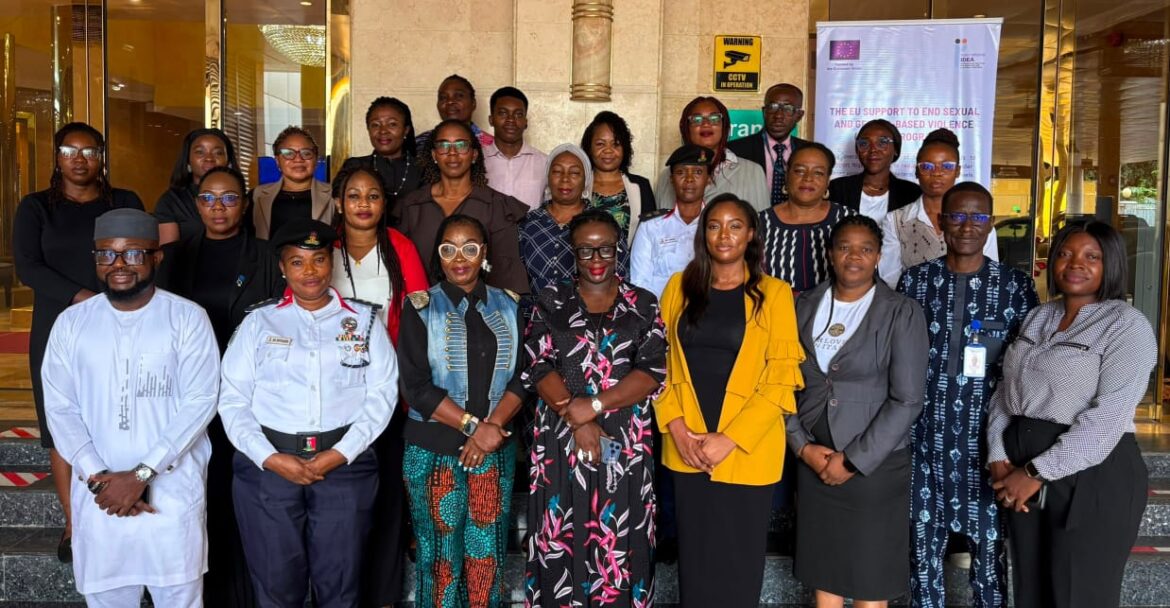
The development was highlighted on Tuesday in Abuja at the First Training of Trainers Workshop on the Standard Operating Procedure (SOP) for the Legal Pathway for the Prosecution of Perpetrators of School-Related Gender-Based Violence (SRGBV).
The initiative, supported by the European Union through its anti-sexual and gender-based violence programme and implemented by the International Institute for Democracy and Electoral Assistance (International IDEA) in collaboration with the Federal Ministry of Justice, brought together stakeholders from government institutions, security agencies, child protection bodies and civil society organisations.
Participants raised concern over the growing prevalence of violence in learning environments, including sexual harassment, bullying, corporal punishment, exploitation and technology-facilitated abuse, warning that such incidents are undermining trust in the education system and inflicting long-term harm on children.
Speaking at the workshop, Gender-Based Violence Policy and Strategy Development Specialist under the programme, Melissa Omene, described school-based violence as a serious threat to child safety and national development.
She noted that available data indicate that nearly one in five reported sexual violence cases occurs within school environments, while many children continue to suffer corporal punishment and other forms of abuse from authority figures.
Omene stressed that beyond the statistics are thousands of affected children whose education, emotional wellbeing and future prospects are compromised, with girls and other vulnerable groups disproportionately affected.
She explained that strengthening legal pathways for prosecution would help deter offenders and reinforce institutional accountability, adding that perpetrators must face consistent consequences across all levels of the justice system.
According to her, the Standard Operating Procedures, jointly developed in 2024 by the Federal Ministry of Justice and the Federal Ministry of Education to guide reporting, referral, investigation and prosecution processes, remain underutilised due to limited awareness and inconsistent implementation.
She added that the current training is designed to bridge these gaps by equipping stakeholders with practical tools for effective case management and coordinated response.
Omene further disclosed that the EU-funded programme, spanning 2025 to 2029, focuses on strengthening legal and policy frameworks, improving survivor support services and promoting behavioural and social change to reduce gender-based violence.
She also revealed ongoing efforts to upgrade selected health facilities in the Federal Capital Territory into Sexual Assault Referral Centres to enhance access to specialised care for survivors.
Head of the Sexual and Gender-Based Violence Response Unit at the Federal Ministry of Justice, Yewande Gbola-Awopetu, said protecting children requires coordinated action across all sectors, describing the SOP as a key instrument for ensuring consistency, professionalism and accountability in handling abuse cases.
She warned that violence in schools not only disrupts learning but also erodes public confidence in institutions and threatens the future of young Nigerians.
Gbola-Awopetu urged participants to serve as change agents within their institutions and ensure that no child is forced to choose between education and personal safety.
At the Federal Ministry of Education, Assistant Director Apakasa Augustina disclosed that the SOP document has been distributed to all 115 Federal Unity Colleges nationwide, with principals already engaged on implementation strategies.
She emphasised the critical role of teachers and school administrators in identifying, preventing and responding to abuse, noting that effective safeguarding systems depend on adequately trained frontline personnel.
Executive Director of Protect the Child Foundation, Elizabeth Ebulejonu Achimugu, observed that many cases of abuse fail to progress beyond reporting stages due to gaps in legal knowledge among frontline responders.
She stressed the need for continuous capacity building, adding that future phases of the programme would extend training to teachers, caregivers and other school personnel.
Stakeholders expressed optimism that stronger coordination among government institutions, civil society organisations, law enforcement agencies and development partners, including the European Union and International IDEA, would help close justice gaps, improve prosecution rates and restore Nigerian schools as safe environments for learning and development.