- As EFCC’s Olukoyede seeks stronger regional pact against trans-border crimes
President Bola Ahmed Tinubu has called on the Economic Community of West African States (ECOWAS) to classify resource theft — particularly illegal mining and mineral smuggling — as an international crime, warning that the menace threatens the peace, security, and economic development of the region.
The President made the call on Tuesday, October 14, 2025, while declaring open the 7th Annual General Assembly of the Network of National Anti-Corruption Institutions in West Africa (NACIWA) at the ECOWAS Secretariat, Asokoro, Abuja. The theme of the Assembly was “A United ECOWAS Against Corruption: Strengthening Regional Collaboration for Asset Recovery and Exchange of Information.”
Represented by the Secretary to the Government of the Federation, Senator George Akume, President Tinubu lamented that illicit financial flows and resource theft continue to cripple regional growth despite decades of reforms. “Illicit outflows remain an odious miasma. Stealing of mineral resources is on the rise, fueling the proliferation of small arms, light weapons, and violent crimes such as kidnapping and banditry. These have worsened our security challenges and undermined our development outlook,” he said.
He stressed the need for urgent collective action, urging ECOWAS to “designate resource theft, illegal mining, and mineral smuggling as international crimes that threaten regional stability,” and to rally global support against trade in stolen minerals from West Africa.
Highlighting Nigeria’s anti-corruption strides, President Tinubu noted that his administration has prioritized asset tracing and recovery, supported by new legal frameworks for asset management. He disclosed that proceeds from recovered assets are being channeled into productive ventures, citing the Students Loan Scheme and the Consumer Credit Scheme, both funded with ₦100 billion recovered by the Economic and Financial Crimes Commission (EFCC).
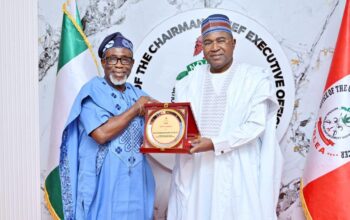
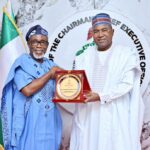
Earlier, EFCC Chairman and NACIWA President, Mr. Ola Olukoyede, reaffirmed the network’s role as a regional platform for anti-corruption cooperation. He outlined key achievements under his leadership since 2022, including NACIWA’s formal recognition by ECOWAS, the establishment of a permanent secretariat in Nigeria, and partnerships with the UNODC, AU Anti-Corruption Board, and the GlobE Network.
Olukoyede also revealed ongoing efforts to have NACIWA recognized as a Technical Commission under Article 19 of the ECOWAS Protocol, a move that would institutionalize coordination on investigations, asset recovery, and anti-corruption policy. “Our fight against corruption cannot be divorced from the broader issues of political stability and social justice in the region,” Olukoyede said, urging members to renew their commitment to collective action.
Attorney-General of the Federation and Minister of Justice, Lateef Fagbemi (SAN), commended Olukoyede’s leadership, describing it as “distinguished and exemplary,” while the Chairmen of the Senate and House Committees on Anti-Corruption and Financial Crimes — Senator Emmanuel Udende and Hon. Ginger Onwusibe (represented by Nnamdi Ezechukwu) — emphasized the importance of regional intelligence sharing and legislative support for anti-corruption efforts.
President of the ECOWAS Commission, Dr. Omar Alieu Touray, represented by Vice President Damtien L. Tchintchibidja, applauded the EFCC for strengthening NACIWA’s institutional role and called for deeper cooperation across member states.
The event, attended by key anti-corruption stakeholders including ICPC Chairman Dr. Musa Adamu Aliyu (SAN), EU Ambassador Gautier Mignot, and representatives of UNODC and civil society, concluded with a renewed regional commitment to harmonize legal frameworks and intensify joint action against corruption, illicit financial flows, and resource theft in West Africa.