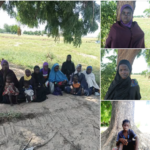
The West Africa Network for Peacebuilding (WANEP), under the EU-supported Research and Action for Peace (REcAP) programme, has raised alarm over the growing risks posed by unregulated madrassas in Nigeria, warning that the lack of oversight could expose young learners to extremist ideologies.
This concern was made public during a national deliberative briefing held in Abuja to present findings from two major studies examining the ideological, cultural, and security dimensions of religious education in Northern and Southwestern Nigeria.
In a statement issued on Monday by WANEP’s representative in Nigeria, Mr. Emmanuel Ami-Okhani, the session brought together policymakers, researchers, civil society actors, and security stakeholders to discuss how religious education intersects with radical ideologies, external funding, and youth identity formation.
The REcAP project, jointly implemented by WANEP, the Danish Refugee Council (DRC), and the Stockholm International Peace Research Institute (SIPRI), seeks to strengthen civil society’s role in addressing violent extremism and promoting peacebuilding across West Africa and the Lake Chad Basin.
One of the key studies, titled “Madrasas, Charities and Religious Radicalism in Northern Nigeria: A Study of the Almajiri System,” authored by Prof. Freedom Onuoha, Dr. Saheed Babajide Owonikoko, and Dr. Chukwuma Okoli, examined the operations of Almajiri schools in Abuja, Kano, and Borno states.

Presenting the report, Dr. Owonikoko explained that while the Almajiri system historically promoted Islamic education and discipline, its decline in regulation and growing dependence on undocumented foreign donations have made it susceptible to ideological manipulation.
He revealed that informal funding from foreign religious charities—mainly from the Middle East—often lacks transparency, making it difficult for authorities to track ideological influences or prevent extremist infiltration.
“Most Almajiri schools are not documented or supervised, making them vulnerable to ideological manipulation through informal funding channels,” Owonikoko warned. “While the majority of Almajiri students are peaceful and focused on Quranic education, the lack of structure creates loopholes that can be exploited by extremist elements.”

A second study, “Madrassas and Islamic Extremism among Teenage Muslim Students in Southwestern Nigeria,” presented by Dr. Busari Dauda of the University of Ilorin and co-authored with Dr. Alatise Remi Kasalla, explored how religious schools shape youth identity in Ilorin, Ibadan, and Osogbo.
Dr. Dauda noted that madrassas in the South-West are generally more structured and integrated into Yoruba Islamic cultural life, with many registered under education ministries. However, he cautioned that competition among school founders and sectarian affiliations are fueling the proliferation of ideologically inclined institutions.
Although the study found no direct evidence of violent radicalisation, Dauda pointed out that teenage students increasingly express feelings of global Muslim victimhood, influenced by narratives around the Palestinian conflict and Western policies towards Islam.
“Extremism is not part of the curriculum,” Dauda said, “but ideological influences can filter in through sect-based teachings and global narratives of injustice.”
The briefing ended with a call for greater government oversight, community engagement, and partnership with Islamic scholars to ensure that madrassas serve as centres of learning and peace rather than potential breeding grounds for radical ideologies.