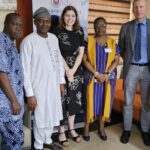
The United Nations Development Programme (UNDP) has urged Nigeria to end the persistent exclusion of women from political leadership, warning that the country cannot compete globally or fulfil its continental ambitions while keeping half its population out of decision-making.
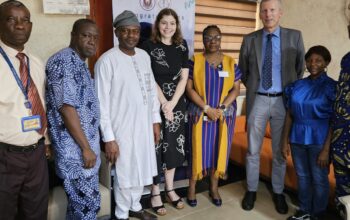
Speaking in Abuja at a High-Level Roundtable with media professionals on the proposed Reserved Seats Bill for Women, UNDP Resident Representative, Elsie Attafuah, said women’s political participation has become a strategic necessity in a world being reshaped by artificial intelligence, demographic shifts, mineral competition and intensifying geopolitical rivalry.
Attafuah stressed that discussions around the Special Seats Bill must move beyond emotion and partisan politics, noting that inclusive governance is now essential for national survival.
She said Nigeria faces a fiercely competitive global environment where ideas, values and influence are constantly contested. “Nigeria cannot walk into the future with half its population excluded from shaping decisions,” she said. “Nigeria cannot compete globally with less than 5% female representation. We need diverse voices and ideas at the table to position Nigeria as a great leader.”
Attafuah described Nigeria’s current female representation — less than 5%, including four women in the Senate and 17 in the House of Representatives — as incompatible with its ambition to lead Africa.
She referenced global evidence linking women’s political leadership to better outcomes in economic growth, health, education and technological innovation, citing countries such as Rwanda, Senegal, Mexico and Sierra Leone, where gender quotas have strengthened governance and stability.
According to her, Nigeria risks falling further behind as the world marks Beijing+30, noting that progress on gender equality remains uneven and the country’s political inclusion efforts remain far off the mark.
Attafuah added that quotas and special seats are not acts of charity but proven tools used globally to correct historical exclusion. Women’s political participation, she said, has become both a development and national security issue. “In a world driven by AI, demographic pressures and geopolitical tension, Nigeria needs every voice and perspective to compete,” she said.
She reaffirmed that UNDP’s support—at the invitation of the National Assembly—is centred on evidence that inclusive governance accelerates national progress. The agency has been assisting with consensus building through the African Facility for Women in Political Leadership.
Attafuah urged the media to play an active role in dismantling stereotypes that undermine women in politics. “The media does not only mirror society — it shapes society’s imagination. If Nigerians cannot imagine women as leaders, it becomes difficult to elect them,” she said.
President of the Women in Politics Forum, Ebere Ifendu, emphasised that legislative backing is essential for progress, noting that voluntary efforts within political parties have failed.
She commended partners such as UNDP, UN Women, the Canadian government, the EU, the British High Commission and supportive Nigerian men for their role in advancing the bill.
Stakeholders were encouraged to take decisive action ahead of the postponed vote on the Women’s Special Seats Bill, described as a historic opportunity for Nigeria.
The bill aims to increase women’s representation in parliament and strengthen Nigeria’s democratic inclusiveness.