The Economic and Financial Crimes Commission (EFCC) has reaffirmed its commitment to strengthening collaboration with the United Nations Office on Drugs and Crime (UNODC) and the Government of Canada to combat terrorism financing and illegal mining in Nigeria.
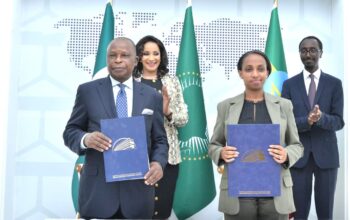
EFCC Chairman, Ola Olukoyede, disclosed this during a courtesy visit by a joint delegation from the Canadian Government and UNODC at the Commission’s headquarters in Jabi, Abuja, on April 24, 2026.
Represented by his Chief of Staff, Commander of the EFCC, CE Michael Nzekwe, Olukoyede expressed appreciation for the sustained support from both partners, describing the relationship as longstanding and impactful.
He noted that the Commission has recorded significant progress in tackling terrorism financing and illegal mining, including multiple convictions secured across its zonal directorates. According to him, the evolving nature of financial crimes—often driven by sophisticated technologies—requires continuous capacity enhancement to ensure effective enforcement.
“The EFCC has been actively engaged in addressing terrorism financing and illegal mining, and we have recorded notable successes. However, as criminal networks become more advanced, it is imperative that we strengthen our institutional capacity through training and technical support,” he said.
Olukoyede emphasised the Commission’s openness to deeper collaboration, particularly in areas of intelligence gathering, financial tracking, and enforcement operations, adding that dismantling illicit financial networks remains a core priority.
Also speaking, the EFCC Director of Investigation, Commander of the EFCC, CE Abdulkarim Chukkol, said the Commission has intensified operations against illegal mining, leading to increased arrests and prosecutions nationwide. He highlighted the importance of multi-agency coordination in addressing the complex linkages between illicit mining activities and financial crimes.
On his part, UNODC Counter-Terrorism Unit Project Coordinator, Tom Parker, said the visit was aimed at advancing collaborative frameworks to curb terrorism financing and illegal mining. He disclosed that a Canada-funded initiative has focused on the nexus between artisanal mining and illicit financial flows, leading to the establishment of a technical working group involving key stakeholders, including regulatory and security agencies.
Similarly, Canadian Senior Project Manager for Counter-Terrorism and Anti-Crime Capacity Building Programmes, Wilma Endamne, outlined areas of potential support, including provision of equipment, specialised software, and law enforcement training to enhance operational effectiveness.
The meeting underscored a shared commitment among the EFCC, UNODC, and the Canadian Government to strengthen institutional capacity and develop coordinated strategies to address emerging threats in terrorism financing and illegal mining.