For decades, Nigeria’s electricity sector has remained one of the country’s most persistent national failures. Across successive military and civilian administrations, promises of stable power supply have repeatedly dissolved into recurring blackouts, collapsing national grids, abandoned projects and deepening public frustration.
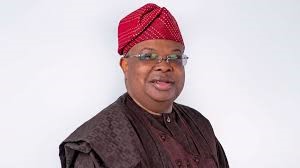
Now, with the appointment of Joseph Olasunkanmi Tegbe as Minister of Power, expectations are once again rising. But unlike in previous years, Nigerians are no longer persuaded by ambitious declarations or policy rhetoric. What they seek now are measurable results.
The challenge before Tegbe is therefore not whether he understands the depth of the crisis, but whether he can succeed where many of his predecessors failed.
Nigeria’s power sector is burdened by the legacy of unrealised reforms and expensive policy experiments. From the multi-billion-dollar National Integrated Power Projects (NIPP) initiated under former President Olusegun Obasanjo, to the privatisation of generation and distribution companies during the Goodluck Jonathan administration, successive governments have consistently assured citizens that stable electricity was within reach. Under former President Muhammadu Buhari, the Siemens-backed Presidential Power Initiative was presented as a major turning point for transmission and distribution infrastructure. President Bola Ahmed Tinubu’s administration has similarly pledged sweeping reforms aimed at improving generation, market efficiency and sector sustainability.
Yet, for millions of Nigerians, generators remain the primary source of electricity.
The contradiction remains stark: Africa’s largest economy continues to generate only about 4,000 to 5,000 megawatts of electricity for a population exceeding 200 million, despite having an installed generation capacity of more than 13,000MW.
The economic consequences have been severe. Many industries have struggled under the enormous cost of self-generated power. Small businesses spend substantial portions of their earnings on diesel and fuel. Manufacturers continue to cite unstable electricity as a major driver of rising operational costs. Students often rely on torchlights for study, while hospitals battle to preserve vaccines and operate critical medical equipment.
For many Nigerians, electricity is no longer viewed merely as an infrastructure problem; it has become a defining factor separating economic survival from productivity and growth.
It is against this backdrop that Tegbe assumes office under intense public scrutiny.
Unlike many previous appointees in the sector, Tegbe enters the ministry with the reputation of a technocrat rather than a career politician. A chartered accountant and management consultant, he built much of his professional career in corporate advisory, investment strategy and institutional restructuring. He previously served as Director-General and Global Liaison for the Nigeria-China Strategic Partnership, where he reportedly played a role in strengthening investment engagement between Nigeria and Chinese investors, particularly in infrastructure and industrial development.
Before that role, Tegbe worked with multinational consulting firm Deloitte and later developed a profile as a senior business strategist with experience in governance systems, public-private partnerships and economic planning. Supporters argue that this private-sector background gives him a stronger understanding of the financial and structural weaknesses that have undermined Nigeria’s electricity sector for years.
His advocates further contend that the crisis confronting the power sector is no longer purely technical. In their view, it has evolved into a broader governance and management challenge requiring disciplined execution, investor confidence and institutional accountability.
During his Senate screening, Tegbe outlined priorities focused on improving gas supply, strengthening grid reliability, accelerating metering, enforcing accountability among distribution companies and restoring financial discipline across the electricity value chain.
Those priorities reflect the reality that Nigeria’s electricity challenges are deeply systemic.
Generation companies continue to complain about inadequate gas supply and mounting unpaid debts. Distribution companies face huge financial losses, ageing infrastructure, electricity theft and weak revenue collection systems. Transmission infrastructure remains fragile and outdated, resulting in repeated system collapses and stranded generation capacity.
The national grid itself has increasingly become symbolic of institutional fragility. Frequent grid collapses have repeatedly plunged large parts of the country into darkness, disrupted economic activity and exposed the weakness of existing infrastructure. Regulatory reports continue to highlight the wide gap between installed capacity and actual available power supply.
For many citizens, these recurring failures have eroded public confidence in government-led reforms.
Questions persist over whether political leaders are genuinely committed to resolving the crisis or simply managing it as a recurring political issue. While some observers blame corruption and regulatory inefficiency, others point to decades of policy inconsistency, weak implementation and institutional dysfunction.
That public skepticism explains why Tegbe’s emergence has been met with cautious optimism rather than widespread celebration.
Nevertheless, his supporters believe he enters office with certain advantages. His experience in investment negotiations and institutional restructuring may prove valuable in a sector desperately in need of efficiency, credibility and investor confidence. Yet technical competence alone will not resolve Nigeria’s electricity crisis.
What the sector arguably requires most is political resolve.
Meaningful reform will inevitably involve difficult decisions, including enforcing payment discipline, restructuring underperforming distribution companies, addressing subsidy distortions, improving tariff transparency, reducing electricity theft and demanding greater accountability from private sector operators. Such reforms are politically sensitive because electricity affects households, businesses and industries across the country.
The minister must also confront the deeper governance failures that have undermined previous interventions.
Over the years, billions of dollars have reportedly been invested in the power sector with limited impact on actual supply. Numerous projects have been launched with considerable publicity, only to become trapped in bureaucratic delays, funding shortages or contractual disputes. Many Nigerians have grown weary of ceremonial project inaugurations without visible improvements in electricity delivery.
As a result, measurable performance indicators may matter more than policy speeches.
If Tegbe hopes to rebuild public confidence, Nigerians will expect clear timelines, transparent reporting mechanisms and visible improvements in supply stability. Citizens continue to question why gas shortages persist despite Nigeria’s vast natural gas reserves, why transmission bottlenecks remain unresolved after repeated intervention programmes, and why estimated billing continues despite repeated promises of nationwide metering.
Above all, many Nigerians want leadership that recognises electricity as central to national development.
No industrial economy can thrive without stable power infrastructure. Countries that achieved rapid industrial growth invested heavily in reliable electricity systems capable of supporting manufacturing, technology, healthcare and modern commerce. Without dependable electricity, Nigeria’s ambitions for industrialisation, digital innovation, manufacturing expansion and foreign investment may remain severely constrained.
The task before Tegbe therefore extends beyond repairing infrastructure or stabilising the grid. His broader challenge is to restore credibility to a sector where public trust has steadily diminished.
There are indications that structural reforms may be gathering momentum. The Electricity Act 2023 has created opportunities for states to establish independent electricity markets, potentially reducing overreliance on the fragile national grid. Several states have already begun exploring decentralised electricity arrangements and subnational power initiatives.
However, Nigerians have heard reform promises before.
What the public seeks now is evidence of sustained progress.
Ultimately, the success or failure of Tegbe’s tenure may rest on a simple but critical question: can his administration deliver steady, predictable and measurable improvements in electricity supply, even if gradual?
If he succeeds, he could emerge as the minister who finally begins the long-delayed transformation of Nigeria’s power sector.
If he fails, he risks joining the long list of public officials whose promises vanished into the darkness Nigerians know too well.