Nigeria and Germany have strengthened their longstanding bilateral relationship with fresh commitments on development financing, private sector investment, skills acquisition, energy transition, agriculture and digital transformation.
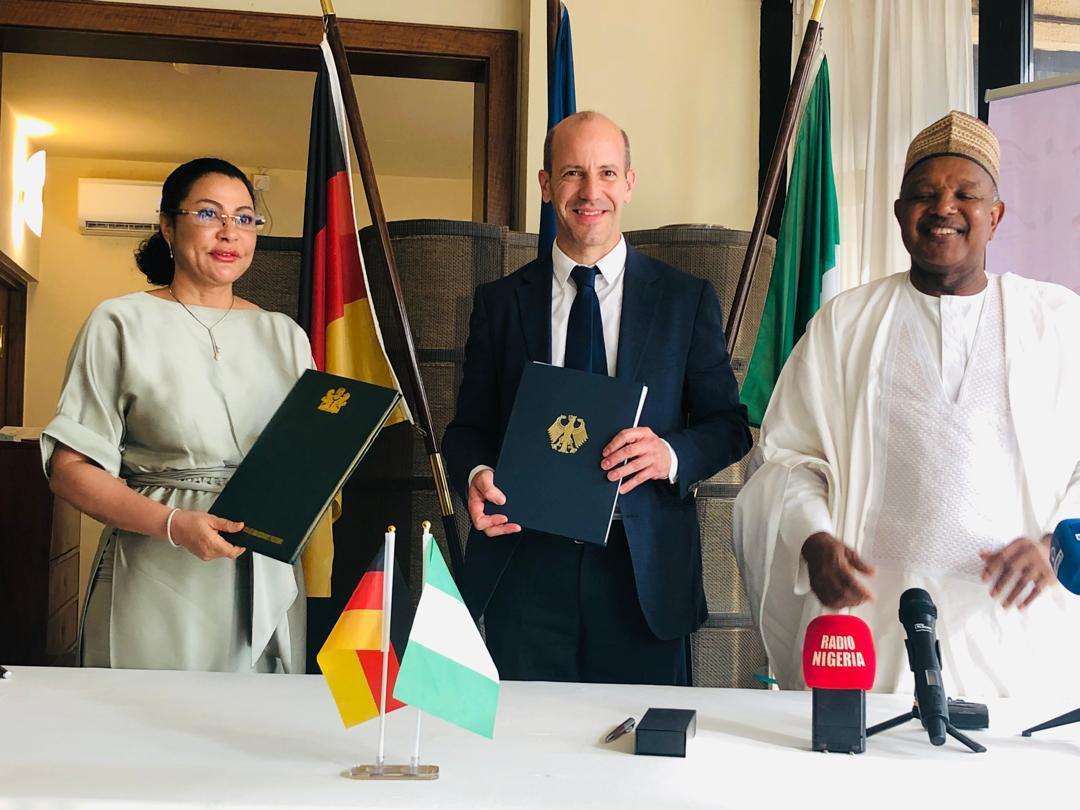
The renewed partnership was reaffirmed during high-level bilateral engagements and the signing of a Summary of Record in Abuja, where both countries reviewed ongoing programmes and agreed on expanded areas of cooperation to support Nigeria’s reform and development agenda.
Nigeria’s Minister of Budget and Economic Planning, Senator Abubakar Atiku Bagudu, described the agreements as a major milestone in Nigeria-Germany relations, saying they reflect shared priorities built on mutual respect, sustainable development and inclusive economic growth.
Bagudu expressed appreciation to the German Government, including the Federal Ministry for Economic Cooperation and Development (BMZ), the Federal Ministry for Economic Affairs and Energy, KfW Development Bank, GIZ and other implementing partners for what he termed constructive and forward-looking negotiations.
A major outcome of the engagement was Germany’s commitment of approximately €65 million in fresh financial and technical cooperation targeted at priority sectors. Both countries also discussed a proposed €300 million export credit guarantee framework aimed at mobilising private investment and expanding long-term financing for strategic infrastructure and development projects in Nigeria.
Officials from both sides noted that the financing arrangements are expected to unlock broader capital inflows into critical sectors of the Nigerian economy.
The expanded partnership focuses on agricultural transformation, climate and energy transition, skills development, healthcare strengthening and inclusive economic growth.
German institutions and private sector companies, including Siemens and SAP, showcased ongoing projects in Nigeria during the engagement. Siemens highlighted its involvement in power infrastructure and energy sector skills development initiatives, while SAP presented digital solutions designed to modernise tax administration and improve Nigeria’s digital governance systems.
The German delegation, led by BMZ Africa Director, Mr. Philip Knill, also outlined plans to support large-scale skills development programmes, including proposals aimed at training up to one million Nigerians in technical, digital and vocational competencies to boost productivity and employment.
Both sides acknowledged Nigeria’s ongoing economic reforms under the Renewed Hope Agenda, including macroeconomic stabilisation measures, energy sector reforms, healthcare transformation and policies aimed at improving the investment climate and stimulating private sector-led growth.
Knill expressed confidence in Nigeria’s economic reform trajectory, describing the country as a strategic African partner with strong potential for industrial expansion, agricultural modernisation and energy transition.
Nigeria, in turn, reaffirmed its commitment to ensuring that all agreed programmes remain nationally driven, well coordinated and aligned with long-term development frameworks, including the National Development Plan 2026–2030 and Agenda 2050.
As part of the broader engagement, German officials undertook field visits and technical discussions with Nigerian ministries and agencies, including visits to energy infrastructure sites and development programme locations.
They noted that existing Nigeria-Germany cooperation programmes have already supported hundreds of thousands of smallholder farmers, expanded access to training opportunities and strengthened thousands of small and medium-sized enterprises across the country, contributing to higher productivity and improved incomes.
In the energy sector, discussions focused on efforts to increase generation capacity and strengthen transmission systems, with Germany expressing readiness to continue supporting Nigeria’s power sector reforms and renewable energy ambitions.
A major emphasis of the discussions was the need for development cooperation to serve as a catalyst for private sector investment, innovation and job creation. Officials stressed that future partnerships should increasingly move beyond aid and focus on leveraging private capital for sustainable economic growth.
Knill also highlighted the importance of stronger economic cooperation between Europe and Africa amid global instability, supply chain disruptions and climate-related challenges.
Both governments described the agreements as the beginning of a deeper implementation-focused partnership rather than an endpoint.
German officials underscored the importance of a “signing today, implementation tomorrow” approach, stressing the need to translate agreements into measurable development outcomes. Nigerian officials echoed the position, pledging effective coordination and delivery of all agreed programmes.
The renewed Nigeria-Germany partnership is expected to deepen bilateral cooperation across economic, technological and development sectors, while opening new opportunities for investment, innovation and sustainable growth, particularly in energy, agriculture, digital economy and skills development.