The International Finance Corporation (IFC) has announced plans to deploy a technical mission to Nigeria to explore scalable investment frameworks aimed at attracting private capital into key sectors including livestock, energy, and housing.
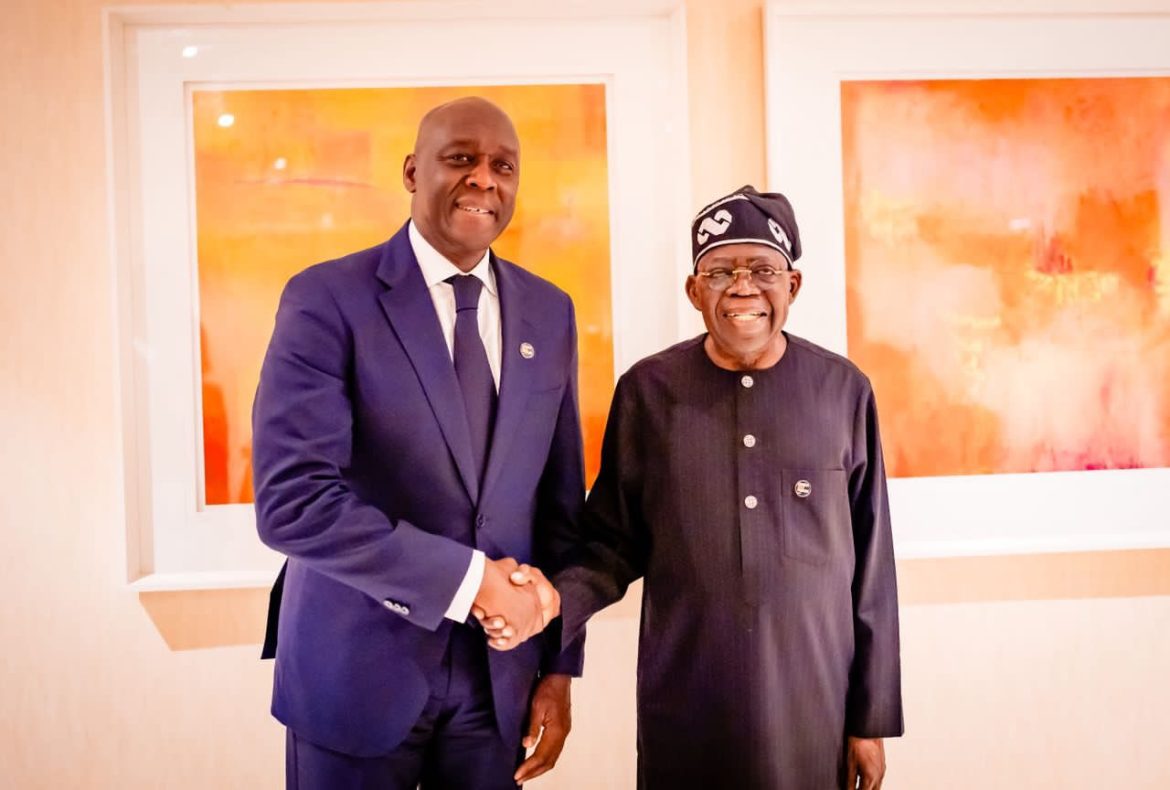
The IFC Managing Director, Makhtar Diop, disclosed this on Thursday in Kigali, Rwanda, during a meeting with President Bola Ahmed Tinubu on the sidelines of the 13th Africa CEO Summit.
Diop led a senior IFC delegation that included Ethiopis Tafara, Regional Vice President for Africa, and Dahlia Khalifa, Director for Central Africa and Nigeria. He said the mission would focus on identifying investment structures capable of unlocking long-term private sector financing in priority sectors of the Nigerian economy.
He noted that the IFC is particularly interested in deepening collaboration with Nigeria in energy infrastructure, housing development, and livestock production value chains.
Diop also commended President Tinubu’s ongoing economic reforms, especially the removal of fuel subsidies and the unification of exchange rates, describing them as bold and transformative measures that have strengthened investor confidence.
“President Tinubu, you have been so courageous in removing the subsidy. When you did it, I said to myself, President Tinubu took the bull by the horns,” Diop said, praising the administration’s reform trajectory.
In response, President Tinubu reaffirmed Nigeria’s commitment to expanding private sector participation in national development, stressing the need to mobilise institutional capital across Africa for large-scale infrastructure financing.
He argued that African pension funds must evolve into strategic development finance tools capable of supporting infrastructure, energy transition, and productive-sector investments across the continent.
Tinubu further called for stronger efforts to harness African institutional capital for long-term economic transformation, noting that such mobilisation is essential to addressing Africa’s infrastructure deficit and development challenges.
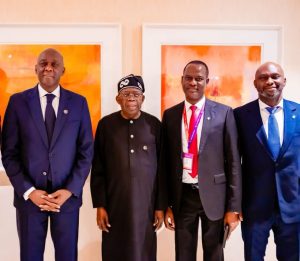
The President also emphasised the importance of decentralised energy systems and improved transmission infrastructure as catalysts for industrial growth and private investment.
“If you want Africa to leapfrog, then energy transmission and decentralisation are important. The funding gap is there, and we must work together,” he said.
Discussions at the meeting also covered mechanisms to strengthen infrastructure financing through institutional investors, local currency funding structures, and currency swap arrangements designed to deepen cross-border investment flows.
Diop noted that collaboration with African financial institutions, including Nigerian banks such as Access Bank, could enhance regional financial integration, facilitate trade, and support business expansion across the continent.
He added that African countries face shared development constraints and must pursue coordinated strategies anchored on stronger institutions and regional economic champions, describing the vision as part of an emerging “African Renaissance.”
The engagement underscores growing efforts by Nigeria to position itself as a key destination for development finance and private capital inflows, particularly in infrastructure, energy, housing, and agricultural transformation.