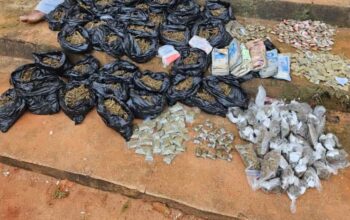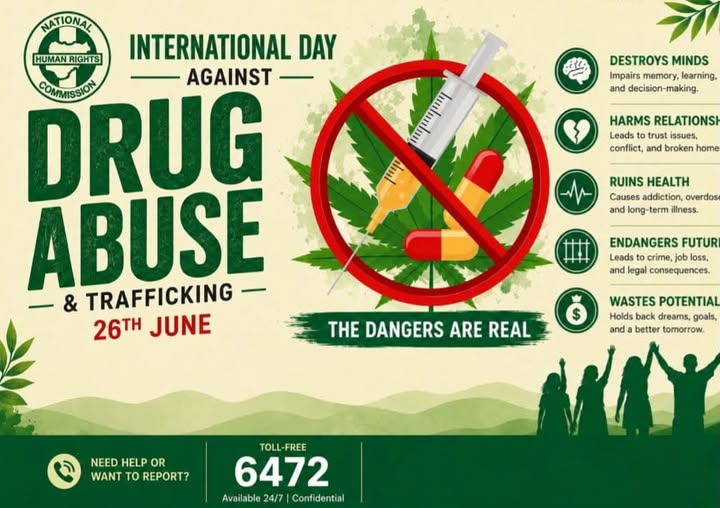
The National Human Rights Commission (NHRC) has expressed deep concern over the escalating rate of drug abuse and illicit drug trafficking in Nigeria, warning that the growing crisis poses significant threats to public health, national security, human dignity and sustainable development.
In a statement commemorating the 2026 International Day Against Drug Abuse and Illicit Trafficking, the Executive Secretary of the Commission, Tony Ojukwu, described substance abuse—particularly among young Nigerians—as an alarming national challenge requiring urgent, coordinated and multi-sectoral action.
Ojukwu stressed that while combating drug abuse and illicit trafficking remains a national priority, enforcement measures must be firmly anchored on human rights principles and the rule of law. He noted that Nigeria’s response should be guided by the provisions of the 1999 Constitution, which guarantees the rights to life, dignity, personal liberty and fair hearing, as well as the Mental Health Act 2021 and the National Health Act 2022.
He added that the country’s anti-drug efforts must also comply with its international obligations under the International Covenant on Civil and Political Rights, the International Covenant on Economic, Social and Cultural Rights, the African Charter on Human and Peoples’ Rights and the United Nations Drug Control Conventions.
The NHRC boss maintained that individuals suffering from drug dependence should be treated with dignity rather than subjected to stigma, discrimination or degrading treatment. According to him, they should have access to quality healthcare, rehabilitation services, psychosocial support and opportunities for successful reintegration into society.
Ojukwu observed that drug abuse has become a major driver of human rights violations, contributing to domestic violence, criminality, human trafficking, exploitation and worsening insecurity across communities, while undermining the enjoyment of fundamental rights and freedoms.
He said the Commission has consistently advocated a public health-based approach to addressing drug use and addiction, including the organisation of national legislative dialogues and stakeholder engagements aimed at promoting evidence-based policies and effective harm reduction strategies.
The Executive Secretary called on the National Assembly to incorporate robust human rights safeguards into the proposed national policy on drug-use quantification thresholds. He urged lawmakers to clearly distinguish between individuals using controlled substances for legitimate medicinal or therapeutic purposes and those involved in drug trafficking and distribution, insisting that people seeking treatment should not be criminalised.
He also appealed to government agencies, civil society organisations, families, educational institutions, faith-based organisations and community leaders to intensify awareness campaigns to prevent drug abuse, particularly among children and young people who remain highly vulnerable to substance dependence.
Ojukwu further urged law enforcement agencies to strengthen efforts against illicit drug trafficking while ensuring strict adherence to national and international human rights standards in the discharge of their responsibilities.
Reaffirming the Commission’s commitment to tackling the drug abuse crisis, he said the NHRC would continue to collaborate with relevant stakeholders to promote policies and programmes addressing the root causes of substance abuse, including poverty, unemployment, social exclusion and limited access to education and mental healthcare.
He called on all Nigerians to join hands in building a society free from drug abuse, where the rights, dignity and well-being of every individual are protected and upheld.