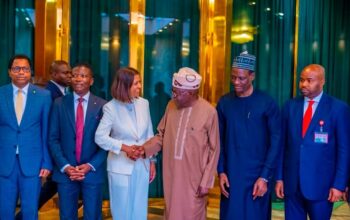
In a damning indictment of Nigeria’s criminal justice system, the Minister of Interior, Dr. Olubunmi Tunji-Ojo, has revealed that a staggering 93% of inmates in the country’s custodial centers are state offenders, with up to 50% of the total prison population locked up for offenses that do not warrant imprisonment.
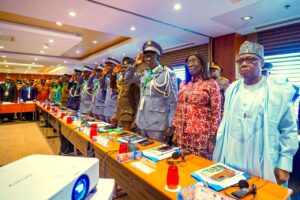
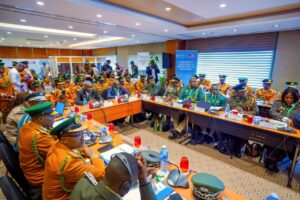
Speaking on Wednesday at the Regional Conference on the Classification of Prisoners and the Use of Technology in Abuja, Tunji-Ojo exposed the economic absurdity and systemic flaws driving Nigeria’s chronic prison congestion. He challenged the nation to stop asking how many more prisons to build, and start asking who actually belongs behind bars.
The Economic Absurdity of Minor OffensesTo illustrate the dysfunction, the Minister revealed how an immediate audit upon his assumption of office led to the release of over 4,000 inmates in a single day—decongesting the nation’s facilities by 5% overnight.
The offense? Being unable to pay minor fines or compensation fees of less than ₦500,000.”I called my Permanent Secretary and the Controller General… I said, give me the record of people who are in correctional centres for fines and compensation of less than ₦500,000. And guess what? Over 4,000 people.
What is the sense in this? I feed them in a year with more than 10 times the value of the fine. How is the government benefiting?”— Dr. Olubunmi Tunji-Ojo, Minister of Interior
The Stats at a Glance Metric Before Reform Current / Reform ImpactAnnual Recidivism Cases~13,000~1,000One-Day Decongestion0%5% (4,000+ minor offenders freed) State vs. Federal Offenders N/A93% State / 7% Federal Inmates in Higher Education Low / Nominal261 Undergrad, 62 Postgrad Major Jailbreaks (Past 3 Years) FrequentZeroFederal Taxpayers Footing the Bill for State Failures
The Minister’s revelations throw a harsh spotlight on the relationship between federal and state justice systems.
While the Nigerian Correctional Service is entirely funded by the Federal Government, 93% of the inmates it feeds, houses, and guards are held for violating state laws. This massive imbalance has intensified calls for state governments to take financial and administrative responsibility for their judicial outcomes by expanding legal aid, speeding up trials, and adopting non-custodial sentencing.
Biometrics and the Three-Year Jailbreak Freeze Beyond decongestion, Nigeria has achieved a landmark milestone: three consecutive years without a single jailbreak or facility attack.
Tunji-Ojo credited this success to aggressive integration of technology and inter-agency biometric data sharing. To prove his point, the Minister shared a striking anecdote of an escaped inmate who attempted to bypass the system.
“Immediately he put his finger at the Nigeria Immigration Service to procure a passport, the system flagged him as an escaped inmate. Immigration reached out to the Correctional Service, and he was arrested right there.”
Slashing Recidivism through Education Rather than treating prisons as mere warehouses for human beings, the Ministry of Interior has shifted toward active rehabilitation. The results are stark: annual recidivism (repeat offenses) has plummeted from 13,000 cases in 2023 to just 1,000 last year.
This drop is heavily tied to academic and vocational empowerment within the walls:18 National Open University of Nigeria (NOUN) study centers have been built inside prisons.1,448 inmates are enrolled in formal education (including 261 undergraduate and 62 postgraduate students).9,582 inmates are currently undergoing vocational and non-formal rehabilitation.
Supporting this shift, the Controller-General of the Nigerian Correctional Service, Sylvester Nwakuche, emphasized that proper inmate classification is the backbone of modern prison reform. “The risks, needs, and rehabilitation requirements of a convicted violent offender cannot be treated in the same manner as those of a low-risk or vulnerable inmate,” Nwakuche stated, urging African nations to unite in leveraging tech to overhaul correctional administration across the continent.