Nigeria risks missing a major opportunity to expand its exports to China unless it urgently addresses weaknesses in production, processing, logistics and export capacity, experts and stakeholders have warned.
The warning followed China’s decision to eliminate tariffs on imports from African countries that maintain diplomatic relations with Beijing, opening a potentially lucrative market for Nigerian products.
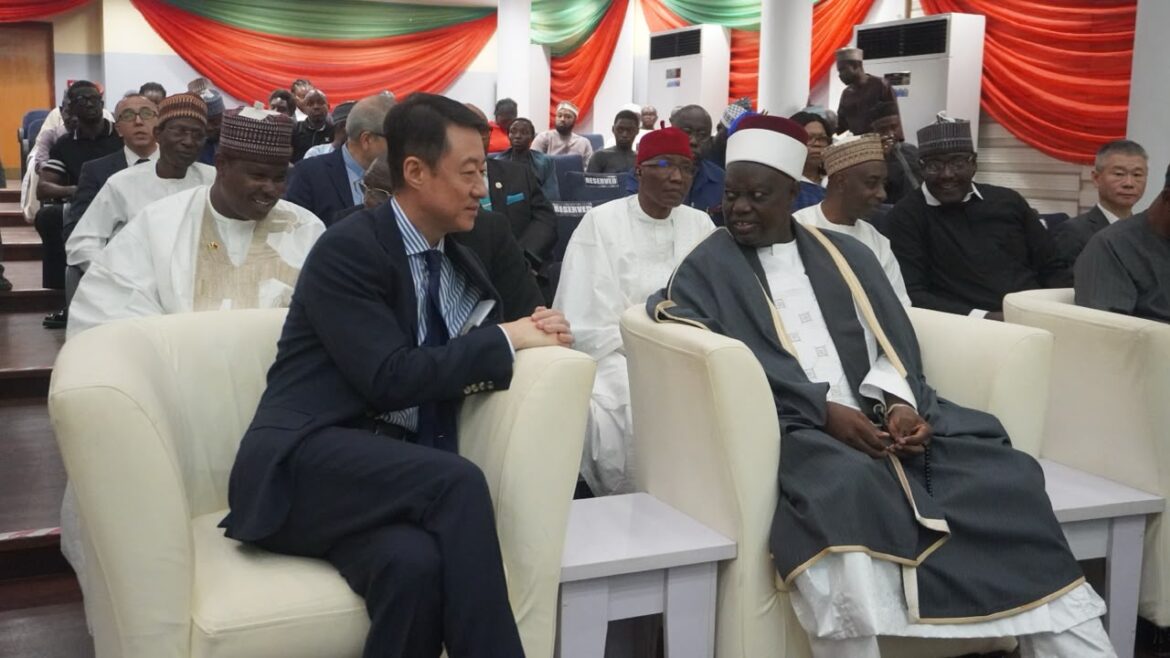
Chinese Ambassador to Nigeria, Yu Dunhai, disclosed in Abuja that bilateral trade between Nigeria and China reached $18 billion in the first half of 2026, while Chinese imports from Nigeria rose by 80 per cent to $2.3 billion following the implementation of the zero-tariff policy on May 1.
Stakeholders, however, cautioned that preferential market access would yield little benefit unless Nigeria could consistently produce goods that meet Chinese standards and supply them in commercially viable volumes.
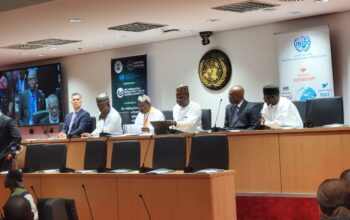
They spoke at an international seminar organised by the Centre for China Studies, which brought together government officials, lawmakers, diplomats, manufacturers, farmers, exporters and academics to examine the implications of China’s zero-tariff initiative for Nigeria and Africa.
Yu said the policy was already delivering tangible benefits to Nigerian exporters through reduced tariff costs.
He cited sesame exports, saying every 100 tonnes now saves about $11,000 in tariff payments, while Nigeria’s annual export of 7,000 tonnes of cattle bone granules could save nearly $450,000.
He added that a 23,000-tonne shipment of Nigerian liquefied propane saved about $300,000 in taxes on the first day of the new regime.
The ambassador, however, stressed that tariff elimination alone would not guarantee success in the Chinese market.
“Meeting Chinese market standards and ensuring reliable supply volumes are essential for long-term success,” he said.
Yu urged Nigerian producers to improve quality, strengthen supply chains and shift from the export of raw commodities to processed and higher-value products. He also said China was prepared to support Nigeria through technology, equipment and technical expertise, including partnerships for industrial parks and local processing.
The Director of the Centre for China Studies, Charles Onunaiju, warned that the preferential access could become another missed opportunity if Nigeria failed to reform its production and trade systems.
“Zero-tariff treatment for products coming from Africa is only the starting point, it’s not the finish line,” he said.
Onunaiju called for the removal of structural barriers, harmonisation of standards, improved customs procedures and stronger regional integration under the African Continental Free Trade Area.
He said the Chinese initiative offered Africa an opportunity to emerge as a major global manufacturing hub, but only if countries developed productive capacity rather than remaining exporters of raw materials.
“The opportunity of becoming the next workshop of the world is in Africa,” he said.
The Federal Government also stressed the need to use the opportunity to accelerate industrialisation and increase domestic value addition.
The Permanent Secretary, Ministry of Foreign Affairs, Ambassador Dunoma Ahmed, said the critical issue for Nigeria was not merely how much it could sell to China, but how much value it could retain domestically.
“Our natural resources must become the starting point, not the end point, of economic activity,” he said.

Ahmed advocated the use of crude oil as feedstock for petrochemical and downstream industries, agricultural commodities for agro-processing and manufacturing, and solid minerals for mineral processing and industrial production.
“In other words, we must transition from exporting resources to exporting value,” he said.
He said Nigeria was seeking Chinese and other international investments in factories, processing plants, technology centres, logistics networks and skilled employment.
Agriculture is expected to be a major test of whether the Chinese policy can deliver a structural transformation in Nigeria’s export profile.
The Minister of State for Agriculture and Food Security, Senator Aliyu Abdullahi, identified processed cassava, rice, spices, shea products, hibiscus, cashew, soybean products, fruits and vegetables as areas with strong export potential.
He warned, however, that Nigeria could not dominate the Chinese market simply by increasing shipments of raw commodities.
“The question before us, therefore, is not ‘Can Nigeria export more?’ The question should be ‘Can Nigeria export better?’” he said.
Abdullahi identified productivity, processing capacity, logistics, quality assurance, traceability, financing, storage and compliance with international standards as critical areas requiring urgent intervention.
He said the government was expanding agro-processing through the Special Agro-Processing Zones programme, with projects launched or under development in Kaduna, Cross River, Ogun and Gombe states.
He also disclosed that a mechanisation programme involving 2,000 Belarusian tractors and other equipment was being implemented to increase agricultural productivity.
Chairman of the occasion and former Director-General of the National Institute for Policy and Strategic Studies, Jonathan Juma, urged Nigeria to learn from its experience under the African Growth and Opportunity Act, warning against allowing another preferential trade arrangement to pass without developing the capacity to exploit it.
He challenged policymakers to move beyond celebrating Nigeria’s natural endowments and focus on converting them into competitive products for international markets.
The Director overseeing the Office of the Permanent Secretary, Ministry of Budget and Economic Planning, Dr Samson Ebimaro, similarly called for improvements in infrastructure, logistics, financing, technology transfer and compliance with international standards.
He identified agriculture, agro-processing, solid minerals, manufacturing, leather and the creative industries as sectors with significant potential in the Chinese market.
Meanwhile, the Chairman, House Committee on Nigeria-China Relations, Hon. Ja’afaru Yakubu, called for the removal of visa bottlenecks confronting Nigerian traders travelling to China.
He said easier movement of Nigerian businesspeople would enable them to build direct relationships with Chinese buyers and strengthen Nigeria’s participation in the market.
Yakubu said the National Assembly would continue discussions with the Chinese Embassy on the issue, stressing that business mobility was an important component of deeper trade relations.
The stakes are high, with China-Africa trade reaching a record $207 billion in the first half of 2026.
But the Abuja seminar underscored a fundamental challenge: while China may have lowered tariff barriers, Nigeria’s production barriers remain.
The real test for Nigeria, therefore, is no longer securing access to the Chinese market. It is building the farms, factories, processing plants, standards, logistics systems and export infrastructure required to ensure that Nigerian products can compete when Chinese buyers open their doors.