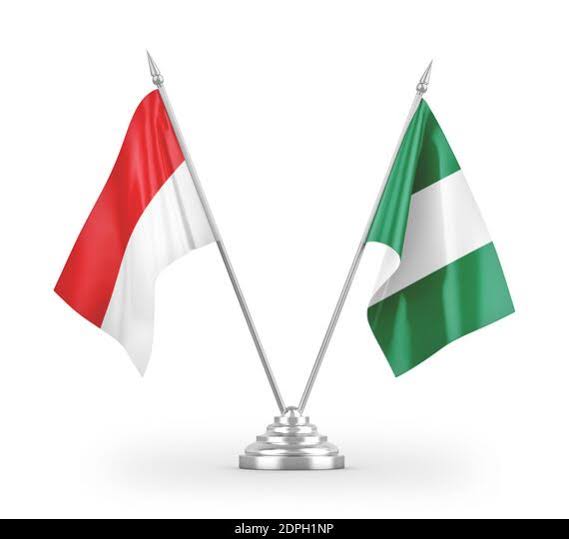
Nigeria and Indonesia are seeking to raise bilateral trade beyond the $3 billion annual mark while deepening cooperation in investment, technology transfer, industrialisation, agriculture, healthcare and other strategic sectors.
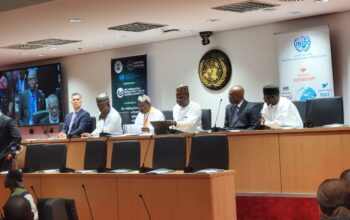
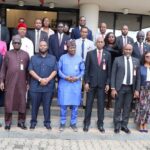
The two countries made the commitment in Abuja on Tuesday at a diplomatic reception marking Indonesia’s 81st Independence Anniversary.
The Indonesian Ambassador to Nigeria, Bambang Suharto, said bilateral trade had consistently exceeded $3 billion annually, making Nigeria one of Indonesia’s major trading partners in Africa.
Suharto said the combined population of more than 550 million people in both countries offered significant opportunities for expanded trade, investment, technology exchange and job creation.
“Our bilateral trade has consistently surpassed USD 3 billion annually, cementing Nigeria’s position as one of Indonesia’s foremost trading partners in Africa,” he said.
According to Indonesian data, bilateral trade stood at about $3.4 billion in 2024, with Indonesia recording a trade deficit of approximately $2.5 billion. Indonesian exports to Nigeria include palm oil and other manufactured and consumer goods, while crude oil is among Nigeria’s major exports to Indonesia.
Suharto said the next phase of bilateral relations should move beyond commodity trading towards stronger industrial and investment partnerships capable of creating jobs and expanding local production.
“Our ultimate ambition is not simply to trade more, but to cultivate a resilient partnership in which businesses on both sides thrive, local industries develop, and our people directly reap the benefits of the opportunities we create together,” he said.
He cited the activities of Indonesian-linked companies operating in Nigeria, including Dufil Prima Foods Ltd, Primera Food Nigeria Ltd, Tempo Scan Pacific, Glorious Dexa Mandaya Ltd and Orange Kalbe Ltd, noting their contributions through investments, employment generation and corporate social responsibility.
The ambassador also highlighted educational and cultural exchanges, including Indonesian scholarship programmes that have enabled Nigerian students to study in Indonesia.
He said the diversity of both countries provided opportunities for sharing experiences on national cohesion, dialogue, inclusion and tolerance.
Suharto said Indonesia remained committed to strengthening its economic engagement with Nigeria and other African countries through platforms such as the Indonesia-Africa Forum, with emphasis on energy, agriculture, healthcare, infrastructure and human-resource development.
The Indonesian Foreign Ministry has said at least 15 Indonesian companies are active in Nigeria, particularly in food, pharmaceuticals, mining and fast-moving consumer goods.
Dufil Prima Foods, which has Indonesian corporate interests through the Salim Group and its relationship with Indofood, was cited as an example of how economic relations between the two countries have evolved from simple import-export transactions to manufacturing and backward integration.
The Indonesian Embassy has also facilitated new commercial partnerships. At the 2025 Trade Expo Indonesia, it helped secure nine trade commitments between Nigerian and Indonesian businesses valued at $24.99 million.
Speaking on behalf of Nigeria, the Permanent Secretary, Ministry of Foreign Affairs, Ambassador Dunoma Umar Ahmed, said Nigeria was seeking to transform its longstanding diplomatic relationship with Indonesia into a stronger economic partnership that would support domestic production and attract sustainable investment.
Ahmed identified Indonesia’s experience in industrialisation, manufacturing, digital transformation, infrastructure, agriculture, maritime development and small and medium-sized enterprises as areas where Nigeria could benefit from expanded cooperation.
“Nigeria is particularly interested in expanding cooperation that can support the development of local productive capacity, strengthen value chains, promote technology transfer, and attract sustainable investment,” he said.
He called for stronger connections among private-sector organisations, chambers of commerce, financial institutions and business communities in both countries.
According to him, agriculture and agro-processing, manufacturing, energy, infrastructure, pharmaceuticals, the digital economy and creative industries offer substantial opportunities for increased trade and investment.
Ahmed also called for practical barriers to commerce, including market-access challenges, inadequate business information and weak connections between business communities, to be addressed.
Nigeria and Indonesia established diplomatic relations in 1965. Indonesia initially maintained its embassy in Lagos before relocating it to Abuja in 2008, while Nigeria established its embassy in Jakarta in 1976.
The two countries also maintain longstanding cooperation under South-South frameworks, including the D-8 Organisation for Economic Cooperation, established in 1997 by Bangladesh, Egypt, Indonesia, Iran, Malaysia, Nigeria, Pakistan and Türkiye. Indonesia is chairing the organisation for 2026–2027.
Ahmed said the D-8 and other multilateral platforms should be used more effectively to promote sustainable development financing, climate action, food and energy security, technology transfer and reforms of international financial and governance institutions.
He also advocated expanded cooperation in education, skills development, science, technology and innovation, particularly in view of the large and youthful populations of both countries.
He proposed greater exchanges among universities, research institutions, cultural organisations, young professionals and civil society groups, saying such engagements could deepen mutual understanding and create additional opportunities for practical cooperation.