Nigeria’s trade relationship with China is showing renewed momentum, with the Asian economic giant importing nearly $2.3 billion worth of Nigerian goods in the first half of 2026, representing an almost 80 per cent increase compared with the same period in 2025.
The development comes as total bilateral trade between Nigeria and China rose by 75 per cent year-on-year to $18 billion, signalling expanding commercial ties between both countries.
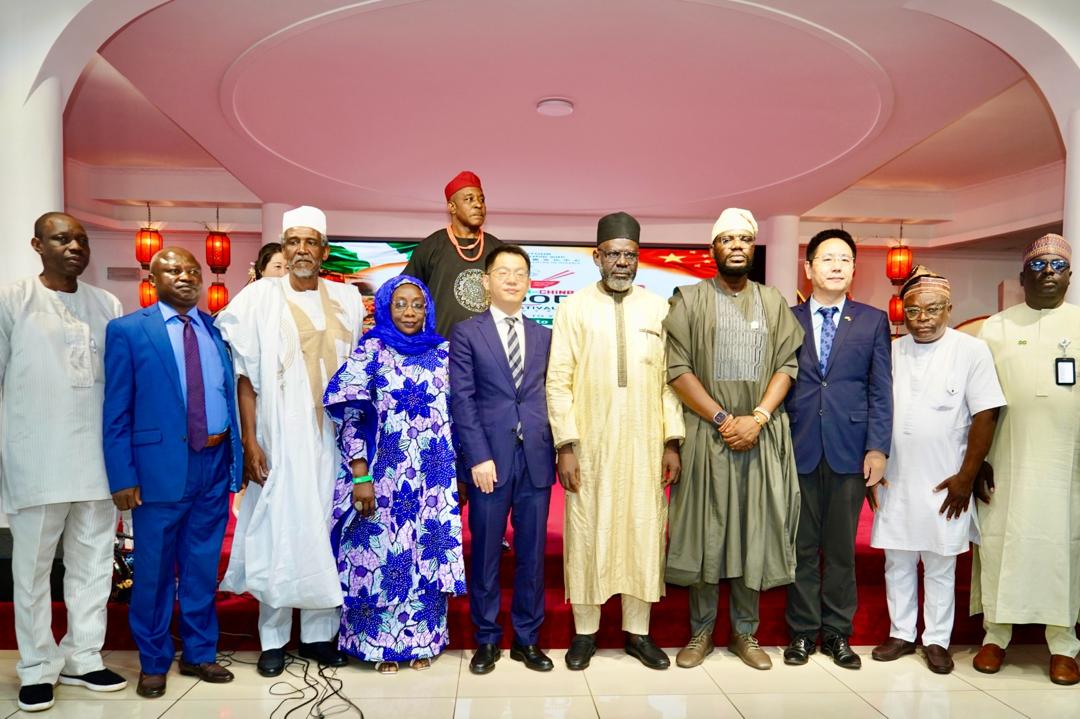
The figures were disclosed on Thursday in Abuja by the Chargé d’Affaires of the Chinese Embassy in Nigeria, Zhou Hongyou, during the Nigeria-China Food Festival held at the China Cultural Centre.
Zhou said China’s zero-tariff policy for African countries that maintain diplomatic relations with Beijing provides Nigeria with a significant opportunity to expand its exports into one of the world’s largest consumer markets.
“This is a great chance for Nigeria to expand exports to China,” Zhou said.

The development comes at a time when the Federal Government is intensifying efforts to diversify the economy, increase non-oil exports, boost foreign exchange earnings and create jobs through increased domestic production.
China’s nearly $2.3 billion purchase of Nigerian goods within six months underscores the growing demand for Nigerian products. However, the challenge remains whether local producers can significantly scale up production, meet international quality standards and maintain a consistent supply to the vast Chinese market.
The expanding trade relationship could create fresh opportunities for Nigerian agricultural products, processed foods, solid minerals and manufactured goods, while reducing the country’s longstanding dependence on crude oil exports.
Zhou also noted that growing economic cooperation was being complemented by increased cultural and people-to-people exchanges, adding that 2026 marks 55 years of formal diplomatic relations between Nigeria and China.
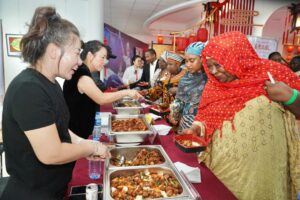
He called for deeper cooperation in education, culture, technology, the arts and youth development, stressing that stronger people-to-people engagement would help sustain bilateral relations for future generations.
Speaking at the event on behalf of the Minister of Arts, Culture, Tourism and the Creative Economy, Hannatu Musawa, the Permanent Secretary, Abdulkarim Ibrahim, said Nigeria’s food industry represented a major opportunity for economic growth, particularly in tourism, hospitality and employment generation.
He noted that food and beverages constitute the largest subsector of Nigeria’s tourism economy and called for stronger Nigeria-China collaboration in gastronomy, tourism, hospitality, culinary education and creative entrepreneurship.
The Director-General of the National Institute for Hospitality and Tourism, Aare Abisoye Fagade, said Nigeria’s diverse culinary traditions could be developed into a globally competitive food-tourism industry through improved packaging, standardisation and commercialisation.
The festival also showcased the potential of cultural diplomacy, with Nigerian and Chinese artistes combining traditional Nigerian drums with Chinese percussion instruments.
Director-General and Artistic Director/Chief Executive Officer of the National Troupe of Nigeria, Hajia Kaltume Bulama Gana, said such collaborations could strengthen mutual understanding and create opportunities for Nigerian artistes to perform and collaborate in China.
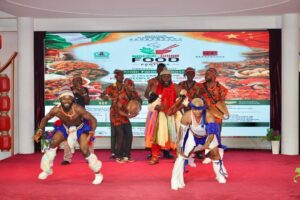
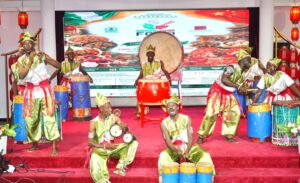
Former Director-General of NIHOTOUR, Alhaji Munzali Dantata, who studied in Beijing several decades ago, also called for stronger cooperation between both countries, particularly in education and cultural exchanges.
Beyond the food, music and cultural displays, however, the event highlighted a broader economic opportunity for Nigeria.
With Chinese imports of Nigerian goods approaching $2.3 billion in just six months and total bilateral trade reaching $18 billion, the challenge for Abuja will be to ensure that the expanding trade relationship translates into increased production of Nigerian-made goods, stronger local industries, higher foreign exchange earnings and sustainable job creation.
Beijing’s zero-tariff policy could offer Nigeria a major platform to strengthen its non-oil export base, but the ultimate gains will depend on the country’s ability to convert its vast agricultural, industrial and mineral resources into competitive products capable of meeting the demands of the Chinese market.