Conglomerate unveils 10-year expansion blueprint spanning smart cities, agriculture, fintech, aviation and manufacturing
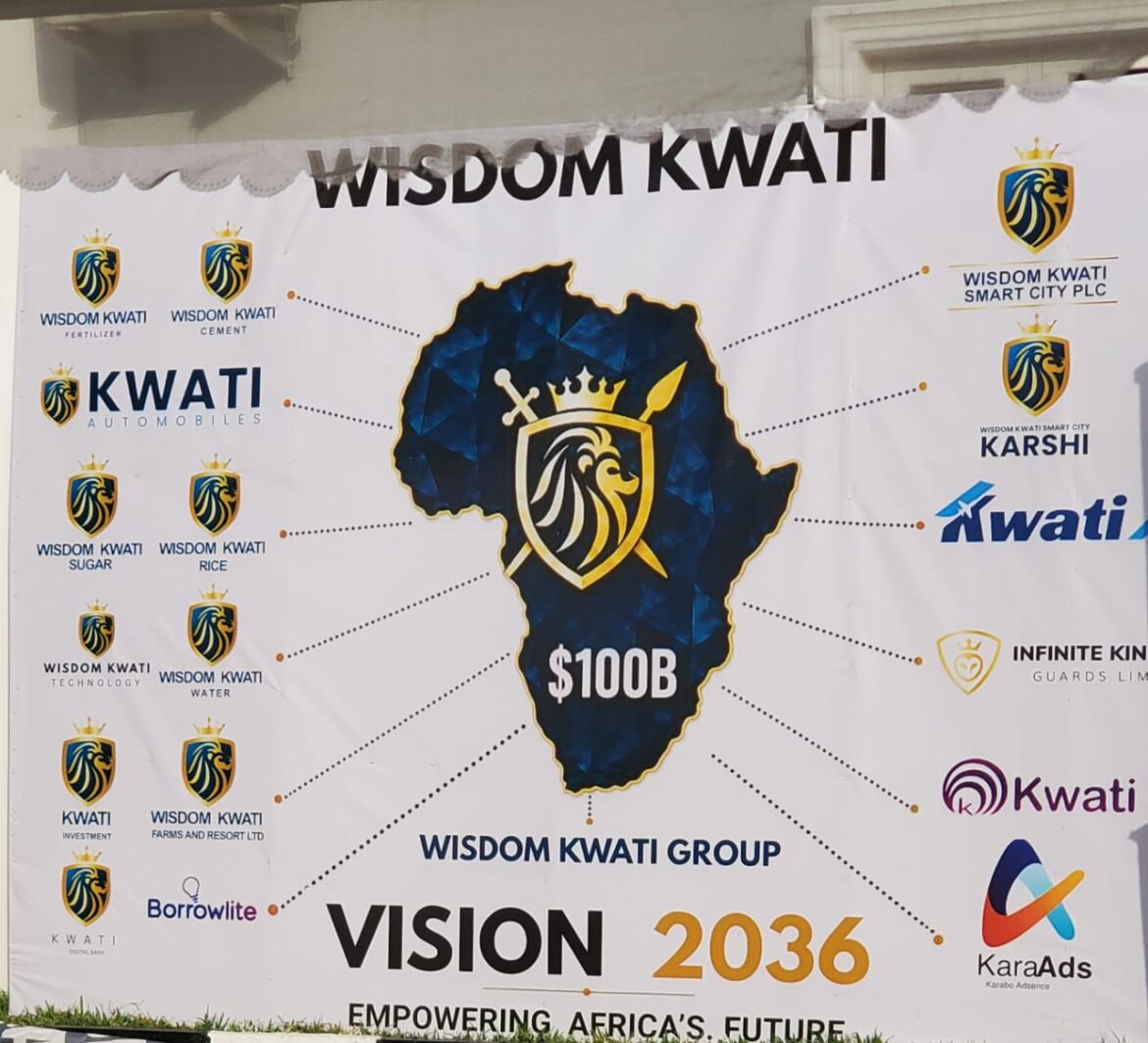
Wisdom Kwati Group, a Nigerian conglomerate, has unveiled an ambitious 10-year growth strategy targeting $100 billion in consolidated revenue by 2036, alongside plans to list on the Nigerian Exchange (NGX) and London Stock Exchange in 2027.
The group announced the blueprint, tagged Vision 2036, during the inauguration of its corporate headquarters in Abuja and the presentation of Wisdom Kwati Smart City Plc as a public limited company.
The strategy outlines expansion across real estate, agriculture, financial technology, aviation, artificial intelligence and manufacturing, with proposed investments in Nigeria and other international markets.
Chairman of the group, Wisdom Kwati, described the $100 billion revenue target as a long-term ambition, stressing that it did not represent the company’s current financial position.
He said the group intended to strengthen corporate governance, introduce independent oversight and adopt internationally recognised auditing standards as it pursued its expansion plans.
“It is not a claim that we are already a $100 billion enterprise. We are not. We will report under IFRS, audited internationally. Related-party transactions will go to independent directors. If we cannot defend that figure, we will not claim it,” Kwati said.
He identified regulatory compliance, proper documentation and measurable performance as immediate priorities, adding that the success of Vision 2036 would depend on building businesses whose financial results could withstand independent scrutiny.
NGX, LONDON LISTINGS TARGETED FOR 2027
As part of its capital-raising strategy, the group said Wisdom Kwati Smart City Plc had received clearance to commence its listing process, with private placements expected to precede a proposed initial public offering and dual listing on the NGX and London Stock Exchange in 2027.
The proposed listings are intended to provide access to capital markets to support the group’s expansion. However, the timeline remains subject to regulatory approvals and the completion of the necessary listing requirements.
Management said the smart city subsidiary operates across seven locations in Adamawa, Rivers, Abuja, Lagos, Kaduna, Nasarawa and Oyo states.
The subsidiary’s assets were valued at approximately N74 billion, according to figures presented by the company, which also reported turnover of N10 million at an earlier stage of its operations. The figures were not independently verified at the event.
Under Vision 2036, the smart city business is projected to contribute $50 billion in revenue through the development of five million homes across Africa, Asia, Europe and North America.
The scale of the target places housing and urban development at the centre of the group’s long-term growth strategy, although achieving it would require substantial financing, land acquisition, infrastructure investment and effective project delivery across multiple jurisdictions.
FINTECH, AI DRIVE DIGITAL EXPANSION
The group is also betting on financial technology and artificial intelligence to diversify its revenue base.
Management said its fintech platform currently has more than 7,000 users, with plans to increase the figure to two million within 24 months and 50 million by 2036. The platform is projected to contribute $20 billion in revenue over the longer term.
Its artificial intelligence platform, Karrot, which the company said had generated more than N100 million, is targeting $1 billion in revenue by 2030.
The group did not provide independently verified financial statements or detailed assumptions underpinning the projected revenues.
The proposed expansion reflects the company’s ambition to combine technology-driven services with its investments in physical infrastructure and consumer-facing businesses.
AGRICULTURE, MANUFACTURING EXPANSION
In agriculture, the conglomerate said it had acquired 1,000 hectares of land in Keffi, Nasarawa State, for farming, with plans to increase its cultivated area to 10,000 hectares by 2030.
Its longer-term ambition is to secure up to 500,000 hectares across West Africa.
Management also disclosed that it had secured 11,500 hectares in Nuni, Sierra Leone, near an airport, in partnership with the country’s government.
Discussions are reportedly ongoing on proposed smart city projects in the United Arab Emirates, Ghana and Houston, Texas, by 2030.
Beyond real estate and agriculture, the group plans to introduce bottled water and rice products by January 2027, followed by sugar in the second quarter, cement in the third quarter and fertiliser towards the end of the year.
The proposed product launches would broaden the group’s presence in agriculture, food processing, construction materials and consumer goods.
Its business portfolio, according to management, includes Karabo Construction, Infinity Kingdom Guards, Kwati Fintech Bank, Kwati Rice and Sugar, Kwati AI and Kwati Air, among other interests spanning construction, security, technology, aviation and real estate.
FROM START-UP TO MULTI-SECTOR CONGLOMERATE
The Group Chief Operating Officer, Pastor Baba Yerima Ballah, traced the organisation’s evolution from its beginnings as Tarabost about a decade ago to what he described as a 500-person organisation.
Ballah said the company had initially explored foreign financing for its smart city concept through a proposal submitted to the German government.
However, he said regulatory bottlenecks frustrated efforts to secure the funding, prompting the group to reconsider its strategy and pursue local development.
He said the organisation subsequently expanded into several sectors, with the aim of creating an interconnected business structure capable of supporting growth across its subsidiaries.
Kwati said the group’s approach was designed to translate ambitious development plans into tangible infrastructure, products and services.
“Africa does not lack visions. What it lacks is the operating machine that will turn visions into houses with bedrooms, flights that land on time, and cities that will have water and title, not only renders,” he said.
He explained that the group intended to develop an integrated business model in which its subsidiaries would patronise one another, creating internal demand and strengthening commercial relationships across its operations.
Management also pledged to protect investors’ funds and honour agreed returns, arguing that the credibility of Vision 2036 would ultimately depend on execution rather than projections.
FINANCING, GOVERNANCE KEY TO VISION 2036
Despite the scale of its ambitions, the group faces significant financing, regulatory and operational challenges in delivering its proposed expansion programme.
Developing five million homes across several continents, expanding agricultural operations across West Africa, building new manufacturing capacity and growing a fintech platform to 50 million users would require substantial capital, strong corporate governance and sustained commercial performance.
The proposed NGX and London Stock Exchange listings could provide an avenue for raising funds, but their completion would depend on meeting the applicable regulatory, financial disclosure and market admission requirements.
The group’s projected revenues, reported asset valuation, proposed listings and international expansion plans were not independently verified at the event.
Vision 2036 therefore represents a far-reaching corporate growth ambition whose credibility will ultimately rest on transparent financial reporting, access to investment capital and the demonstrable performance of its businesses.
For now, Wisdom Kwati Group has set out its targets. The challenge ahead will be converting those projections into bankable projects, operational businesses and verifiable financial results by 2036.