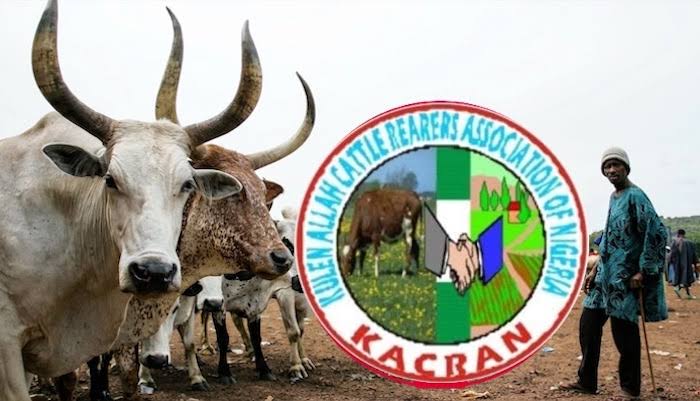
The Kulen Allah Cattle Rearers Association of Nigeria (KACRAN) has raised concerns over the reported large-scale movement of livestock from Nigeria to neighbouring African countries, warning that the trend could undermine food security, domestic livestock production, employment and economic growth.
The association called on Northern governors, traditional rulers, local government chairmen, security agencies and other stakeholders to urgently intervene to protect the country’s livestock resources and strengthen domestic supply.
In a statement signed by its National President, Hon. Khalil Mohd Bello, KACRAN said trailers loaded with cattle, rams and sheep were reportedly leaving major livestock markets in Northern Nigeria for Burkina Faso, Côte d’Ivoire and Togo.
It identified Potiskum in Yobe State, alongside Damaturu, Maiduguri, Ngalda and Gombe, as key livestock trading centres from which animals were allegedly being transported across national borders.
According to Bello, information available to the association indicates that about five trailers of sheep and rams leave the small ruminants market in Potiskum daily for foreign destinations.
Although the association acknowledged that cross-border livestock trading was a legitimate commercial activity, it argued that more animals should be supplied to domestic markets, particularly in Lagos, Port Harcourt, Asaba and other parts of Southern Nigeria.
KACRAN said expanding domestic distribution would help retain economic value within Nigeria, especially as insecurity and other challenges had reportedly affected livestock supplies from neighbouring Niger Republic, Chad and Cameroon.
The association warned that continued livestock outflows, combined with cattle rustling, banditry, inadequate grazing facilities and dwindling access to water, could further weaken the country’s capacity to produce sufficient meat and milk for its growing population.
Insecurity, grazing constraints worsen crisis
KACRAN attributed the challenges facing livestock producers to years of insecurity, inadequate water infrastructure, declining access to grazing reserves and what it described as insufficient attention to pastoral development by some Northern state governments.
It said attacks by bandits and other criminal groups, alongside cattle rustling across the North-West, North-East and North-Central regions, had caused substantial livestock losses and compounded the difficulties confronting pastoralists.
The association warned that further depletion of the national herd could undermine efforts to boost local meat and milk production, generate employment and reduce dependence on imported livestock products.
It also expressed concern over the rising cost of livestock, warning that many households could struggle to afford rams for Eid-el-Kabir and other religious and social celebrations.
According to the statement, ram prices currently range from N300,000 to N1 million, depending on size, while a ram costing N100,000 may no longer meet the requirements of some naming ceremonies.
KACRAN cautioned that prices could rise further before the next Eid-el-Kabir if the authorities failed to address supply constraints and improve domestic livestock production.
The association’s estimates of livestock movements, historical herd losses and prevailing market prices were not independently verified.
Calls for export restrictions, livestock investment
To reverse the trend, KACRAN urged Northern governors and relevant authorities to impose an immediate embargo on the export of female animals and young breeding stock, arguing that preserving breeding capacity was essential to rebuilding Nigeria’s livestock population.
It also called for the identification of major livestock exporters and the provision of soft loans to help them expand their businesses while redirecting more supplies to Nigerian markets, particularly in the South.
The association further urged state governments to reclaim and rehabilitate grazing reserves and cattle routes, establish adequate water points, improve access to animal feed and strengthen security operations to tackle cattle rustling and banditry.
It advocated the multiplication of livestock through improved breeds and access to affordable credit for livestock traders, farmers and prospective investors in livestock and fisheries production.
KACRAN also called for financial and institutional support for businesses across the livestock value chain, noting that increased investment could protect livelihoods, create employment opportunities for young people, conserve foreign exchange and stimulate economic growth.
The association maintained that livestock development should be treated as a national economic priority rather than an issue affecting pastoralists alone.
It urged political leaders, traditional institutions, business operators and security agencies to coordinate efforts to address the challenges facing pastoralists and livestock producers.
KACRAN said urgent and coordinated intervention was necessary to safeguard Nigeria’s livestock resources, strengthen domestic production and ensure the sector’s continued contribution to food security, employment and national development.