- Countries agree on extradition, asset recovery, prisoner transfer and anti-drug trafficking measures as Nigeria ranks third globally in UK student visas
The United Kingdom and Nigeria have agreed to strengthen bilateral cooperation on migration, justice and national security, with fresh commitments to combat visa fraud, organised immigration crime, cyber-enabled fraud and drug trafficking.
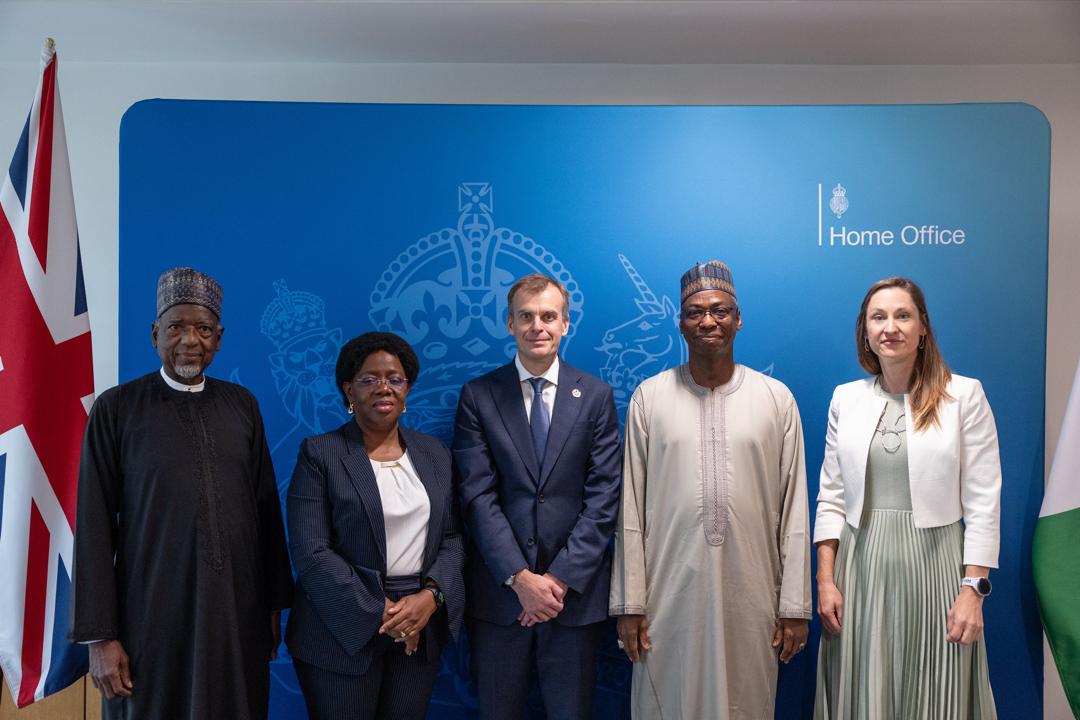
The agreements were reached at the annual UK-Nigeria Migration, Justice and Home Affairs Dialogue held in London on October 6, following commitments made during President Bola Tinubu’s State Visit to the UK in March.
The two countries also agreed to expand cooperation on extradition, asset recovery, prisoner transfer, document verification and border management, as well as the safe and dignified return and reintegration of migrants.
The renewed partnership is designed to strengthen law-enforcement collaboration, protect legitimate travellers and address criminal activities that exploit migration systems and cross international borders.
According to the British government, Nigeria is the third-largest source of student visas issued by the UK globally and the fifth-largest source of work visas, underscoring the importance of maintaining legitimate migration channels while preventing fraud and abuse.
British Deputy High Commissioner, Vicky Seymour, said the dialogue was translating the political commitments made during Tinubu’s State Visit into practical measures that would benefit citizens of both countries.
“Building on the momentum of President Tinubu’s State Visit, we are turning political commitments into action that benefits citizens in both our countries, from tackling visa fraud and organised immigration crime to strengthening border security and supporting safe and dignified return and reintegration,” she said.
Seymour added that the partnership aimed to protect legitimate travellers, ensure accountability for those who abuse immigration systems and enhance security in both countries.
On Nigeria’s part, the Permanent Secretary of the Ministry of Foreign Affairs, Dr Dunoma Umar Ahmed, emphasised that effective migration cooperation must balance enforcement with opportunities for lawful movement between the two countries.
Ahmed described migration as one of the most significant and visible aspects of UK-Nigeria relations, stressing the need for credible legal pathways alongside measures to combat irregular migration and associated criminal activities.
He said the discussions were ultimately intended to promote the security, prosperity and safety of both countries and their citizens.
A major component of the agreement is strengthened judicial and law-enforcement cooperation, particularly in extradition, asset recovery and prisoner transfer. These measures are expected to improve coordination in addressing cross-border criminality and ensuring that offenders cannot easily evade justice by operating across national jurisdictions.
The two governments also committed to improving document verification and border management systems to identify fraudulent travel documents, disrupt organised immigration crime and strengthen the integrity of their respective immigration processes.
Efforts to combat cyber-enabled fraud and drug trafficking will further broaden the security partnership, reflecting the growing need for intelligence-sharing and coordinated enforcement against criminal networks operating across borders.
Beyond security, both countries agreed to support the development of Nigerian visa pathways for businesses seeking to invest in Nigeria.
The proposed initiative is intended to facilitate legitimate business travel and investment, reinforcing the economic dimension of the bilateral relationship while ensuring that immigration controls are not compromised.
The emphasis on legal migration opportunities reflects Nigeria’s position as a major source of students and workers travelling to the UK and the shared interest of both governments in preserving legitimate routes for education, employment and business.
The dialogue was jointly chaired by senior officials of Nigeria’s Ministry of Foreign Affairs and the UK Home Office. Both sides agreed to monitor implementation of the commitments to ensure that the outcomes of the meeting translate into measurable progress.
Nigeria is scheduled to host the next annual UK-Nigeria Migration, Justice and Home Affairs Dialogue in 2027, providing an opportunity for both governments to assess progress and identify additional areas for cooperation.
The latest agreements signal a broader effort by Abuja and London to deepen strategic relations by combining tougher action against immigration-related offences and transnational crime with improved legal migration opportunities, stronger judicial cooperation and expanded economic engagement.
For both countries, the challenge will be to ensure that the commitments produce tangible results in combating criminal networks, protecting legitimate migrants and strengthening public confidence in their migration and justice systems.