- Washington warns cartels may shift trafficking routes to Africa as agency says seizures worth $360m expose bid to turn Nigeria into drug production hub
The United States has commended the National Drug Law Enforcement Agency (NDLEA) for dismantling four clandestine methamphetamine laboratories linked to Mexican drug cartels in Nigeria, describing the operations as a major contribution to the fight against transnational organised crime.
The commendation came as the NDLEA Chairman/Chief Executive, Brig. Gen. Buba Marwa (rtd), urged Washington to sustain and, if possible, increase its assistance to the agency, warning that any reduction in support could create operational gaps that international drug cartels and terrorist networks might exploit.
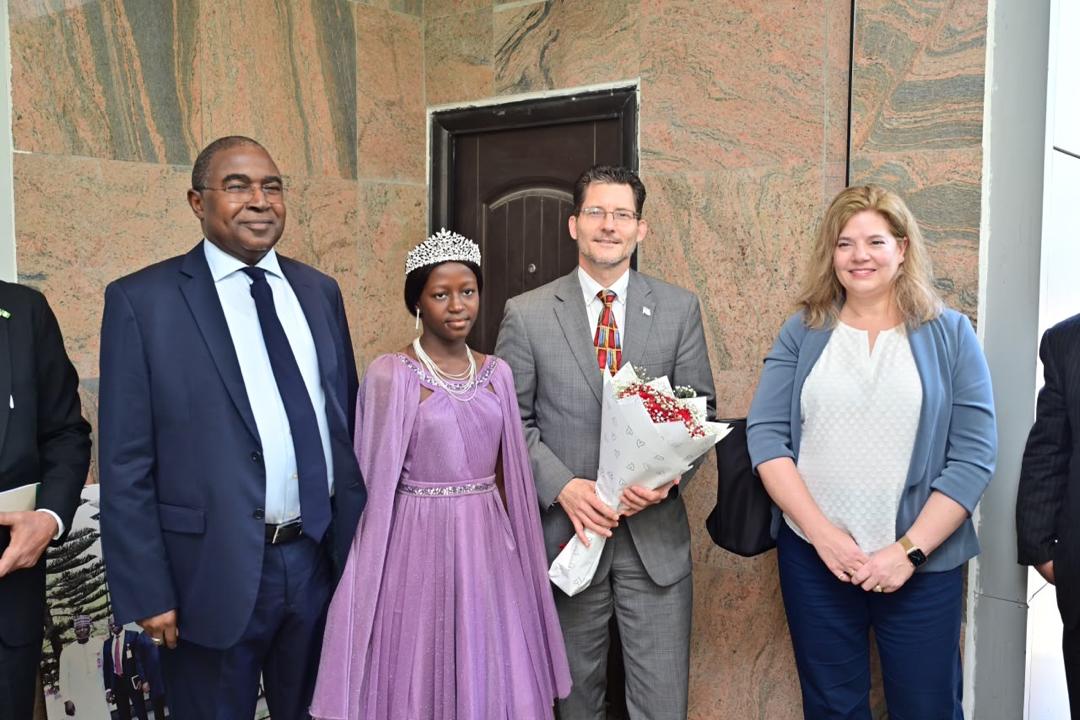
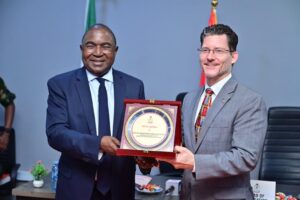
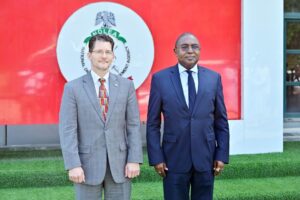
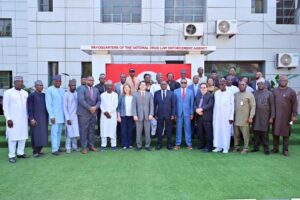
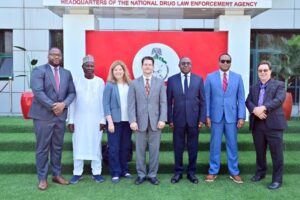
The United States Deputy Assistant Secretary of State for International Narcotics and Law Enforcement Affairs (INL) for Africa and the Middle East, Michael Gonzales, gave the commendation on Tuesday during a visit to the NDLEA national headquarters in Abuja.
Gonzales, who assumed office four months ago, said Nigeria was the logical first destination for his visit because of its position as an African economic powerhouse and the impressive operational achievements of the country’s anti-drug agency.
He said the longstanding partnership between Nigeria and the United States, coupled with the NDLEA’s successes, made it important to assess its operations firsthand.
“When I was thinking where does it make the most sense to visit first, Nigeria was a clear answer,” Gonzales said, citing the country’s leadership role on the continent and the “impressive wins” recorded by the NDLEA and its inter-agency partners.
“I wanted to see firsthand where the magic happens, as we say in the United States,” he added.
The American official identified the discovery and dismantling of four methamphetamine laboratories this year as evidence of the NDLEA’s operational capabilities, particularly its intelligence-led investigations, inter-agency coordination, international cooperation and prosecution of offenders.
He stressed that the global nature of illicit drug trafficking required closer cooperation among countries, noting that narcotics remained one of the foreign policy issues with some of the most direct consequences for American families and communities.
According to him, the work of the INL and the NDLEA “fundamentally delivers for the Nigerian people, for the American people.”
US warns of shifting cartel routes to Africa
Gonzales warned that intensified pressure on drug cartels in the Western Hemisphere could push trafficking networks towards Africa, increasing Nigeria’s strategic importance in international counter-narcotics operations.
He likened the shifting of trafficking routes to “squeezing a balloon”, explaining that stronger enforcement in one region could force criminal organisations to seek alternative corridors through Africa to Europe and other destinations.
He called for sustained action against transnational criminal organisations, including efforts to dismantle the financial networks that sustain their operations.
The US official also expressed concern over the growing shift from plant-based drugs to synthetic substances, which can be more difficult to detect and potentially more lethal.
His remarks highlighted concerns that criminal organisations could exploit Nigeria’s strategic location, commercial connections and regional transport networks to establish new production and distribution channels as enforcement pressure increases elsewhere.
Four laboratories expose cartel expansion plans
Responding, Marwa said the four laboratories linked to Mexican cartels demonstrated the scale of the threat and the urgent need for stronger international cooperation to prevent Nigeria from becoming a major manufacturing centre for synthetic drugs.
He disclosed that NDLEA operatives had dismantled what he described as the largest clandestine methamphetamine laboratory ever discovered in Nigeria, located in a forest in Ijebu East, Ogun State.
The operation led to the arrest of three Mexican methamphetamine experts and their Nigerian collaborators, while illicit substances valued at more than $360 million were recovered from the facility, according to the NDLEA chairman.
Barely four weeks later, the agency raided another industrial-scale laboratory at Tapa Village in neighbouring Oyo State, arresting a Mexican methamphetamine expert and four Nigerian collaborators.
Two additional facilities were subsequently dismantled in Enugu and Ebonyi states, bringing the total to four laboratories linked to Mexican cartels.
“These were not isolated incidents. They show a deliberate attempt to turn Nigeria into a manufacturing hub,” Marwa said.
He warned that the operations appeared to extend beyond supplying the domestic market, with the potential to establish a West African production and trafficking corridor for shipping industrial quantities of methamphetamine to Europe, Asia and the United States.
According to him, increased pressure on established trafficking routes into the US could encourage criminal organisations to establish alternative supply chains in Africa.
“Every meth-producing laboratory that we shut down is a supply line that never reaches an American street, and every cartel operative we arrest is one fewer in the pipeline,” he said.
Marwa described the agency’s forensic chemists, investigators and tactical teams as providing a form of “forward defence” for American communities by disrupting drug production before the substances reach international markets.
Marwa links drug trafficking to terrorism financing
Beyond the immediate threat posed by synthetic drugs, Marwa warned that the operations underscored the growing convergence of narcotics trafficking, illegal arms dealing and terrorism financing.
He said proceeds from drug sales could be used to procure weapons, sustain armed groups and support terrorist activities, making coordinated action against these criminal networks essential to regional and international security.
“Crime has no borders, and neither does the threat. The drugs we seize, the arms we intercept and the terrorist financing we trace are not separate problems,” he said.
“When we seize narcotics and illicit weapons in the same operations and along the same routes, we are looking at the convergence of crime. Drug money buys guns, guns sustain armed groups, and armed groups sustain terrorism.”
The NDLEA chief further argued that insecurity in the Sahel and the Lake Chad Basin could not be contained within those geographical areas, just as illicit goods moving through West Africa could reach markets far beyond the continent.
He maintained that disrupting drug production and trafficking networks was therefore not only a law enforcement priority but also an important component of broader efforts to counter terrorism and organised violence.
US partnership credited with major operational gains
Marwa said cooperation with the United States, particularly through INL institutional assistance and collaboration with the US Drug Enforcement Administration (DEA), had strengthened the NDLEA’s capacity in forensic and chemical analysis, professional training, financial-crime investigations and equipment maintenance.
He attributed part of the agency’s operational progress over the past five years to the partnership, citing the arrest of 96,157 drug offenders, including 250 drug barons; the seizure of more than 15.8 million kilogrammes of assorted illicit drugs; and the conviction of 16,691 traffickers, including major drug kingpins.
The figures, he said, reflected the scale of the agency’s enforcement campaign and the importance of maintaining the capabilities required to investigate and prosecute increasingly sophisticated criminal networks.
He warned that reducing American assistance could undermine these gains at a time when international cartels were allegedly seeking to expand industrial-scale synthetic drug production in Nigeria.
Marwa therefore urged Gonzales to convey to the US government the need to preserve existing assistance and consider additional support to address emerging threats.
“INL support, as is, should be maintained if not increased,” he said.
Both countries face shared security threat
The appeal reinforces the strategic importance of US-Nigeria counter-narcotics cooperation as authorities confront the prospect of international criminal organisations establishing production facilities and trafficking networks within Nigeria.
For Washington, the dismantling of the four laboratories represents a disruption of potential supply chains before methamphetamine reaches American streets and other international markets.
For Nigeria, the operations highlight the urgency of preventing the country from becoming a production base for synthetic drugs, with attendant risks to public health, national security and regional stability.
The challenge for both countries extends beyond intercepting consignments and arresting suspects to dismantling the laboratories, financial channels, supply networks and international partnerships that sustain the illicit trade.
With criminal organisations increasingly operating across national boundaries, the latest developments have renewed calls for sustained intelligence sharing, stronger investigative capacity and closer cooperation between law enforcement agencies.
The NDLEA’s appeal for increased US assistance underscores its position that maintaining operational gains will require resources commensurate with the growing sophistication and international reach of the criminal networks it confronts.