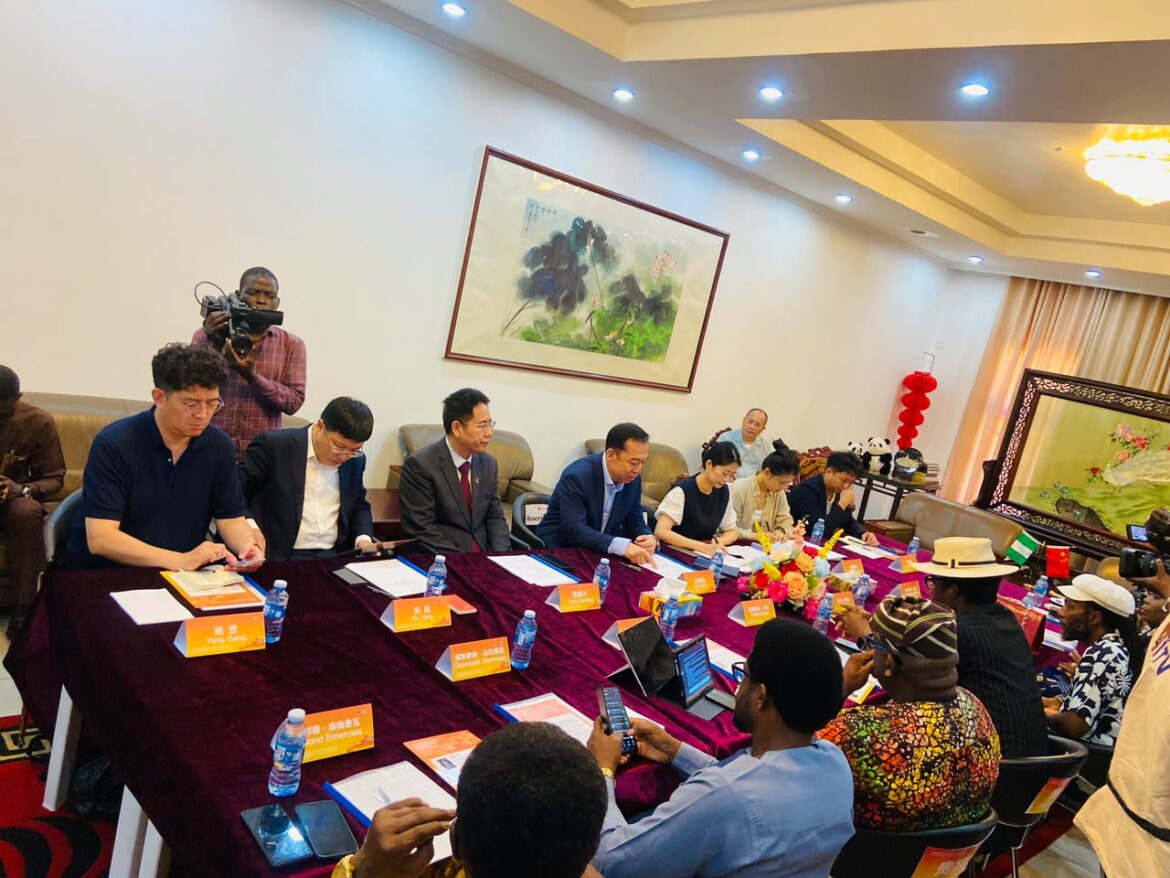
Nigeria and China are exploring billion-dollar opportunities in the film industry through co-production, technology transfer and cross-border distribution, as stakeholders seek to turn growing cultural ties into commercially viable partnerships.
The initiative gained momentum at the Chinese Film Screening in Nigeria 2026 in Abuja, where industry players identified Nigeria’s storytelling strength and China’s technological infrastructure, investment capacity and distribution networks as complementary assets capable of expanding the global reach of both countries’ creative industries.
However, stakeholders stressed the need to translate diplomatic goodwill and cultural exchanges into concrete business arrangements that would attract investment, facilitate market access and deliver sustainable returns for filmmakers.
The Director of the China Cultural Centre in Nigeria, Mr Yang Jianxing, said film remained an important platform for strengthening mutual understanding between the two countries.
“China and Nigeria share a deep-rooted traditional friendship and close people-to-people exchanges, and film serves as an important bridge for fostering mutual understanding between our peoples,” he said.
Jianxing said bilateral cooperation had grown through reciprocal film screenings, professional exchanges, festivals and the distribution of productions across national borders.
He cited collaborations involving the Chinese Embassy, the China Cultural Centre and StarTimes Nigeria, which have introduced Chinese films and television productions to Nigerian audiences through initiatives such as the Chinese Women’s Film Festival and screenings of works dubbed or subtitled in local languages, including Hausa.
He added that Nigerian productions had also gained exposure on mainstream Chinese digital media platforms, helping audiences in the Asian country discover Nigerian stories and experiences.
The commercial prospects of the partnership were highlighted by the founder of the Abuja International Film Festival, Fidelis Duker, who said discussions with the Chinese delegation had focused on co-production, distribution and investment opportunities.
Duker disclosed that engagements had included Nigerian film institutions, with plans to meet distributors and cinema operators in Lagos to explore practical avenues for collaboration.
He said the population sizes of both countries offered significant opportunities for expanding film audiences, provided that the necessary investment, technology and distribution networks were established.
“What we found out today, or what we’ve known over the years, is that China has technology,” Duker said, citing figures presented to participants indicating that China sold 1.3 billion cinema tickets in the previous year.
China’s film industry illustrates the scale of the potential market. Figures from the China Film Administration show that the country generated 51.832 billion yuan in box-office revenue in 2025, with cinema attendance reaching 1.238 billion. Domestic productions accounted for nearly 80 per cent of box-office receipts, while the country ended the year with 93,187 cinema screens.
The figures highlight the scale of China’s production and exhibition infrastructure and the potential opportunities for Nigerian filmmakers seeking access to international audiences.
Beyond exporting completed films, the proposed partnership could facilitate joint productions, technical training, technology transfer, improved post-production capacity and stronger distribution arrangements for Nigerian content.
Duker said combining Nigeria’s creative strengths with China’s industrial capacity could deliver substantial benefits to both countries.
“When you marry Nigerian narrative vitality with China’s technical infrastructure, capital, and unparalleled distribution expertise, you can imagine” the possibilities, he said.
The Chinese delegation, led by Bai Yimin, chairman of Huaxia Film Distribution Company Limited, also underscored the importance of cinema in strengthening bilateral relations.

Bai said cooperation had yielded results through reciprocal film festivals, professional exchanges, and the translation and broadcasting of films.
“In recent years, cooperation in the film industry has become a brilliant chapter in China-Nigerian cultural and people-to-people exchanges,” he said.
He added that the Chinese Embassy and the China Cultural Centre would continue supporting initiatives that use cinema to connect audiences and deepen relations between the two countries.
The event coincided with the 23rd Abuja International Film Festival, which received 10 Chinese film entries this year, five of which were nominated for awards. According to Duker, Chinese films had featured in 22 of the festival’s 23 editions, reflecting a longstanding relationship between the festival and China’s film industry.
He also acknowledged StarTimes for its support over the years, saying the partnership had contributed to the festival’s growth.
Three films were screened at the event: The Shadow’s Edge, Blades of the Guardians: Wind Rises in the Desert and The Lychee Road.
The latest engagement builds on broader efforts to deepen cooperation in the creative sector. In August 2026, the Nigerian Television Authority and China Movie Channel signed a strategic cooperation agreement aimed at promoting film co-production, technology transfer, professional training and wider distribution of creative content.
Announced at the China-Nigeria Film and Literature Symposium in Abuja, the agreement signalled a move towards more structured collaboration beyond the exchange of finished productions.
Stakeholders said the latest discussions could provide an opportunity to bring filmmakers, distributors, cinema operators and production institutions together to establish workable commercial arrangements.
However, they noted that access to a large market did not automatically guarantee commercial success. Nigerian and Chinese productions seeking entry into each other’s markets would require reliable distribution partners, effective marketing, appropriate subtitling and dubbing, clear licensing agreements and investment structures that protect the interests of participating filmmakers.
Differences in language, audience preferences, production practices and market regulations would also need to be addressed to ensure that joint productions attract viewers and generate revenue.
For Nigeria, the priority is to ensure that Nollywood benefits commercially from international partnerships rather than limiting its participation to cultural showcases and film festivals. For China, deeper engagement with Nigeria offers an opportunity to expand the international reach of its productions while strengthening ties with one of Africa’s most prominent film industries.
The success of the proposed partnership will ultimately depend on the ability of both countries to convert cultural exchanges into funded co-productions, sustained content distribution and lasting commercial relationships.
With both sides expressing interest in closer collaboration, stakeholders are now faced with the task of developing an industry-to-industry framework that can transform their shared cultural interests into measurable economic gains.