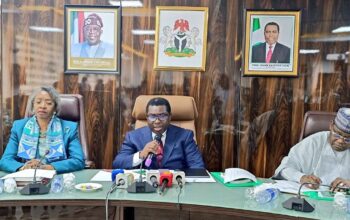
Speaker of the House of Representatives, Rt. Hon. Tajudeen Abass, has reaffirmed the National Assembly’s commitment to removing systemic barriers hindering women’s participation in governance. He made this assurance at the National Citizens’ Summit on Constitutional Reform and Campaign on Ending Violence against Women and Girls held in Abuja.
Represented by Deputy Speaker Hon. Benjamin Kalu, Abass pledged that ongoing constitutional reforms would prioritize women’s empowerment, safety, and full integration into governance. “We must collaborate with women’s groups, faith leaders, and traditional institutions to amplify women’s voices and protect their rights,” he stated.
The Speaker described the Summit as a pivotal moment, launching campaigns to boost women’s representation in elective and appointive positions while aligning with the United Nations Sustainable Development Goal 5 on gender equality. He underscored the urgency of addressing alarming global statistics, including World Health Organization data revealing that one in three women has experienced violence.
“We must break the cycle of history with renewed strategies, broader coalitions, and stronger public support to end violence against women and girls,” Abass said, stressing the role of constitutional reforms in driving gender equality.
Abass also praised past constitutional achievements, such as the 2018 “Not Too Young to Run” law, which expanded political opportunities for Nigerian youth. He invited stakeholders to contribute recommendations for the 2025 Appropriation Bill, ensuring a gender-inclusive budget that reflects the needs and aspirations of all Nigerians.
Hon. Adebo Ogundoyin, Chair of the Conference of Speakers of State Legislatures, highlighted the glaring underrepresentation of women, who hold only 57 out of 991 seats across Nigeria’s 36 State Houses of Assembly. He called for temporary measures, including gender quotas, to enhance women’s governance roles and address gender-based violence, which he identified as a significant barrier to empowerment.
Dr. Nesreen El Molla, UN Women Deputy Representative to Nigeria, commended Abass for his leadership and stressed the urgency of combating violence against women, calling it incompatible with modern society. She urged participants to propose actionable strategies to increase women’s inclusion in governance.
The Summit culminated in the unveiling of a national campaign to enhance women’s representation through constitutional and electoral reforms. Attendees included state legislative leaders, civil society organizations, traditional and religious institutions, and international stakeholders.
With a shared commitment to advancing gender equality and addressing systemic barriers, the Summit underscored the necessity of inclusive governance and collective action against violence targeting women and girls.