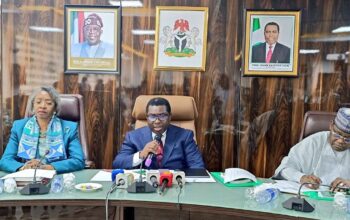
Environmental stakeholders in Nigeria convened in Abuja for a three-day workshop aimed at enhancing the country’s transition into a robust carbon market.
The event, titled Stakeholders Engagement on Nigeria’s Carbon Market Policy and Manual of Procedure, was organized by the National Council on Climate Change Secretariat (NCCCS) with support from the United Nations Development Programme (UNDP), the European Union (EU), and the United Kingdom (UK) government, among others.
State environment commissioners and other participants expressed optimism about the workshop’s potential to harmonize efforts in carbon financing and credit systems while promoting sustainable development initiatives.
Speaking to journalists, Niger State Commissioner for Environment and Climate Change, Hon. Yakubu Kolo, emphasized the importance of leveraging carbon financing as an alternative revenue source. “The training has deepened our understanding of Article 6 of the Paris Agreement and how Nigerians can benefit from it,” Kolo said. He highlighted plans for Niger State to issue green bonds, regenerate forests, and align with voluntary carbon markets.
Dr. Nura Ibrahim Kazaure, Jigawa State Commissioner for Environment and Climate Change and Chairman of the Commissioners Forum, noted the workshop’s relevance in enhancing projects such as afforestation, solar energy, and alternative cooking technologies. “This workshop provides a framework to develop methodologies for implementing impactful climate initiatives at the state level,” Kazaure remarked.
Kaduna State Commissioner for Environment and Natural Resources, Abubakar Buba, praised the training for simplifying the process of accessing global carbon markets for subnational governments.
The NCCCS Director-General, Dr. Nkiruka Maduekwe, welcomed participants and reiterated the Federal Government’s commitment to strengthening collaboration between federal and state authorities in building a viable carbon market. She described the workshop as a catalyst for Nigeria’s sustainable development goals and carbon emission reduction strategies.
Maduekwe outlined the objectives of the event, which included sensitizing stakeholders to new carbon market policies, providing high-level training, gathering feedback to refine strategic documents, and building the capacity of National Designated Authorities (NDAs) for effective oversight and implementation.
The workshop aligns with Nigeria’s broader climate change agenda, seeking to attract global investments while addressing environmental challenges through innovative and sustainable solutions.