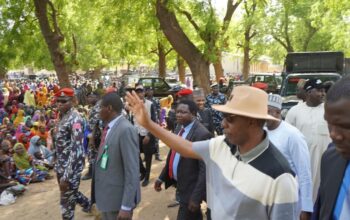
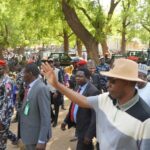
The National Project Coordinator (NPC) for the Agro-Climatic Resilience in Semi-Arid Landscapes (ACReSAL) project, Prince Abdulhamid Umar, has voiced confidence that the project’s initiatives will significantly uplift the livelihoods of Gboko South residents. During a joint engagement by the World Bank and the Federal Government of Nigeria with local communities, Prince Umar commended the robust involvement of women in the project’s rollout.
The ACReSAL project focuses on establishing a community-driven palm plantation and processing factory, which is expected to boost local livelihoods and enable families to afford education for their children. Additionally, the project will supply farm inputs to bolster agricultural activities. Prince Umar highlighted the critical role of community ownership and the long-term sustainability of these investments.
Hon. Odoh Ugwu, Benue State Commissioner for Water Resources, Environment, and Climate Change, presented farm inputs to community members, stressing the need for sustainable management and fair resource distribution, with a focus on addressing women’s needs. He reiterated the government’s commitment to supporting the Gboko Local Government Area through the ACReSAL project.
In his remarks, Benue State ACReSAL Project Coordinator Bald Victor Ama revealed that the Gboko community has allocated 1,000 hectares for the palm plantation, with 50 hectares already developed. The community has also requested the establishment of a palm fruit processing factory. To further support the community, ACReSAL plans to drill boreholes to improve access to clean drinking water.
Local leaders and women expressed their gratitude for the ACReSAL Project and pledged to ensure the sustainability of its investments in their community.