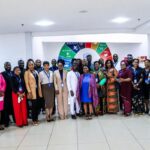
Vice President Kashim Shettima and other economic leaders have called for the deepening of Islamic finance across Africa as a pathway to inclusive and sustainable economic transformation.
Speaking at the 7th African International Conference on Islamic Finance (AICIF) held in Lagos on Tuesday, Shettima—represented by Dr. Tope Fasua, Special Adviser to the President on Economic Matters—urged African nations to leverage non-interest finance to promote equitable prosperity and bridge development gaps.
The conference, themed “Africa Emerging: A Prosperous and Inclusive Outlook,” was organised by Metropolitan Law and Metropolitan Skills Ltd in collaboration with the Securities and Exchange Commission (SEC).
Shettima highlighted that under President Bola Tinubu’s Renewed Hope Agenda, Nigeria’s economic reforms—such as exchange rate unification, subsidy rationalisation, and modernised tax systems—have strengthened macroeconomic stability and investor confidence, lifting reserves above $40 billion.
He emphasised that Islamic finance provides an ethical and inclusive model for development, citing Nigeria’s sukuk programme, which has funded more than 120 major road projects spanning nearly 6,000 kilometres. “Each bond represents a covenant between government and citizens, proof that finance can build rather than burden,” he stated.
Shettima noted that takaful insurance and waqf endowments are extending financial protection and social support to previously excluded communities. He urged African policymakers to sustain reforms that enhance transparency and mobilise domestic capital through innovative tools like green sukuk and diaspora bonds.
“Africa’s future must be financed from within, guided by principles of justice, inclusion, and sustainability,” the Vice President affirmed.
Conference Chairperson, Ms. Ummahani Ahmad Amin, said AICIF was designed to foster collaboration and knowledge sharing to advance Islamic finance as a viable funding alternative for Africa’s socio-economic development. She noted that while global Islamic finance assets reached $3.88 trillion in 2024, Africa still lags in harnessing its potential to close the continent’s $170 billion annual infrastructure gap.
In his remarks, SEC Chairman Mr. Mairiga Katuka disclosed that Nigeria’s non-interest capital market had raised over ₦1.4 trillion through sovereign sukuk, financing 124 road projects nationwide. He added that the country now has 19 halal mutual funds managing over ₦112 billion in assets, underscoring the SEC’s commitment to expanding regulatory frameworks for innovative instruments such as tokenised and blockchain-enabled sukuk.

The Emir of Kano and former Central Bank of Nigeria Governor, Alhaji Sanusi Lamido Sanusi, urged Islamic financial institutions to focus on supporting small and medium enterprises (SMEs) and women in underserved communities. He said inclusive finance must target those at the grassroots to achieve real impact.
“I would be happier to see Islamic banks that are ambitious enough to grow markets that deliver real value to people and help reduce poverty,” Sanusi said, stressing that empowering women remains central to Africa’s prosperity.
The two-day conference also featured a startup pitch competition and an awards ceremony recognising outstanding contributors to the growth of Islamic finance across Africa.