Avocats Sans Frontières (ASF) France has raised concern over the plight of at least 82 Nigerian women currently on death row, urging government and justice sector stakeholders to integrate gender perspectives into the application of capital punishment.
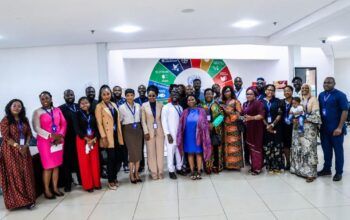
The call was made during a two-day workshop in Abuja as part of activities marking the global 16 Days of Activism Against Gender-Based Violence. The event, themed “Capacity-building Session on Mainstreaming Gender Perspective in the Use of the Death Penalty,” brought together rights advocates and experts to highlight systemic inequalities faced by women in the criminal justice system.
ASF France Country Director, Angela Uzoma-Iwuchukwu, said Nigeria has the highest number of women on death row in sub-Saharan Africa, many of whom have been “neglected and forgotten” due to their incarceration.
“We strongly believe these women need a voice. There are gender issues around the application of capital punishment. The death penalty is often projected as neutral, but it is not,” she said.

Uzoma-Iwuchukwu noted that gender bias exists from the point of arrest through conviction and incarceration, adding that many women on death row are victims of domestic violence whose circumstances are rarely considered during trial.
“In practice, women face additional brutality and discrimination. They are often tried for more than their crimes—they are tried for being women who dared to commit crimes,” she stated, highlighting poverty as a major factor that deepens their vulnerability.

Founder of the Edeika Trauma Care Centre and Equity Advocates, Mrs. Ene Ede, called for the total abolition of the death penalty, insisting that life is sacred and should not be taken under any circumstance.
“Anything that involves taking life is of utmost importance to humanity. The justice system often contains elements of injustice, and the death penalty only worsens it. We must approach justice with empathy and patriotism,” she said.
Ede argued that the risks of wrongful convictions and systemic bias make capital punishment unsafe and unjust, urging Nigeria to re-examine its laws to protect the most vulnerable.
The workshop ended with renewed advocacy for reforms that reflect fairness, gender sensitivity and the protection of human rights across the justice system.