The Economic Community of West African States (ECOWAS) Commission and the World Food Program (WFP) have allocated $1.6 million to tackle rising malnutrition and poverty in Katsina and Sokoto states, exacerbated by increased banditry and internal displacement in Northwest Nigeria.
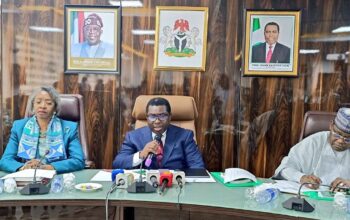
WFP Deputy Head of Programme, Manuela Reinfield, announced this on Friday at the launch of the second phase of the ECOWAS-WFP Stabilization Project for 2024/2025 in Katsina. The project aims to provide monthly cash transfers of N11,500 to approximately 14,500 beneficiaries in Katsina and Sokoto states over the next six months. Additionally, the program will distribute nutritious food, including corn-soya blend, to pregnant and lactating women and their children under two years to prevent malnutrition.
The WFP’s efforts in the region will be bolstered by the delivery of 5,000 metric tonnes of wheat donated by the Ukrainian government, expected to arrive this weekend. Reinfield emphasized that the initiative comes at a critical time due to the worsening food security and insecurity in the Northwest.
Katsina and Zamfara states will receive unconditional food assistance with the incoming wheat grain. Amb. Sani Nuhu, Nigeria’s Permanent Representative to ECOWAS, noted that the regional bloc has established a Stabilization Fund to support victims of terrorism and banditry, deciding to extend humanitarian assistance to the Northwest given the severe circumstances. He explained that ECOWAS has committed $1 million annually to Nigeria for social alleviation initiatives targeting victims of insecurity in the Northeast and Northwest, with WFP selected as the implementing partner to ensure aid reaches the intended beneficiaries.

Katsina State Governor, Dikko Umar Radda, commended ECOWAS, WFP, and the Ministry of Humanitarian Affairs for their support, stating that the project will empower state institutions and facilitate continuity and technical collaboration even after the project’s completion. He assured the state’s readiness to provide a conducive environment for ongoing partnerships with donor organizations.
Olumuyiwa Enitan, Permanent Secretary of the Ministry of Humanitarian Affairs and Poverty Alleviation, highlighted that the program’s beneficiaries were carefully selected based on global best practices, focusing on the most vulnerable populations. A total of 14,694 individuals have been chosen in Katsina and Sokoto states, with 7,347 beneficiaries identified across two local government areas in Katsina.
Enitan expressed the program’s intention to pave the way for a future marked by peace, stability, and prosperity in the region.